
The rapid adoption of rooftop solar panels across Australia has fundamentally altered the relationship between consumers and the national energy grid, creating a complex financial dilemma that regulators are now moving to address. The Australian Energy Market Commission (AEMC) has released a comprehensive set of draft recommendations aimed at building a more equitable and efficient electricity market. Central to this vision is a significant, and potentially controversial, proposal to restructure how network charges are calculated. By advocating for a shift toward higher fixed charges, the commission intends to ensure that the substantial costs of maintaining the country’s poles and wires are shared more fairly among all users, including the growing number of households generating their own power. This move signals a pivotal moment in Australia’s energy transition, attempting to balance the benefits of renewable energy with the long-term stability and financial viability of the shared grid infrastructure.
A Blueprint for Market Modernization
The AEMC’s strategic plan extends beyond network tariffs, outlining six primary recommendations designed to cultivate a more dynamic and transparent energy services market. A key consumer-focused reform is a mandate requiring energy providers to offer identical prices to all customers on a specific plan, a measure aimed at abolishing the so-called “loyalty tax” where long-standing customers inadvertently pay more than new ones. Further proposals include establishing a competitive franchise model for consumers who have not actively chosen a market offer and committing to regular reviews of existing regulations to ensure they remain effective in a rapidly changing industry. Additionally, the commission plans a significant overhaul of the “Energy Made Easy” comparison website, enhancing its usability and equipping it to handle the new, more complex energy plans emerging in the market. While these initiatives promise broad benefits, the most impactful change lies in the proposed redesign of network tariffs to prioritize efficiency and a fairer distribution of costs.
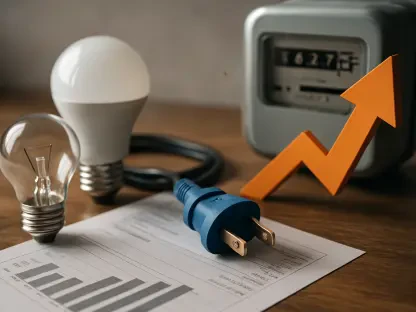
At the core of the AEMC’s analysis is the composition of the average electricity bill and the growing imbalance in how its largest component is funded. Network charges, which cover the immense cost of building and maintaining the physical infrastructure of the grid, typically account for 30% to 50% of a household’s total bill. Traditionally, these charges have been primarily linked to the volume of electricity a consumer draws from the grid. However, this model is becoming increasingly strained with the proliferation of Consumer Energy Resources (CER), such as rooftop solar panels and home battery systems. As households with these technologies reduce their reliance on grid-supplied electricity, their contribution to the network’s sunk costs also decreases. This trend has sparked a critical debate about how to fund essential infrastructure in an era of decentralized energy generation, prompting regulators to explore new models that decouple network funding from simple energy consumption and better reflect a user’s access to and reliance on the grid.
The Rationale for a New Cost Structure
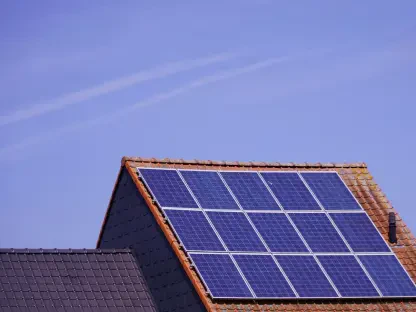
The fundamental issue the AEMC seeks to resolve is an emerging financial inequity driven by the success of residential solar power. Households equipped with CER still fundamentally rely on the grid for backup power when their systems are not generating and as a platform to export their surplus energy. Under the current billing structure, where network charges are tied to consumption, these households contribute significantly less to the upkeep of the grid infrastructure they continue to use. This creates a significant “cost shift,” where consumers without solar or batteries, who depend entirely on the grid for their electricity, are left to shoulder a disproportionately larger share of the network’s fixed costs. The AEMC argues that this situation is not sustainable and that as the grid evolves from a one-way delivery system to a two-way platform, the financial model supporting it must also adapt to ensure that all beneficiaries contribute fairly to its maintenance and modernization.
Interestingly, the AEMC’s proposal for higher fixed network charges was not a prominent feature in its initial press releases or summary documents, requiring a deeper dive into the full report to understand its significance. When questioned directly, the commission provided a multi-faceted justification for this approach. Primarily, it is presented as a direct and effective solution to the cost-shifting problem between CER and non-CER households. Beyond fairness, the AEMC believes this change will promote more efficient use of the network by removing price signals that unnecessarily discourage consumption at times of low demand. Furthermore, it is intended to provide clearer long-term financial signals to consumers, helping them make more informed decisions when considering investments in home energy technologies like batteries. By creating a more predictable cost structure for grid access, the commission hopes to foster a more stable and equitable environment for all energy users.
Navigating Future Challenges and Technologies
A predictable consequence of increasing the fixed costs associated with grid connection is the potential for more households to consider disconnecting entirely. This “bugger the grid” mentality, while appealing to some, presents a significant challenge to the energy system as a whole. The collective value of a distributed energy network, where countless homes can both draw from and contribute to the grid, is diminished each time a household goes completely off-grid. This could lead to reduced grid stability and higher costs for those who remain connected. Recognizing this risk, some analysts speculate on a future where regulators might adopt policies similar to those in the water utility sector. In such a scenario, a fixed service charge for access to essential infrastructure could become mandatory for any connected property, regardless of whether the service is actively used, thereby ensuring the foundational network remains financially viable for everyone.
In a related but distinct development, the AEMC has also finalized a new rule to accelerate the adoption of advanced metering technology. This mandate requires that all smart meters installed from November 30, 2028, onwards must be equipped with wireless communication capabilities to transmit real-time data. A key benefit of this rule is that customers with these new meters will have the right to access their own detailed energy data at no extra charge. However, for households with smart meters installed before this date, accessing the same functionality will require paying their retailer a “reasonable” fee for an upgrade. While the data access is termed “free,” the minimal associated costs, estimated at around $0.66 per meter annually, will be socialized across all customer bills. AEMC Chair Anna Collyer stated that this initiative is designed to “future-proof” the nation’s metering infrastructure and send a clear signal to innovators to develop new products and services that leverage real-time energy data.
Deliberations on a New Energy Era
The commission’s draft report marked the beginning of a crucial public consultation period, which concluded on February 13, 2026. The feedback gathered during this time was set to be thoroughly reviewed before the AEMC published its final recommendations in the second quarter of the year. This period of deliberation represented a critical juncture for Australia’s energy market, as stakeholders from across the spectrum weighed in on a proposal that sought to fundamentally redefine the financial relationship between consumers and the grid. The proposed shift toward higher fixed charges, while aimed at rectifying a clear inequity, initiated a necessary but complex conversation about the future of energy pricing. The ultimate decisions made were poised to have long-lasting implications, shaping how Australia balances the integration of renewable technologies with the imperative of maintaining a stable, reliable, and equitably funded national electricity network for decades to come.