
With the nation’s grid facing unprecedented strain from AI data centers and long interconnection queues, we sat down with Christopher Hailstone, a leading expert in energy management and electricity delivery, to discuss a solution hiding in plain sight. Christopher argues that the greatest opportunity for creating capacity quickly and affordably lies not in massive transmission projects, but at the very edge of the grid—in our neighborhoods and homes. We explored how to slash regulatory red tape, the power of innovative customer models, and the critical role of advanced software in orchestrating a cleaner, more resilient energy future.
Given that local distribution networks often operate at less than 10% of their capacity, what are the most critical first steps for utilities to unlock this potential, and how can a mass deployment of resources at the grid edge concretely improve system-wide efficiency?
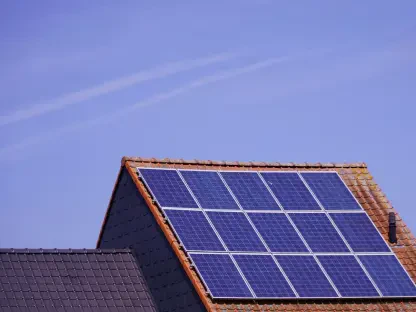
It’s a staggering figure, isn’t it? We have this massive, underutilized asset right under our noses, and we’re still stuck in a paradigm of building more and more expensive infrastructure. The most critical first step is a fundamental mindset shift away from just building bigger poles and wires. Instead of that slow, capital-intensive approach that lands consumers with higher bills, we must focus on maximizing the potential of every single interconnection point. A mass deployment of resources like solar and batteries at the grid edge has this incredible, outsized potential. It’s not just about local benefits; it unlocks latent capacity that cascades right up through the entire network, from the local transformer all the way to the transmission system.
Australia’s one-day approval process has helped place solar on 40% of homes. To replicate this success, what specific policy and procedural changes must U.S. jurisdictions make, and what metrics would you track to measure the impact on both deployment speed and installation costs?
The biggest barrier we face is self-inflicted: it’s red tape. In the U.S., getting permits and export approval for a simple residential solar and battery installation can drag on for months. It’s a huge source of friction and frustration for customers and installers alike. To replicate Australia’s success, we must ruthlessly streamline these processes. We need to move toward a simple, standardized, and rapid approval system, aiming for that one-day turnaround. It’s not just a nice-to-have; it’s a critical enabler. To measure our progress, I’d be tracking three key metrics: the average time from application to approval, the total “soft costs” associated with installation, and, of course, the residential solar and battery adoption rate. Watching those numbers change would tell us if our policies are truly working.
Innovative models like bundling solar and batteries into a new home’s mortgage simplify adoption. How can this “all-in-one” approach be adapted for existing homes at scale, and what are the primary financial and logistical hurdles that must be overcome for mass-market adoption?
The new-build model, like the Zero Bills Homes program, is brilliant because it removes the decision-making burden from the customer. The technology is just part of the house. Adapting this for the massive market of existing homes is the real challenge. The biggest hurdle is financing; you can’t just roll the cost into a new 30-year mortgage. Logistically, retrofitting is also inherently more complex than installing during construction. For mass-market adoption, we need to create similarly seamless packages. This means retailers and utilities must step up to bundle installation, attractive financing options, optimized rate plans, and remote asset management into a single, simple, and comprehensible value proposition for the homeowner.
Investor-owned utilities possess unique strengths like brand recognition and network knowledge. What specific strategies should they employ to align rate design with distributed asset programs to create compelling customer offers? Please walk through an example of how this would benefit a typical household.
Investor-owned utilities are uniquely positioned to lead this transition. They have trusted brands, existing billing relationships, and an intimate understanding of their own networks—they know exactly where flexibility is most valuable. The key is to stop treating asset programs and rate design as separate initiatives. They must be woven together into cohesive customer offers. For instance, a utility could design a “Solar and Storage” rate plan with a significant differential between peak and off-peak prices. Then, they could offer a streamlined program to install a battery, pre-enrolled to automatically charge during the cheap hours and discharge to power the home or sell back to the grid during expensive peaks. For the household, this means a lower electricity bill, backup power, and a simple, hands-off experience managed by a trusted provider.
Optimizing distributed assets solely for wholesale energy prices can create new problems like secondary peaks. How do advanced control platforms balance these market signals against local network stability needs, and what are the key trade-offs in that optimization process?
This is a non-trivial problem and absolutely critical to get right. If you only optimize for wholesale prices, you create a herding effect where every battery and EV in a neighborhood tries to charge during the same cheapest two hours, potentially overloading the local transformer and creating a new “secondary peak.” This is where advanced control platforms become essential. These sophisticated systems must be multi-purpose, constantly running an optimization across different, often competing, needs. They have to weigh the value of the wholesale market signal against the physical constraints and stability needs of the local distribution network. The key trade-off is often between maximizing revenue for the asset owner in the short term versus spreading the load to maintain grid health and make the best use of available network capacity for everyone.
What is your forecast for the grid edge over the next decade?
I believe the next decade will see a tidal wave of change at the grid edge. The friction for enrolling devices will collapse to the point where smart assets like EVs and heat pumps arrive in grid programs by default. We’ll see solar and storage unlock new capacity faster and cheaper than any traditional alternative, driven by these innovative customer models we’ve discussed. The investor-owned utilities that embrace this and learn to orchestrate these resources effectively will not only enhance their network efficiency but also attract new industrial growth to their territories. Ultimately, getting the grid edge right means delivering more reliable and cheaper power for all.