
A massive financial protection gap exists in the market because traditional insurance policies often fail to cover non-damage business interruptions caused by service failures. This reality is crashing into the American energy sector as the rise of artificial intelligence accelerates a data center supercycle that threatens to outpace the physical capabilities of the national grid. For decades, electricity providers operated under a paradigm of slow, predictable demand growth, but the sudden arrival of hyperscale computing has shattered those old assumptions. These facilities require immense, constant power loads that the existing infrastructure was never designed to handle, leading to a situation where the demand for high-performance computing is moving at light speed while the physical utility backbone crawls at a twentieth-century pace. This fundamental disconnect creates a volatile environment where technical innovation is constantly bottlenecked by the availability of high-voltage transformers and transmission lines.
The Massive Divergence: Infrastructure and Economic Realities
The current tension in the energy market is defined by a staggering statistical gap that has widened since the turn of the millennium. Since that time, the power consumption requirements of American data centers have expanded at a compound annual rate of nearly 20%, reflecting the insatiable appetite for digital services and advanced machine learning models. Meanwhile, the expansion of the national power grid’s capacity has lagged significantly, averaging a growth rate of only 2% annually. This tenfold difference in growth trajectories has shifted the role of data centers from minor niche users to dominant industrial players. In 2026, these facilities are expected to consume roughly 5% of all electricity generated in the United States, a fiftyfold increase in their relative energy footprint compared to twenty-five years ago. This rapid consolidation of power demand is taxing the resilience of local utilities, which must now balance the needs of residential consumers with the high-density requirements of big tech.
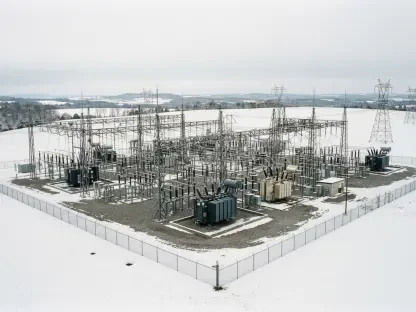
This infrastructure lag has transformed from a technical curiosity into a severe financial liability for project developers and real estate investors. In the most congested energy markets, such as Northern Virginia or Silicon Valley, the wait time to secure a high-voltage connection to the public grid can now stretch anywhere from two to six years. These massive delays in commissioning new facilities represent more than just scheduling headaches; they are multi-billion-dollar risks to corporate valuation. For a high-capacity data center capable of generating $400 million in annual revenue, a three-year delay in becoming operational results in a direct loss of over $1.2 billion in potential income. These bottlenecks are fundamentally altering the competitive landscape, as the ability to secure power is now a more critical factor in market success than having the most advanced hardware or the most efficient cooling software. The power grid has become the ultimate gatekeeper for the modern digital economy.
The Strategic Pivot: Implementing On-Site Power Systems
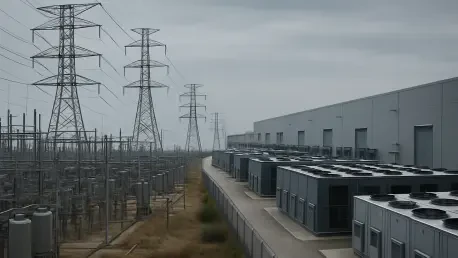
In response to the mounting delays and instability associated with the public grid, hyperscale operators are aggressively pursuing behind-the-meter strategies to reclaim control over their energy supplies. Industry projections indicate that for these facilities to continue growing without destabilizing public infrastructure, they will likely need to generate more than 50% of their total energy requirements on-site by 2030. This shift marks a fundamental transition where tech companies are essentially becoming their own utility providers, managing complex energy portfolios that were once the exclusive domain of public service commissions. Large-scale operators are investing heavily in a diversified mix of natural gas turbines for reliable baseload power, often coupled with expansive solar and wind arrays. To solve the problem of intermittency, these renewable assets are being paired with industrial-scale battery storage systems that can provide hundreds of megawatt-hours of backup power during peak demand periods.
Beyond fossil fuels and standard renewables, the industry is increasingly betting on nuclear energy as the definitive long-term solution for high-density, carbon-free power. Small modular reactors and direct power purchase agreements from existing nuclear plants are becoming the cornerstone of long-term strategic planning for the world’s largest tech firms. This move toward nuclear power reflects a pragmatic acknowledgment that the current grid cannot guarantee the 99.999% uptime required for high-level computing. By establishing a direct link to high-output nuclear sources or building proprietary generation units, data center operators are attempting to insulate themselves from the price volatility and physical scarcity of the traditional power market. This evolution toward energy independence is not merely about meeting corporate sustainability goals; it is a necessary survival tactic in an era where power is the most valuable and constrained resource. The transition effectively shifts the burden of operational risk from the utility company directly to the data center owner.
Addressing Operational Vulnerabilities: Protection and Resiliency
Despite the transition toward more self-sufficient energy strategies, the inherent complexity of managing high-density artificial intelligence hardware has led to a significant increase in operational instability. Statistics show that roughly half of all operational data centers have experienced a major outage or impactful service disruption within the last three years. These incidents are rarely caused by a single catastrophic event; instead, they often stem from failures in cooling systems that cannot handle the thermal load of modern chips or glitches in uninterruptible power supply systems during a transition to backup generation. The financial impact of these outages is immense, with a single event often costing upwards of $1 million in lost productivity and damaged reputation. On a global scale, these recurring technical failures account for billions of dollars in annual losses, underscoring the fact that the physical infrastructure supporting the cloud is far more fragile than the sleek digital interfaces would suggest.
The widening gap between digital complexity and physical reliability necessitated the development of new financial tools designed to address the unique vulnerabilities of the technology sector. Because traditional insurance policies often ignored non-physical damage, the industry increasingly adopted parametric insurance models that triggered immediate payouts based on verifiable service-level agreement failures. This approach provided a much-needed safety net for operators who faced massive financial penalties when their systems went dark, even if no hardware was physically destroyed. The long-term success of the American data center market depended on a total synchronization between facility architecture, local power generation, and these specialized risk management frameworks. By viewing energy not as an external utility but as a core component of the technological stack, the industry created a more resilient foundation. These strategic investments focused on hardening sites against both grid instability and internal system failures to ensure that the digital economy remained operational during the supercycle.