
The humming roar of a data center cooling system in Northern Virginia or West Texas might seem miles away from a suburban kitchen, but the financial reverberations are landing directly on the breakfast table in the form of rising electricity rates. As the massive expansion of artificial intelligence continues to redefine the modern economy, the digital revolution is no longer confined to fiber-optic cables and Silicon Valley boardrooms. It has manifested as a tangible “demand shock” on a national power grid that was already grappling with a significant “supply crunch” due to aging infrastructure and shifting generation sources. While the technological promise of generative AI is virtually limitless, it brings a gritty, pocketbook dilemma to the forefront of national discourse: who should shoulder the bill for the massive energy upgrades required to keep these digital brains humming? Without immediate and robust legal intervention, the default answer remains the residential ratepayer, regardless of whether they have ever interacted with a chatbot or generated an AI image.
The sheer scale of the energy required by hyperscalers—the tech giants operating these massive server farms—is unprecedented in the history of American industry. A single large-scale data center can consume as much electricity as a medium-sized city, necessitating new substations, high-voltage transmission lines, and dedicated power plants. In many jurisdictions, the arrival of these facilities has forced utilities to accelerate their capital spending plans, often by billions of dollars. Under current regulatory frameworks, these costs are frequently bundled into the general rate base, meaning that every customer, from a senior citizen on a fixed income to a small local bakery, ends up subsidizing the infrastructure that fuels the AI boom. This socialization of cost is creating an invisible surcharge on monthly bills, turning the energy transition into a regressive financial burden for those least able to afford it.
The Invisible Surcharge on Your Monthly Power Bill
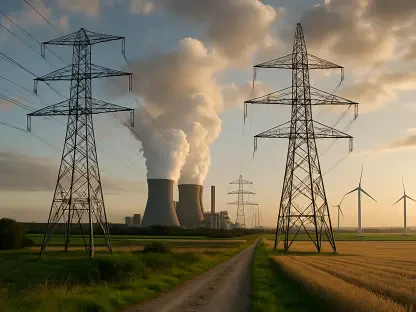
The rapid ascent of artificial intelligence is fundamentally altering the relationship between the tech sector and the average American consumer. As data centers expand at a breakneck pace to facilitate the processing power required for complex neural networks, they are placing a strain on the electric grid that has not been seen in decades. This sudden surge in load growth is happening at a time when the grid is already vulnerable, leading to a scenario where utilities must scramble to secure new power sources. The financial implications are stark; when a utility company builds a new natural gas plant or a massive solar farm specifically to meet the needs of a new data center cluster, the capital investment is typically recovered through the rates charged to all customers. This means that the “AI tax” is being quietly integrated into the cost of keeping the lights on in residential neighborhoods across the country.
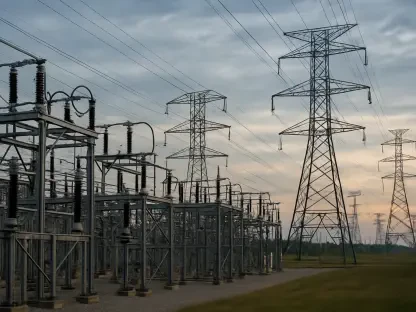
Furthermore, the pressure on the grid extends beyond just the generation of power to the very “wires” that deliver it. The transmission and distribution networks are seeing increased congestion, necessitating expensive upgrades to maintain reliability and prevent blackouts. Because the current regulatory system treats these upgrades as essential for the stability of the entire system, the costs are often shared among all users. This creates a situation where the general public is essentially providing a low-interest loan or a direct subsidy to some of the wealthiest corporations in history. The disconnect between who drives the demand and who pays the bill has reached a point of systemic failure, prompting calls for a total reassessment of how energy infrastructure is financed and who is held accountable for the resulting price hikes.
The Collision of Political Mandates and Antique Regulations
The tension between modern technological expansion and 20th-century energy policy has reached a critical boiling point in the middle of this decade. Political leaders have responded to growing public outcry by proposing initiatives like the “Ratepayer Protection Pledge,” a policy framework demanding that tech giants take full financial responsibility for the energy they consume. This framework operates on a “build, bring, or buy” principle, requiring data centers to either construct their own power generation, bring new supply to the grid from elsewhere, or pay a premium that covers the full cost of their consumption. The goal is to create a “ringfence” around these massive projects, ensuring that their energy needs do not dilute the power supply or increase the costs for small businesses and families. However, this policy goal is currently on a collision course with the “cost-of-service” utility model that has governed the American power sector for over a hundred years.
This systemic friction matters because existing laws were designed to socialize risks and costs across the broadest possible customer base to ensure universal access to electricity. In the early 20th century, this model was essential for rural electrification and industrial growth, but in the context of the AI revolution, it has become a liability. The legal mechanisms that allow utilities to pass through their expenses to “captive” customers—those who have no choice but to buy from the local monopoly—make it incredibly difficult to isolate the financial impact of a single massive user. Even when regulators attempt to implement specialized tariffs for data centers, the underlying legal structures often allow for “leakage,” where indirect costs like administrative overhead, grid balancing, and backup generation are still shared by the general public.
Decoding the Legal Barriers to True Ratepayer Protection
The path to protecting consumers from the inflationary pressure of AI energy demands is blocked by a complex web of monopoly protections and outdated infrastructure laws. In many states, utility companies operate as protected monopolies where their primary source of profit is a guaranteed return on capital expenditures. This “cost-of-service” model creates a perverse incentive for utilities to welcome massive new projects, as more infrastructure building leads to higher profits. Because these utilities are insulated from market competition, the financial risks associated with these large-scale investments—such as the potential for “stranded costs” if a data center project is abandoned or becomes obsolete—remain with the utility and, by extension, its customers. This socialization of risk means that even if a tech company pays its initial bills, the long-term financial stability of the utility is backed by the residential ratepayer.
A secondary legal hurdle involves the historic principle of non-discrimination in electricity law, which grants any customer the right to access the existing power supply on equal terms. By asking AI companies to “build, bring, or buy” only new generation sources, policy mandates are essentially asking these corporations to waive their traditional legal rights to the current power pool. While many tech firms are willing to comply with these requests to maintain their public reputation, the existing legal framework is not naturally designed to support such a departure from standard practice. This creates a regulatory vacuum where, in the absence of explicit new statutes, the costs of serving these large loads can still find their way into the general rate base through various accounting loopholes and emergency grid-balancing measures.
The “network” nature of the power grid further complicates the allocation of infrastructure costs. When a new high-voltage transmission line is constructed to serve a distant data center, it technically improves the reliability of the entire regional network. Regulators often use this “benefit” as a justification to spread the cost of the project across all users in a given region, following the doctrine of “roughly commensurate” cost-sharing. This makes it nearly impossible to pinpoint exactly how much a data center owes versus what the public is being forced to subsidize. Since the vast majority of grid projects are utility-initiated with very little competitive oversight, the total price of transmission has skyrocketed, further obscuring the true cost of supporting the AI industry.
Insights From the Front Lines of Energy Policy
Industry experts and recent market data suggest that the current system is suffering from a massive “accountability deficit” that heavily favors incumbent utilities over the interests of the consumer. Currently, organizations like the Federal Energy Regulatory Commission and state-level utility boards are inundated with testimony and lobbying from the monopoly utilities they regulate, while the voices of residential consumers and even the tech companies themselves are often less influential in the technical minutiae of rate-setting. This has created a scenario where the concentrated interests of a few monopoly utilities outweigh the dispersed interests of millions of residential consumers. Experts argue that until hyperscalers use their significant political and economic clout to directly challenge the utility status quo, the cycle of rising rates and socialized costs will likely persist.
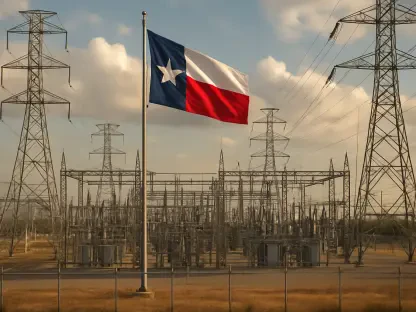
There are, however, success stories emerging from states that have embraced competitive energy markets. In states like Texas, where retail choice and competitive power generation are the norm, large-scale customers are often required to contract directly with independent power producers. This market-based approach keeps the financial risk of new generation and transmission projects strictly between private parties, preventing the utility from passing those costs on to residential users. In these “load-growth ready” environments, the expansion of AI does not automatically trigger a rate hike for the average homeowner because the monopoly “cost-recovery” mechanism has been dismantled or significantly limited. Business customers in monopoly-controlled states such as Wisconsin and Indiana are now actively lobbying for similar reforms, recognizing that competition is the only reliable way to ensure that innovation does not lead to a raid on ratepayer wallets.
A Framework for Reclaiming the Power Grid
To ensure that the AI boom does not bankrupt the American ratepayer, a specific set of strategies must be implemented to modernize the energy landscape toward a more equitable future. The most effective way to insulate ratepayers from the costs of AI is to move away from the traditional monopoly model and toward expanded retail competition and direct contracting. By allowing data centers to engage in “off-grid” arrangements or enter into direct grid-service contracts with independent providers, the financial burden of new energy generation is removed from the utility’s rate base entirely. This strategy ensures that the companies driving the demand are the only ones responsible for the investment and the operational risks associated with that demand, protecting the general public from fluctuations in the tech market.
Furthermore, state and federal regulators must transition away from “utility-initiated” transmission projects and toward a system of competitive bidding. Opening up grid infrastructure to independent developers can significantly drive down the cost of new transmission lines and ensure greater transparency in how these projects are funded. Allowing tech companies to fund and build their own “merchant lines”—high-voltage direct-current lines that connect specific generation sources to their data centers—would also allow them to bring their own power to the table without relying on public infrastructure. These private lines act as dedicated conduits for industrial power, bypassing the residential grid and preventing the socialization of transmission costs that currently inflates monthly bills.
Finally, a new era of consumer-tech alliances is necessary to shift the balance of power in the regulatory arena. Hyperscalers have a unique opportunity to act as “Grid Heroes” by aligning with consumer advocates to push for structural reforms that lower the total cost of the system. By joining forces in organizations dedicated to electricity customer protection, large industrial users and residential advocates can demand the dismantling of excessive supply costs and push for a more efficient, market-driven grid. This collaborative approach recognizes that the primary obstacle to affordable energy is not the demand for new technology, but the antiquated laws that prevent the market from responding to that demand efficiently.
In the years leading up to the present, the struggle to balance technological progress with economic fairness defined the legislative landscape of the energy sector. Regulators and lawmakers eventually realized that the old ways of socializing risk were no longer sustainable in an age of hyper-scale demand. By moving toward competition and demanding transparency, the industry took the first steps toward a system where innovation paid its own way. This shift protected the vulnerable while allowing the digital economy to flourish, proving that with the right legal frameworks, the power of AI could be harnessed without dimming the lights for everyone else.