
Setting the Stage for a Power Revolution
Imagine a world where every click, search, or AI-generated response silently pushes the electric grid closer to its breaking point. In today’s digital economy, data centers are the unsung heroes fueling cloud services and artificial intelligence, yet their voracious appetite for power is creating a silent storm in the energy sector. This market analysis delves into the escalating strain on power infrastructure due to skyrocketing data center demands, particularly from AI workloads. It aims to dissect current trends, forecast future challenges, and spotlight innovative solutions that could redefine how the tech and energy markets coexist. By exploring volatility patterns, technological gaps, and emerging opportunities, this discussion seeks to equip stakeholders with actionable insights into a critical intersection of technology and sustainability.
Current Market Dynamics: A Grid Under Pressure
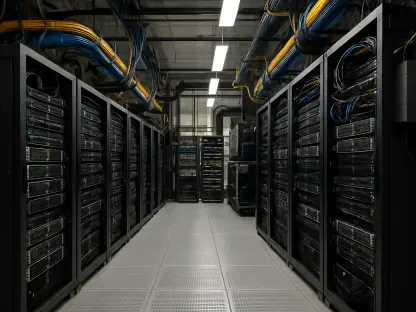
The electric grid, a cornerstone of modern civilization, was architected for an era of predictable energy consumption—think household appliances and industrial machinery with steady loads. However, the rise of hyperscale data centers has upended this stability, introducing a new paradigm of energy demand that the market has yet to fully address. Over recent years, the proliferation of AI-driven applications has transformed these facilities into power-hungry giants, with consumption patterns that spike and plummet unpredictably. This volatility not only stresses local grid components but also poses systemic risks, as utilities struggle to balance supply against erratic demand. The market is at a pivotal moment where the failure to adapt could lead to widespread disruptions, affecting not just tech companies but entire regional economies.
Moreover, the data center industry’s rapid expansion has outpaced grid modernization efforts, creating a glaring mismatch between supply capabilities and demand realities. Areas with high concentrations of these facilities, like Northern Virginia, face intensified pressure, while renewable-heavy regions grapple with aligning intermittent energy sources with fluctuating needs. Industry reports underscore a troubling trend: the construction of gigawatt-scale data centers is accelerating, often without corresponding upgrades to power infrastructure. This gap highlights a critical market challenge—how to sustain digital growth without compromising energy reliability in an increasingly interconnected world.
Deep Dive into Trends and Projections
AI Workloads: The Volatility Driving Market Shifts
At the core of the current market upheaval lies the unpredictable nature of AI workloads, which generate power consumption patterns that defy traditional forecasting models. Unlike conventional computing tasks with consistent energy draws, AI processes cause sudden surges—akin to a heartbeat monitor’s erratic peaks—that overwhelm grid components such as substations and feeders. Insights from industry analyses reveal that these rapid fluctuations disrupt utility coordination, leading to frequency imbalances and increased reliance on costly backup systems. Looking ahead, as AI adoption scales, projections suggest that without intervention, grid instability could become a defining bottleneck for tech sector growth over the next few years.
Energy Storage: Gaps and Emerging Solutions
Compounding the challenge is the inadequacy of existing energy storage technologies to meet the dynamic needs of modern data centers. Lithium-ion batteries, a staple for short-term power backup, are ill-suited for the sustained, fluctuating demands of AI facilities. Market evaluations show that while these systems mitigate brief outages, they fall short in addressing prolonged volatility, leaving data centers vulnerable to downtime and utilities exposed to strain. However, a promising shift is emerging with long-duration flow batteries, which offer durability and the capacity to smooth power spikes in real time. Adoption of such innovations could transform the storage market, positioning data centers as potential grid stabilizers rather than stressors.
Regional Disparities and Market Complexities
Beyond technology, regional variations add another layer of complexity to the market landscape. High-density data center hubs face acute grid challenges, while areas with significant renewable integration struggle to balance intermittent supply with unpredictable demand. Forecasts indicate that from this year to 2027, the pace of data center buildouts will likely continue to outstrip grid adaptation, exacerbating local disparities. A common oversight in market planning is the assumption that grid stability is solely a utility concern, whereas data center operators must play an active role. Emerging strategies, such as integrating facilities as microgrids, are gaining traction, suggesting a potential reshaping of market responsibilities in the near future.
Future Outlook: Innovations Reshaping the Market
Turning to the horizon, the intersection of data centers and grid management is poised for a transformative overhaul, driven by technological and strategic advancements. Long-duration energy storage solutions, particularly flow batteries, stand out as a market disruptor, capable of cycling indefinitely and maintaining stability over extended periods. Economic analyses suggest that early investments in such technologies could yield significant returns by offsetting the costs of grid failures and downtime. Furthermore, regulatory incentives are beginning to emerge, encouraging operators to adopt grid-friendly systems, which could catalyze a broader market shift toward collaborative power management.
In parallel, the concept of co-building grid infrastructure with data centers is gaining momentum as a forward-thinking strategy. Industry projections anticipate that within the next decade, successful markets will be defined by partnerships between tech firms and utilities, designing systems that mutually reinforce stability. This trend not only promises to alleviate current pressures but also positions data centers as integral components of a resilient energy ecosystem. As digital demand continues to soar, the market’s ability to innovate at this nexus will likely determine the sustainability of technological progress.
Reflecting on the Path Forward
Looking back on this analysis, it became evident that the surge in data center power demands, particularly from AI workloads, had posed a formidable challenge to grid stability. The market grappled with volatile consumption patterns, inadequate storage solutions, and regional imbalances that underscored the urgency for adaptation. Key implications emerged around the need for shared responsibility between tech and energy sectors, a shift that had started to redefine traditional roles. Strategically, stakeholders were encouraged to pivot toward investments in long-duration storage and to foster utility partnerships, laying the groundwork for a more integrated approach. Ultimately, the journey ahead hinged on embracing innovation and collaboration, ensuring that the digital economy could thrive without destabilizing the power systems it relied upon.