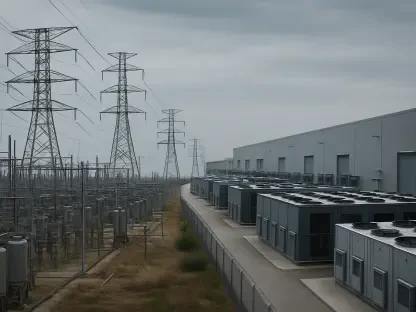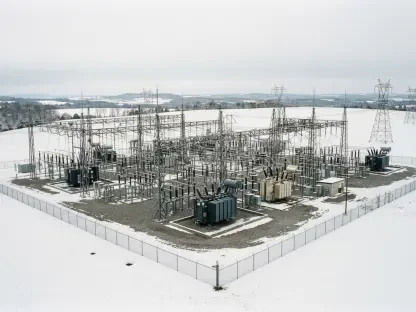

Critics argue that the revenue generated by massive corporate data centers has failed to provide the promised downward pressure on rates for average Georgia households. This specific concern has become the focal point of a historic shift in the state’s regulatory environment as the Georgia Public Service Commission enters a new era of governance. For the first time in thirty years, the Democratic Party has secured a majority on the five-member board, a transition that fundamentally alters the landscape of utility oversight. This body is responsible for regulating essential services like electricity and natural gas, impacting every resident and business across the region. The move away from decades of Republican control suggests a pivot toward more aggressive consumer protections and a re-evaluation of how large-scale infrastructure projects are funded. As Georgia navigates a period of rapid growth and high energy demand, the commission’s priorities are shifting toward ensuring that the benefits of this expansion are shared more equitably with everyday citizens.
Redefining the Regulatory Landscape
Part 1: Shifting Priorities Toward Consumer Advocacy
The election of Peter Hubbard and Shelia Edwards, who now join Alicia Johnson, has established a voting bloc that is openly committed to a consumer-first regulatory agenda. This newly formed majority has signaled an immediate intent to move away from the traditional framework that many advocacy groups labeled as overly accommodating to utility providers. By controlling the board, these officials are now positioned to demand greater accountability regarding capital expenditures and long-term service agreements. This shift is not just about political alignment; it represents a strategic decision to prioritize the public interest over the financial performance of utility shareholders. The commission’s mandate is being redefined to focus on the “energy burden” faced by low-income families and rural residents who have seen their monthly costs rise steadily. Supporters argue that thirty years of consistent leadership lacked the friction to keep corporate interests in check, whereas the current composition promises a more rigorous and investigative style of governance.
Part 2: Affordability Initiatives and Equitable Solutions
Central to this new regulatory philosophy is a focus on affordability, which Peter Hubbard has integrated into the commission’s agenda through a dedicated affordability docket. This initiative serves as a structured series of hearings and investigations into the various factors that contribute to high utility rates in the state. While the regulatory machinery is often criticized for its slow pace, the creation of this docket indicates a commitment to long-term systemic reform rather than temporary fixes. The commissioners intend to use their four-year window to initiate reviews that have been neglected for years, such as a comprehensive examination of natural gas pricing and infrastructure costs. Experts suggest that while immediate decreases in power bills are unlikely due to existing multi-year rate plans, the groundwork is being laid for a more transparent and equitable rate-making process. By scrutinizing everything from executive bonuses to advertising budgets, the commission aims to ensure that every dollar charged to a household is fully and clearly justified.
Managing Growth and Transparency
Part 3: Navigating the Technical Challenges of the Data Center Boom
Managing the sudden surge in energy-intensive data centers is perhaps the most significant technical challenge for the newly seated commissioners. The massive OpenAI facility being developed near Savannah highlights the scale of this industrial boom and its impact on the state’s power grid. Georgia Power has frequently argued that these high-revenue projects are vital because they help pay for the generation and transmission infrastructure that supports all customers. However, the theoretical downward pressure on residential rates that was promised by these developments has not yet materialized in a way that provides tangible relief to the average Georgian. The commission is now tasked with performing a deep financial audit of these corporate energy deals to determine if residential users are indirectly subsidizing the growth of these tech giants. There is a growing consensus among the majority that without strict oversight, the energy demands of artificial intelligence and cloud services could overwhelm the grid and lead to higher costs for those least able to afford them.
Part 4: Transparency Mandates and Corporate Confidentiality
The ongoing debate over transparency is deeply intertwined with these corporate energy agreements, as much of the relevant financial data is currently shielded as trade secrets. This level of confidentiality often leaves the public and independent auditors unable to verify the utility’s claims regarding the economic benefits of industrial expansion. The new Democratic majority has vowed to challenge these broad redactions and push for a more open reporting standard that allows for public scrutiny of service contracts and energy purchase agreements. Even the current chair, Jason Shaw, has admitted that the commission must improve its ability to compel utilities to disclose more detailed operational and financial information. By demanding a higher standard of transparency, the commission seeks to rebuild public trust that has been eroded by years of closed-door negotiations and redacted filings. This shift toward open data is a necessary precursor to any meaningful rate reform, as it allows for an accurate assessment of how corporate growth impacts the broader energy ecosystem.
Part 5: Establishing Scrutiny and Future Accountability
As the state prepared for the comprehensive rate-setting process scheduled for 2028, the commission implemented a higher level of scrutiny regarding long-term energy forecasts. The new majority challenged the traditional demand projections provided by the utilities, opting instead to employ independent analysis and historical data to verify the need for new infrastructure. This proactive approach aimed to prevent over-investment in expensive power plants that could lead to stranded assets and higher long-term costs for consumers. The board also focused on the integration of renewable energy and battery storage, seeking to diversify the state’s energy mix in a way that promoted stability and lowered costs. Southern Company, the parent firm of Georgia Power, expressed a general willingness to work with the new commission, but a clear ideological divide remained regarding the distribution of economic growth benefits. The commissioners ensured that energy planning centered on residential stability and efficiency rather than industrial throughput.
Part 6: Implementation Roadmap and Actionable Steps
Moving forward, the primary goal for stakeholders and policymakers involved the formalization of these transparency standards to ensure they remained a permanent feature of the regulatory landscape. One effective solution identified was the creation of a public-facing database that tracked utility expenditures and infrastructure investments in real time. This tool allowed for continuous monitoring by independent experts and simplified the public’s ability to engage with the rate-making process. Additionally, the commission prioritized the expansion of state-funded energy efficiency programs, which provided direct financial relief to households by reducing their total consumption. The focus also shifted toward the diversification of energy sources to mitigate the risks associated with volatile fuel prices and increasing industrial demand. By institutionalizing these proactive measures, the commission established a sustainable model for utility regulation that balanced economic development with affordable living. These steps kept the state’s energy infrastructure robust.