
Sunlight streaming across a cramped urban balcony is no longer just a backdrop for morning coffee but has become the fundamental fuel for a quiet technological insurgency that is currently rewriting the rules of the American electrical landscape. While a full-scale residential solar installation often demands a $20,000 commitment and a team of professional installers, a new wave of American homeowners is slashing their electric bills with nothing more than a $200 panel and a standard wall outlet. This shift toward “stealth solar” is transforming the energy landscape from the bottom up, proving that the transition to renewable power does not require a massive renovation or a high-interest loan. Across the country, “guerrilla solar” enthusiasts are bypassing traditional utility hurdles to claim energy independence on their own terms.
The emergence of these plug-and-play systems represents more than just a technological trend; it is a cultural pivot away from centralized utility control. For decades, the path to solar energy was gated by high entry costs and complex permitting processes that favored affluent homeowners with permanent property rights. Today, the availability of affordable, portable panels has shattered those barriers, allowing apartment dwellers and budget-conscious families to generate their own electricity. This movement thrives on the idea that energy production should be as accessible as any other household appliance, effectively democratizing a sector that was once the exclusive domain of large-scale infrastructure projects.
As the movement matures, it challenges the traditional relationship between consumers and power providers. By installing these small-scale systems, individuals are not just saving money; they are participating in a decentralized energy revolution that prioritizes local resilience over grid-scale dependency. This shift is particularly evident in urban centers where rooftop space is limited, yet sunlight remains an untapped resource. The rise of DIY solar signals a future where every sun-drenched surface, from a suburban porch to a high-rise balcony, contributes to the national power supply.
The $200 Entry Point to the Green Revolution
The primary allure of plug-in solar lies in its extreme affordability compared to traditional installations. For a few hundred dollars, a consumer can purchase a high-efficiency panel that provides immediate relief from climbing utility rates. This low barrier to entry has sparked a “green revolution” among demographics that were previously excluded from the renewable market. Instead of signing a twenty-year lease or taking out a massive loan, residents can now experiment with solar energy for the price of a mid-range smartphone. This accessibility is essential for expanding the reach of sustainable technology beyond the wealthy elite.
“Stealth solar” installations are characterized by their lack of permanence and their ease of deployment. Because these systems do not require drilling into roofs or complex rewiring of the home’s main electrical panel, they are often installed without the lengthy wait times associated with traditional contractors. This immediacy provides a psychological win for the consumer, who sees a reduction in their power meter’s speed almost instantly. This rapid gratification has turned energy efficiency from a distant goal into a tangible, daily reality for thousands of households across the United States.
Furthermore, the term “guerrilla solar” reflects a growing defiance against what many perceive as predatory utility pricing and stagnant innovation. By taking matters into their own hands, citizens are signaling that they are no longer willing to wait for slow-moving policy changes to address climate and economic concerns. This grassroots approach ensures that the benefits of the renewable transition are distributed more equitably. It empowers the individual to become an active producer rather than a passive consumer, fundamentally altering the power dynamics of the modern economy.
Why the “Guerrilla Solar” Movement Is Taking Root
The surge in DIY plug-in solar is a direct response to the widening gap between rising utility costs and the high barrier to entry for traditional solar arrays. For years, renters and low-to-middle-income families were effectively locked out of the renewable energy market due to property restrictions or prohibitive upfront costs. However, as economic pressures mount, the demand for portable, user-friendly energy solutions has skyrocketed. This movement connects the dots between individual financial necessity and the broader national push for a decentralized, sustainable power grid.
The movement also gains strength from the increasing frequency of grid instability and extreme weather events. As Americans witness more frequent blackouts and infrastructure failures, the desire for a localized backup power source has become a priority. Plug-in solar kits, often paired with small portable battery stations, offer a level of security that the centralized grid cannot guarantee. This focus on self-reliance resonates deeply with the American spirit of independence, particularly in regions where the traditional power infrastructure is aging and unreliable.
Moreover, the digital age has facilitated the spread of DIY knowledge, allowing enthusiasts to share installation tips and performance data through online forums and social media. This collective intelligence has demystified the technology, making it feel less like an experimental science project and more like a standard home improvement task. As more people document their success in lowering their carbon footprints and utility bills, the social proof continues to drive adoption rates higher. The movement is no longer a niche hobby but a mainstream response to a changing economic climate.
The Mechanics and Economics of Balcony Solar
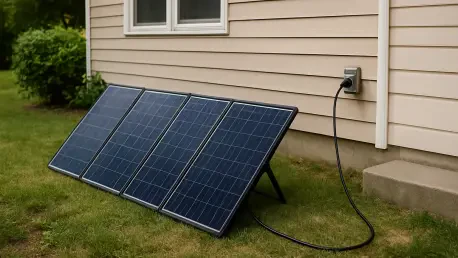
At its core, a plug-in solar system—frequently called “balcony solar”—consists of one or two panels paired with a microinverter. This hardware converts the Direct Current (DC) from sunlight into the Alternating Current (AC) used by household appliances. By simply plugging the unit into a 120-volt outlet, the electricity flows into the home’s internal wiring, powering devices and reducing the draw from the public grid without requiring a professional electrician. The simplicity of this design is what makes the technology so disruptive to traditional business models.
Unlike traditional rooftop systems that may take a decade to break even, small-scale plug-in kits offer a much faster return on investment. For many users, a modest $2,000 investment can shave $50 off a monthly bill, allowing the system to pay for itself in as little as three years. This democratization of energy allows those who do not own a roof or have significant capital to participate in the green transition. The financial math is becoming undeniable as panel prices continue to drop and electricity rates continue their steady climb.
The United States is increasingly looking toward Germany, where over 1.2 million balcony systems are already in operation. In the German market, purchasing a solar panel is as simple as buying a piece of furniture, with retailers like Ikea making the technology accessible to the general public. This international success serves as a proof of concept, demonstrating that streamlined regulations can lead to a 10% to 20% reduction in average household energy costs. Following this blueprint could allow the American market to bypass many of the growing pains experienced by early adopters in Europe.
Legislative Shifts and Expert Perspectives
The push for DIY solar has found unexpected allies across the political spectrum. In Utah, Republican State Representative Ray Ward successfully sponsored a bill to eliminate complex utility agreements for small plug-in systems. The movement appeals to the left as a climate solution and to the right as a matter of property rights and self-reliance, leading at least 28 states to currently evaluate similar legislative simplifications. This bipartisan consensus is rare in modern energy policy and suggests a strong future for the technology.
Critics, including utility companies and trade organizations, raise valid concerns regarding circuit overloading and “islanding,” which is the risk of a system feeding power back into a dead grid and endangering utility workers. To counter this, experts point to new certification frameworks from organizations like UL Solutions. Furthermore, innovative manufacturers are now engineering systems that prevent export to the grid entirely, effectively neutralizing the safety arguments used by regulatory opponents. These technical safeguards are essential for gaining the trust of skeptical inspectors and policy makers.
Safety experts also emphasize that the risk of a single-panel system is negligible compared to the larger electrical loads of common appliances like space heaters or air conditioners. By establishing clear standards for plug-in kits, regulators can ensure that the market grows safely without stifling innovation. The dialogue between manufacturers and utility commissions is currently evolving toward a middle ground that recognizes the utility of these systems while maintaining the integrity of the national grid. This cooperative approach is vital for the long-term viability of the DIY movement.
Practical Strategies for Adopting Plug-In Solar
Before investing in hardware, users must identify a “solar-rich” area, such as a south-facing balcony or a sunny patch of the backyard. Since these systems are portable, they do not require permanent mounting, making them ideal for renters who may need to take their “power plant” with them when they move. The flexibility of these units means that a tenant can enjoy the benefits of solar energy without needing the permission of a landlord to modify the building’s structure.
While states like Utah have clear laws, many Americans currently operate in a legal “gray area.” Prospective users should research local “interconnection agreements” but also look for products that are specifically designed to be “non-export” systems. These units consume all generated power within the home, which often bypasses the need for formal utility notification. Understanding the distinction between systems that push power back to the grid and those that keep it internal is crucial for staying within the bounds of local regulations.
Industry experts suggest starting small to gain “clean energy awareness.” By monitoring how much power a single panel produces, consumers become more attuned to their energy consumption patterns. This behavioral shift often serves as a gateway, leading individuals to advocate for larger community solar projects and more robust renewable energy policies in their local districts. Ultimately, the small plug-in panel is often just the first step in a much larger journey toward total energy independence and climate advocacy.
Moving toward a future where every household has the capability to generate its own power required a fundamental rethink of how energy was distributed and regulated across the country. Legislators recognized that the most effective way to accelerate the green transition was to lower the barriers for individual participation rather than relying solely on massive corporate projects. This shift encouraged manufacturers to prioritize safety and ease of use, leading to the development of systems that were as reliable as they were affordable. As these small-scale arrays became a common sight in neighborhoods, the national grid evolved into a more flexible and resilient network. The success of the plug-in solar movement demonstrated that meaningful change often started with a single, simple action taken at the local level. Consumers who began with one panel soon found themselves at the forefront of a sustainable revolution that reshaped the American economy. Looking ahead, the focus shifted toward integrating these millions of small power plants into a cohesive system that balanced individual freedom with collective stability.