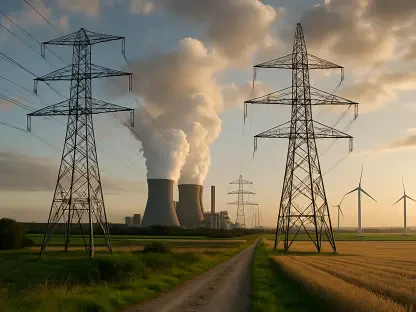

Today, we’re joined by Christopher Hailstone, a veteran expert in U.S. energy policy and utility regulation. With extensive experience in energy management and electricity delivery, he offers a crucial perspective on a growing conflict unfolding in the nation’s heartland. The Department of Energy is increasingly using emergency powers to force aging coal plants to delay retirement, citing grid reliability. But state regulators and consumer advocates are pushing back, questioning the financial and environmental costs. We’ll delve into the core of this issue, exploring the risks of the current ad-hoc cost recovery system, the debate over whether a true grid emergency exists, the staggering financial losses being incurred, and the long-term consequences these actions could have on our energy future.
State regulators are pushing for a formal stakeholder process to allocate costs for plants ordered to stay online, pointing to PJM’s approach as an example. What specific risks does the current ad-hoc system create, and what would a successful stakeholder-driven cost allocation process look like for MISO?
The current system is, frankly, a chaotic and unpredictable way to run a multi-billion dollar grid. Right now, when the DOE issues one of these 90-day orders, it triggers a mad scramble. A utility files for cost recovery with FERC, and costs end up getting spread across a huge, multi-state region with little to no formal input from the states and consumers who will ultimately pay the bill. The biggest risk is a complete breakdown of trust and transparency. Ratepayers in one state are suddenly on the hook for a power plant hundreds of miles away without any clear evidence that it’s benefiting them. A successful stakeholder-driven process, like the one PJM used for the Eddystone units, would be the exact opposite. It would be a transparent, deliberate forum where MISO, the states, utilities, and consumer groups could evaluate the actual reliability need and, if a need is proven, fairly assign costs to those who demonstrably benefit.
Environmental groups contend that MISO is not facing a true resource adequacy emergency. What specific grid data undermines the DOE’s emergency claim, and what clear, verifiable criteria should the department be required to meet before issuing such orders in the future?
This is the heart of the matter. The DOE is using the word “emergency,” but the data to back it up feels incredibly thin. Environmental groups, and frankly many state regulators, are asking a simple question: where is the fire? These filings argue that MISO has sufficient resources to maintain reliability without these specific aging units. The DOE’s orders often lack a detailed analysis showing that a specific plant’s retirement would directly lead to a system collapse. To restore confidence, the department must be held to a much higher, more transparent standard. Before issuing an order, they should be required to publish clear, verifiable data showing, for instance, that reserve margins will fall below a critical threshold or that a specific transmission zone will become unstable without that unit. There needs to be a clear trigger, not just a vague assertion of a “severe power shortage.”
Keeping these aging plants running is expensive, with one utility reporting an $80 million loss. Could you walk us through how these operational and maintenance costs are calculated and explain who ultimately bears the financial burden when costs are spread across a broad multi-state region?
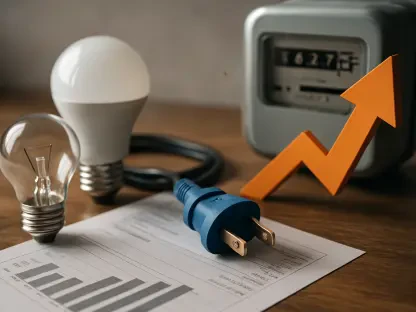
The costs are staggering, and they go far beyond just flipping a switch. When a plant is scheduled for retirement, the utility winds down its budget for maintenance, fuel, and staffing. An emergency order throws all of that into reverse. Suddenly, you have massive, unbudgeted expenses. Look at the numbers for the Indiana units—it’s at least $20.6 million just for the first 90 days, and that could balloon with another $34 million in maintenance if the orders are extended. The most visceral example is Consumers Energy, which reported an $80 million loss running its Campbell plant under these orders. The real kicker is who pays. Under the current FERC-approved approach, that $80 million loss doesn’t just hit Michigan; it’s socialized across MISO’s central and northern regions, an 11-state area. So, a small business owner in Illinois or a family in Wisconsin could see their electricity bills go up to cover the losses of a plant they have no connection to and from which they derive no clear benefit.
The Organization of MISO States warned that regionalizing costs without proven benefits could incentivize utilities to “cash in” on early plant retirements. How might this scenario play out, and what specific market rules or FERC actions could prevent such unintended consequences?
It creates a genuinely perverse incentive, and the states are right to be alarmed. Imagine you’re a utility with an old, uneconomic coal plant. Under normal market conditions, you’d be on the hook for the costs of running it or replacing it. But now, you see a potential escape hatch. You could announce an early retirement, knowing it might trigger a DOE emergency order. If FERC then allows you to spread all your operating costs and losses across the entire region, you’ve effectively “cashed in.” You’ve shifted a local financial problem onto the backs of 11 states. To prevent this, FERC needs to draw a hard line. It could, for example, rule that costs for these emergency orders can only be regionalized if MISO’s own independent planning processes first identify a clear, regional reliability need for the unit. Without that verification, the costs should remain with the utility and its local customers, preserving the market discipline that is supposed to guide these retirement decisions.
Regulators note these emergency orders are becoming “routine,” creating uncertainty. What are the long-term consequences for grid planning and investment signals if these 90-day extensions continue without a predictable framework for cost recovery and demonstrated reliability benefits?
The long-term consequences are deeply corrosive to the market. Grid planning operates on timelines of years, even decades. When “emergency” becomes “routine,” it injects a massive dose of uncertainty that poisons everything. How can a company confidently invest hundreds of millions of dollars in a new gas plant, wind farm, or transmission line when they have no idea if the federal government will suddenly intervene to keep an old, uneconomic competitor online indefinitely? It sends a chilling signal to investors that market fundamentals don’t matter as much as political intervention. This uncertainty delays the grid transition, props up aging, less efficient assets, and ultimately undermines the very reliability the DOE claims to be protecting by making the system more brittle and less adaptable in the long run.
What is your forecast for how FERC and MISO will ultimately resolve this cost allocation issue for emergency orders?
My forecast is that the status quo is unsustainable. The pressure from an organized and growing coalition of state regulators, like the Organization of MISO States, is becoming too significant for FERC to ignore. I don’t see FERC directly challenging the DOE’s authority to issue the orders, but I do expect them to be forced to act on the “who pays” question. The most logical path forward is for FERC to strongly encourage, or even direct, MISO to initiate a formal stakeholder process to create a clear, predictable, and fair cost allocation framework, much like what PJM has done. It won’t happen overnight, as it will involve contentious negotiations between states and utilities. But the alternative—a chaotic, case-by-case system that angers states and distorts the market—is simply not a viable long-term solution.