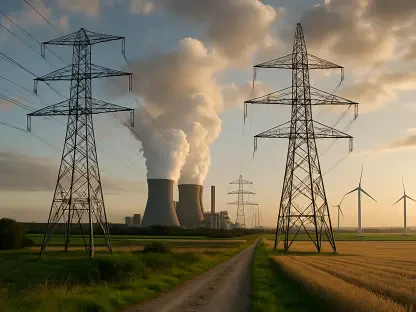

The escalating pressure from massive interconnection queues and the soaring energy demands of a rapidly electrifying economy has pushed the nation’s grid infrastructure to a critical inflection point. In response, the Federal Energy Regulatory Commission (FERC) is deploying a series of decisive, if temporary, measures designed to accelerate the deployment of new generation and bolster the stability of the power system. Recent commission actions, from approving specialized fast-track studies for grid operators to greenlighting major infrastructure projects, signal a concerted effort to address immediate reliability threats while paving the way for more durable, long-term reforms. This strategic push underscores the agency’s recognition that the slow, methodical processes of the past are no longer sufficient to keep pace with America’s dynamic energy needs.
Navigating America’s Evolving Energy Landscape
The United States currently faces a precarious situation regarding the reliability of its electric grid, with resource adequacy becoming a pressing national concern. The retirement of conventional power plants, coupled with the intermittent nature of new renewable resources and unprecedented load growth from data centers and industrial electrification, has created a widening gap between available supply and peak demand. This challenge has placed regulators, utilities, and developers in a difficult position, forcing them to find new ways to ensure the lights stay on during extreme weather events and periods of high consumption.
This complex environment involves a delicate interplay between key stakeholders. FERC, as the primary federal regulator, sets the market rules and oversees interstate transmission, providing the framework for how energy is generated and moved. Grid operators, such as the Midcontinent Independent System Operator (MISO) and the Southwest Power Pool (SPP), are responsible for the day-to-day management of the transmission system and for planning future resource needs. Meanwhile, project developers are on the front lines, navigating the financial and regulatory hurdles to build the new generation and storage facilities required to meet the country’s evolving energy appetite.
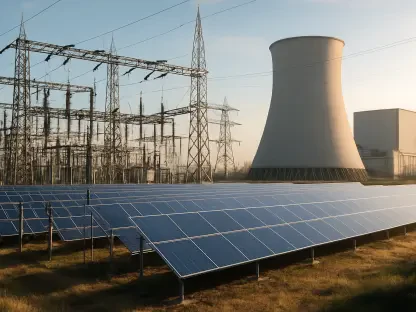
Successfully navigating this transition requires a balanced approach to technology. The modern grid is a mosaic of diverse energy sources, each with unique operational characteristics. Integrating vast amounts of wind and solar power necessitates complementary resources like battery storage and pumped-hydro storage to provide power when the sun is not shining or the wind is not blowing. Concurrently, natural gas infrastructure remains a critical component for providing firm, dispatchable power that can be called upon quickly to maintain grid stability, particularly as regions shift toward more stringent seasonal reliability standards.
The combination of aging infrastructure, shifting generation portfolios, and new demand patterns has created a clear regulatory imperative to modernize the nation’s energy system. Decades-old rules governing how new projects connect to the grid and how transmission is planned and paid for have become significant impediments to progress. FERC’s recent actions reflect an acknowledgment that incremental adjustments are no longer enough; foundational reforms are needed to create a regulatory environment that can support the development of a cleaner, more resilient, and reliable grid for the future.
Unpacking Key Market Drivers and Projections
Generation Backlogs and Surging Demand: The New Grid Reality
A primary catalyst for FERC’s recent focus on accelerated pathways is the ongoing interconnection queue crisis. Across the country, thousands of gigawatts of proposed generation projects, primarily solar, wind, and storage, are stuck in long waiting lines to be studied and approved for connection to the transmission system. These backlogs, which can stretch for years, delay the deployment of needed resources, create investment uncertainty for developers, and ultimately threaten the ability of grid operators to meet future energy needs. This logjam has made it clear that the standard interconnection process is ill-equipped to handle the volume and pace of the modern energy transition.
Compounding the supply-side challenge is the unprecedented surge in demand from large-scale loads. The rapid growth of data centers, cryptocurrency mining operations, and advanced manufacturing facilities is placing immense strain on regional grids that were not designed for such concentrated and energy-intensive consumption. In response, grid operators like SPP are developing innovative solutions, such as dedicated assessment pathways for large loads, to connect these new customers with new, dedicated power supplies more efficiently. This approach attempts to solve the demand problem without further burdening the already-clogged general interconnection queue.
These market dynamics are also forcing a fundamental rethinking of how resource adequacy is measured. Grid operators are moving away from traditional models based on a single summer peak demand and are instead adopting seasonal or even monthly frameworks to ensure sufficiency year-round. MISO’s transition to seasonal resource adequacy requirements, for instance, has highlighted the need for generation sources that can perform reliably during extreme winter weather. This shift creates a stronger business case for resources like natural gas pipelines that can provide flexible and dependable fuel access to power plants when they are needed most.
Quantifying the Reliability Gap: Key Projects and Figures
The scale of FERC’s intervention is significant, with approximately 51.6 gigawatts of planned generation currently moving through the expedited processes approved for MISO and SPP. This volume represents a substantial injection of new capacity intended to bridge the immediate resource adequacy gap while longer-term reforms take root. These fast-track systems are designed specifically for “shovel-ready” projects that have demonstrated a higher degree of commercial viability, ensuring that the resources being prioritized have the greatest chance of coming online quickly to serve consumers.
Two recently approved projects serve as powerful illustrations of the commission’s multi-technology approach to reliability. The approval of the 1.2-gigawatt Goldendale Pumped Storage Project in Washington—the first of its kind in over a decade—provides a long-duration energy storage solution essential for integrating intermittent renewables. By storing excess energy for up to 12 hours, the facility can provide a massive reserve of power to stabilize the grid. In parallel, the approval of the $902-million ANR Heartland natural gas pipeline expansion will enhance fuel security for power plants in the Midwest, a critical need identified by MISO to meet its higher winter reserve margins.
Looking forward, these strategic approvals signal a clear policy direction aimed at meeting projected energy demands through a balanced portfolio of resources. The commission’s actions demonstrate an understanding that there is no single solution to the grid reliability challenge. Instead, the future grid will rely on a combination of variable renewables, fast-responding storage, and dispatchable thermal generation. By facilitating the development of critical infrastructure across these technology classes, FERC is attempting to create a more resilient and flexible energy system capable of withstanding the pressures of the coming years.
Confronting Systemic Hurdles and Bottlenecks
While expedited interconnection studies provide a necessary near-term solution, regulators openly acknowledge that they are “stopgaps” rather than a permanent fix. These temporary pathways do not address the underlying causes of the interconnection logjam, which stem from outdated processes, a lack of automation, and insufficient staffing at both the commission and grid operator levels. The risk is that once these one-time studies are complete, the standard queues will remain overwhelmed, perpetuating the cycle of delays for the next wave of projects seeking to connect to the grid.
Commissioner Judy Chang has highlighted what many industry experts consider the ultimate bottleneck: the lack of sufficient transmission capacity to integrate new generation. Even if a project completes its interconnection study in record time, it cannot come online if the physical power lines needed to carry its electricity to customers do not exist. The process for planning, permitting, and building new high-voltage transmission lines is notoriously slow and complex, often taking a decade or more. Without robust and proactive transmission planning reform, accelerating interconnection studies alone will simply move the bottleneck further down the road.
The path to building new energy infrastructure is also fraught with legal and permitting challenges. The expedited interconnection processes for MISO and SPP already face federal lawsuits from public interest groups concerned about fairness and market impacts. Similarly, the seven-year permitting journey for the Goldendale pumped storage project, which involved numerous federal and state reviews, underscores the administrative hurdles that can delay even critically needed projects. These challenges highlight the need for regulatory processes that are not only efficient but also legally durable and capable of withstanding scrutiny.
Amid the push for speed, there remains a critical need to balance efficiency with fairness. The creation of special fast-track queues has raised concerns that it provides an unfair competitive advantage to a select group of projects, leaving others to languish in the backlogged standard process. Regulators must therefore ensure that any expedited pathway is implemented transparently and that cost responsibility for associated grid upgrades is allocated equitably. Protecting consumers from bearing an undue share of the costs of grid expansion remains a core tenet of the regulatory mission.
FERC’s Regulatory Toolkit: From Temporary Fixes to Foundational Reforms
At the heart of the commission’s immediate strategy are the expedited pathways developed by MISO and SPP. These studies represent a significant departure from the standard process, offering a much faster timeline—approximately 90 days for MISO and six months for SPP. To qualify, projects must meet stricter criteria, including making larger milestone payments and posting greater financial security, a mechanism designed to weed out speculative projects and prioritize those with a high likelihood of reaching commercial operation. This targeted approach aims to deliver tangible results on an accelerated schedule.
These temporary fixes are intended to serve as a bridge to the more comprehensive, long-term reforms mandated under FERC Order 2023. This landmark rule overhauls the standard generator interconnection process by implementing a “first-ready, first-served” cluster study approach, imposing firm deadlines for completing studies, and establishing stricter commercial readiness requirements for all projects entering the queue. The ultimate goal of this foundational reform is to clear the existing backlog and create a more efficient, predictable, and fair process for connecting new resources for years to come.
The commission is also using its direct approval authority to advance critical infrastructure that supports grid reliability. The decisions to greenlight the Goldendale pumped storage facility and the ANR Heartland gas pipeline are practical applications of FERC’s policy goals. These approvals send a clear market signal that the commission is committed to an “all-of-the-above” strategy, recognizing the complementary roles that long-duration storage and flexible natural gas infrastructure play in supporting a changing grid.
Internally, FERC is shifting its policy posture to better uphold existing market rules and enhance regulatory discipline. Chairman Laura Swett has signaled an intent to more closely scrutinize requests for waivers from agency-approved tariffs, arguing that the commission has been “overly generous” in the past. This stricter approach is intended to prevent market participants from using waivers to circumvent rules or correct self-inflicted errors, particularly within the interconnection process. This internal policy shift aims to reinforce the integrity of the market rules and ensure that exceptions are rare and well-justified.
Forging the Future Grid: Policy Shifts and Long-Term Strategies
A significant operational shift at FERC that signals a renewed agency focus is the active recruitment of new staff. Following a hiring freeze, the commission is now seeking to bring on new attorneys, engineers, and other experts to bolster its capacity to handle a growing and increasingly complex workload. This infusion of talent is essential for effectively implementing major reforms like Order 2023, reducing backlogs in case processing, and providing the rigorous analysis needed to oversee the nation’s evolving energy markets.
Beyond immediate fixes, there is a clear push toward innovation to solve the interconnection puzzle. Commissioners have pointed to the potential for automation to streamline the study process, reducing manual work and accelerating timelines. Concurrently, creative solutions like SPP’s dedicated assessment for large industrial loads provide a model for how to manage new sources of demand without exacerbating existing gridlock. These forward-looking approaches are crucial for developing a regulatory framework that can adapt to rapid technological change and new market dynamics.
Ultimately, the long-term success of these efforts hinges on a more holistic approach to transmission planning. The current generator-led, “connect-and-manage” approach is inefficient and often results in piecemeal upgrades. A paradigm shift toward proactive, long-range regional transmission planning is needed to build out the high-capacity backbone grid required to unlock the full potential of the nation’s renewable resources. This would involve identifying the most beneficial corridors for new lines based on future generation patterns and demand growth, rather than reacting to individual interconnection requests.
As the grid expands, ensuring that costs are allocated fairly will be paramount to protecting consumers. The development of new transmission lines and other grid infrastructure involves substantial investment, and determining who pays for these upgrades is a contentious issue. Regulators must develop clear and equitable cost allocation methodologies that ensure the beneficiaries of new infrastructure pay their fair share, preventing consumers in one area from shouldering the costs of projects that primarily benefit others. This balance is critical for maintaining public support for necessary grid modernization.
A Multi-Pronged Strategy for a Reliable Energy Future
The Federal Energy Regulatory Commission’s recent actions synthesized a clear, multi-pronged strategy for managing the nation’s energy transition. By approving expedited interconnection pathways, the commission directly addressed the immediate threat that generation backlogs posed to resource adequacy. Simultaneously, its approval of both a major pumped storage facility and a critical natural gas pipeline demonstrated a commitment to a technology-neutral approach, prioritizing reliability above all else. These decisions were not made in a vacuum but were framed as necessary precursors to the more fundamental, long-term reforms embodied in Order 2023.
This approach revealed the dual imperative facing regulators: they had to take decisive action to solve the urgent problems of today while simultaneously building the foundation for a more resilient grid for tomorrow. The fast-track processes were explicitly labeled as temporary measures, a bridge to a future where a reformed and more efficient standard interconnection process could manage the flow of new resources. This balance between immediate intervention and foundational change defined the commission’s strategic direction.
A key takeaway from the commission’s discussions was the widespread acknowledgment that transmission reform is the ultimate linchpin for future grid success. Commissioners recognized that no amount of interconnection process improvement could overcome the physical limitations of an inadequate transmission system. This placed a sharp focus on the need for proactive, long-range transmission planning as the next critical frontier in energy policy, without which the nation’s clean energy goals and reliability needs could not be met.
Ultimately, the series of approvals and policy announcements created a more defined regulatory environment, offering greater clarity for investors and developers. By signaling a willingness to use its authority to break through bottlenecks and facilitate the construction of needed infrastructure, FERC’s actions established a framework that could foster increased investment and growth. The combination of short-term relief and long-term vision provided a roadmap for navigating the complexities of modernizing America’s power grid.