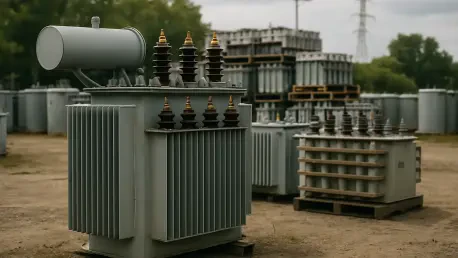

The relentless expansion of AI infrastructure, data centers, and renewable energy projects has ignited an unprecedented demand for electricity, yet this technological surge is being throttled by a critical and often-overlooked shortage of essential components. The scarcity of medium-voltage (MV) transformers has emerged as a primary bottleneck, causing significant delays in the development of new power capacity and threatening to impede national progress in these vital sectors. In a decisive move to address this vulnerability, Giga Energy, a U.S.-based manufacturer of power infrastructure, has announced the opening of a new 60,000-square-foot factory in Houston, Texas. This facility is singularly focused on revitalizing the domestic production of these essential components, aiming to drastically shorten lead times and fortify the nation’s energy grid against persistent supply chain disruptions. The initiative represents a substantial investment in American manufacturing and a direct, strategic response to the urgent needs of the country’s most innovative and power-hungry industries.
A Strategic Response to a National Bottleneck
The new Houston facility is far more than a simple expansion; it is a major industrial undertaking designed to directly confront a national infrastructure crisis, with production slated to begin in the first quarter of 2026. Giga Energy has set ambitious targets for the plant, projecting a scaled output of over 3,000 MV transformer units annually. This production volume is equivalent to an impressive 15 gigawatts of power per year, a substantial contribution toward satisfying the voracious energy appetites of modern data processing and green energy initiatives. Beyond its impact on the power grid, the plant’s establishment will deliver a significant local economic boost, initially creating 25 new jobs. As production ramps up to full capacity, this figure is expected to grow to nearly 100 skilled manufacturing roles, fostering sustainable job growth in the Houston area. This expansion is a calculated maneuver to onshore critical infrastructure manufacturing, insulating key American industries from the lengthy lead times and geopolitical uncertainties that have plagued a supply chain heavily reliant on overseas producers for far too long.
Advanced Manufacturing and Supply Chain Control
Central to the new facility’s operational strategy is the integration of advanced manufacturing technology engineered to optimize both product quality and production speed. A prime example of this commitment to innovation is the implementation of a state-of-the-art terahertz drying oven. This cutting-edge equipment dramatically accelerates the moisture removal process during production, a traditionally time-consuming but critical step in ensuring transformer longevity and performance. The result is not only a faster overall production cycle but also a higher degree of consistency and reliability in the final product. By establishing this U.S. manufacturing base, Giga Energy gains invaluable end-to-end control over its entire supply chain. This vertical integration provides a crucial advantage, allowing the company to meticulously oversee every stage of production, from sourcing raw materials to final assembly and quality assurance. CEO Matt Lohstroh emphasized that this facility is a milestone in the company’s mission to merge sophisticated technology with American industrial capability to solve the nation’s most pressing infrastructure challenges while supporting local economies.
Forging a Resilient Energy Future
The announcement of Giga Energy’s Houston factory marked a pivotal moment in the concerted effort to reinforce America’s power infrastructure. This strategic initiative went beyond simply increasing the supply of a critical component; it established a powerful precedent for reshoring essential manufacturing and directly confronting the systemic vulnerabilities exposed by years of dependence on fragile global supply chains. By investing decisively in domestic production capabilities, the company not only addressed an immediate and pressing bottleneck but also laid the foundational groundwork for a more self-reliant and resilient national grid. The project was immediately recognized as a critical enabler for the future of high-growth industries, which are fundamentally dependent on a stable and readily expandable power supply. The integration of advanced manufacturing demonstrated a profound commitment to innovation that promised to elevate the standards of American industrial output for years to come, positioning this expansion as a cornerstone of the nation’s long-term energy security and technological leadership.