
The energy transition is often framed as a battle between old and new, but the reality of 2026 demands a more nuanced partnership. Christopher Hailstone, a seasoned expert in energy management and grid security, argues that our reliance on natural gas peakers as a singular safety net is becoming a primary liability. With decades of experience in navigating the mechanical and digital complexities of electricity delivery, he advocates for a foundational shift toward standalone energy storage. By examining the physics of frequency stability, the degradation of mechanical assets, and the rise of grid-forming technologies, Hailstone provides a roadmap for a resilient, modern grid that balances the digital speed of batteries with the endurance of gas.
Frequency instability often triggers protection trips long before an actual energy shortage occurs. How does the sub-second response of power electronics compare to the physical inertia of mechanical turbines, and what specific metrics define success during those first ten minutes of a grid event?
In the high-stakes environment of grid operations, ten minutes is an eternity that can determine whether a city stays powered or falls into a cascade of automated protection trips. Traditional gas turbines are mechanical behemoths; even the most advanced aero-derivative “fast-start” plants still require several minutes just to synchronize and begin their ramp. Success in those first ten minutes is defined by the speed of power injection to catch a decaying frequency before it hits critical thresholds. Standalone battery energy storage systems operate at the speed of power electronics, providing a sub-second response that acts like a safety net for the grid’s pulse. While a gas peaker is still lifting its shield, a battery has already stabilized the system, ensuring that a minor transmission fault doesn’t spiral into a regional blackout.
Using gas assets for short-term, “twitchy” balancing often results in abysmal heat rates and accelerated component wear. What are the specific maintenance trade-offs when forcing turbines to handle high-frequency fluctuations, and how does a “bridge then backstop” strategy technically mitigate these operational costs?
When we force massive gas turbines to handle “spiky” peaks that last only 15 minutes, we are essentially using a marathon runner to do the job of a sprinter, which leads to incredibly inefficient heat rates and excessive fuel burn. This “twitchy” work is punishing for the turbine’s hot-gas-path components, racking up significant maintenance costs and shortening the lifespan of the asset. We advocate for a “bridge then backstop” strategy where batteries handle the rapid, high-frequency shocks that the grid faces throughout the day. This allows the gas fleet to remain offline until it is truly needed for sustained, multi-hour endurance, ensuring these plants run at their optimal heat rate when they finally do engage. By letting batteries take the “wear and tear” of frequency regulation, we actually preserve the mechanical integrity of our existing gas infrastructure.
As traditional plants with spinning rotors retire, the grid loses its natural heartbeat and system strength. How do grid-forming inverters provide synthetic inertia to stabilize weak substations, and what are the technical steps required to transition a project from “grid-following” to acting as a primary voltage source?
The loss of system strength is a silent crisis; traditional plants provided a natural “shock absorber” through the physical inertia of their spinning rotors. Most existing renewable inverters are “grid-following,” meaning they simply listen to the grid’s pulse and follow along, which becomes dangerous as those traditional rotors retire. Advanced standalone storage projects are now being equipped with grid-forming inverters that act as a primary voltage source rather than a follower. These systems use sophisticated software to provide “synthetic inertia,” electronically mimicking the response of a spinning turbine to keep voltage firm in weak parts of the grid. Transitioning to this model requires moving beyond simple energy delivery to providing essential reliability services that can hold a network together even when local generation is sparse.
Standalone storage projects are frequently sited in congested urban load pockets to capture revenue from frequency control and energy arbitrage. How do these locations provide a higher effective load-carrying capability than distant gas plants, and what does a sophisticated revenue stack look like over a project’s lifecycle?
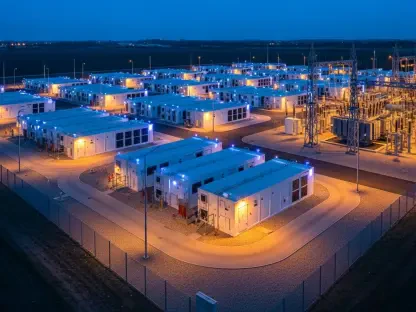
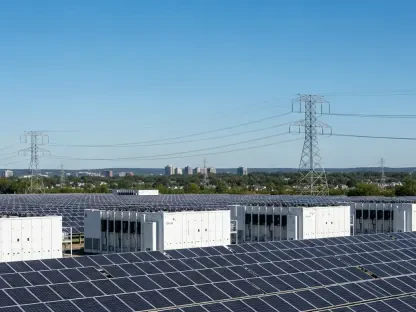
Siting is a massive advantage for standalone storage because these units can be placed directly within congested urban load pockets or near weak substations where space is at a premium. Because they are located closer to the actual demand, they often possess a higher Effective Load Carrying Capability than a distant gas plant, which might find its power blocked by transmission congestion during a heatwave or storm. A sophisticated revenue stack for these projects involves more than just buying low and selling high; it includes high-margin ancillary services like regulation up/down in markets like ERCOT or CAISO. Furthermore, they capture value through capacity markets, where operators pay for the mere guarantee of availability, and energy arbitrage by flattening the “duck curve,” moving peak solar production into the high-priced evening hours.
Reliability now depends on balancing the digital speed of batteries with the long-duration endurance of the gas fleet. How should operators restructure their portfolios to ensure these resources complement rather than compete with one another, and what are the consequences of failing to modernize this approach by 2026?
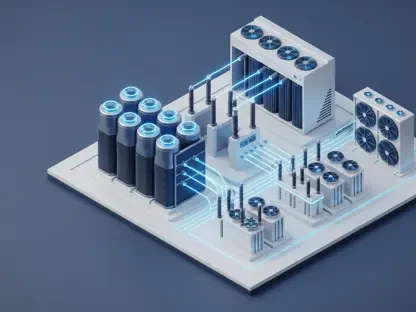
Operators must stop viewing storage and gas as competitors and instead see them as a symbiotic pair: the sprinter and the marathon runner. A modernized portfolio uses the digital reliability of storage to protect the mechanical reliability of the gas fleet, ensuring each asset is utilized for its core strength. If we fail to restructure our portfolios by 2026, we risk operating a grid that is fundamentally fragile and prone to cascading failures despite having “enough” generation on paper. The consequence of sticking to an outdated, gas-only strategy is a system that is not only more expensive to maintain but also less capable of handling the volatile frequency shifts of a high-renewables world. We must build a system where batteries catch the initial fall so that gas can provide the long-term support.
What is your forecast for the modern grid?
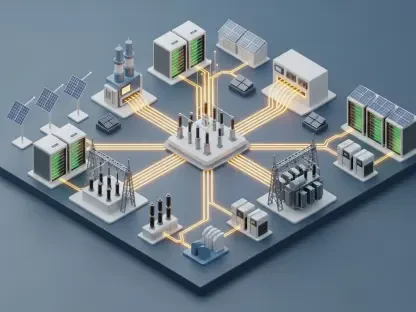
My forecast is that the grid of the near future will transition from a “fuel-contingent” system to a “response-contingent” system. We will see a massive rollout of standalone storage not just for energy, but as the primary provider of grid stability services that were once the byproduct of coal and gas. By 2026 and beyond, the most successful utilities will be those that have decoupled frequency regulation from thermal generation, allowing their gas assets to serve as rare but essential long-duration backstops. This shift will stabilize energy prices and significantly reduce the operational strain on our aging infrastructure. Ultimately, the grid will become a high-speed digital network that uses the “software” of batteries to manage the “hardware” of the rotating fleet.