
Christopher Hailstone has spent decades at the intersection of energy management and infrastructure modernization, witnessing firsthand the evolution of how we power our world. As a seasoned utilities expert, he has navigated the complexities of grid reliability and the shifting landscape of renewable energy integration. His deep understanding of federal regulatory frameworks and the technical demands of high-capacity electricity delivery makes him a vital voice in the conversation about the future of the American power grid. Today, we explore the legislative maneuvers and technical innovations that could redefine the relationship between fossil fuels and clean energy.
Proposed reforms seek to prevent gas-fired power plants from jumping ahead in interconnection queues. How would ending this fast-track access impact grid reliability, and what specific technical hurdles must be overcome to prioritize renewable projects without compromising immediate energy demands?
Ending the practice of allowing gas-fired plants to jump the queue is a fundamental shift toward a level playing field, but it requires a sophisticated balancing act. When we stop fast-tracking these projects, we reduce the artificial advantage given to fossil fuels, yet we must ensure that the renewable projects replacing them can meet instantaneous load demands. The technical hurdle lies in the “interconnection bottleneck,” where hundreds of projects sit waiting for studies that determine their impact on the system. To maintain reliability, we need to move away from a “first-come, first-served” model to one that prioritizes projects based on their readiness and regional benefit. This ensures that when a gas plant loses its priority status, there is a diverse mix of wind, solar, and storage ready to fill that 24/7 reliability gap without causing localized blackouts.
Federal agencies are looking to restore clean energy tax credits and grants previously eliminated from the budget. How would a 30% investment tax credit for advanced transmission conductors change long-term infrastructure planning, and what metrics would define a successful rollout for these high-capacity projects?
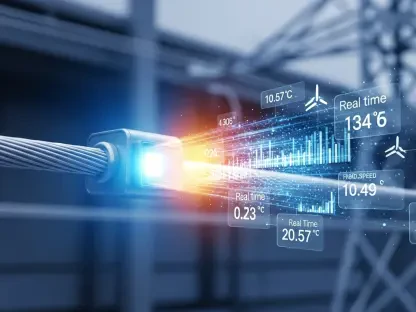
A 30% investment tax credit for advanced transmission conductors is a massive financial catalyst that shifts the math for utility planners. Currently, many utilities stick to traditional aluminum conductors because they are familiar, even if they are less efficient. With this credit, planners can justify the higher upfront costs of advanced conductors or superconducting lines that move significantly more power over the same footprint. Success for these projects will be measured by two primary metrics: the reduction in line losses and the increase in interregional transfer capacity. If we can see a measurable drop in the “congestion costs” that consumers pay when power can’t get from where it’s made to where it’s needed, we will know these high-capacity investments are working.
New standards would require liquefied natural gas export approvals to account for domestic price volatility and environmental impacts on vulnerable communities. How should regulators weigh these economic factors against global energy demands, and what specific data points are needed to prove a project won’t burden local consumers?
Regulators are being asked to move beyond a narrow view of energy as a commodity and see it as a social and economic driver. We have to weigh the global demand for gas against the very real risk of price spikes for American families, especially since domestic prices are increasingly tied to global markets. To prove a project is safe for consumers, regulators need rigorous data on “material price volatility” and long-term domestic supply forecasts. They also need granular health impact assessments for rural and minority communities living near these export terminals. It is no longer enough to show a project is profitable; the Department of Energy must now prove that exporting our energy doesn’t come at the expense of a low-income family’s ability to pay their heating bill.
Expanding the power grid often involves giving federal agencies exclusive siting authority for lines crossing multiple states. What are the practical challenges of bypassing local jurisdictions for 1-GW lines, and how would this shift accelerate the deployment of advanced transmission technologies?
The primary challenge of federal siting authority is the inevitable friction with state sovereignty and local land rights, which can stall projects for a decade or more. When you are talking about a 1-GW line that crosses at least two states, you are dealing with thousands of individual stakeholders, each with different concerns. However, giving FERC exclusive siting authority for these “national interest” lines removes the patchwork of conflicting state approvals that often kills large-scale projects. This streamlined process encourages the use of advanced technologies because it provides a more certain timeline for developers. Instead of spending ten years in litigation, they can focus on deploying superconducting lines that carry 750 MW or more, finally connecting remote wind farms to distant urban centers.
Independent transmission monitors have been suggested to increase transparency in how regional grid operators deploy new facilities. How would these monitors alter the current stakeholder participation process, and what step-by-step reforms are necessary to ensure utility commissions have the staff to evaluate these complex integrated resource plans?
Independent transmission monitors would act as a neutral “third eye,” ensuring that grid operators aren’t just building the most expensive projects to pad their bottom lines, but are choosing the most cost-effective solutions for the public. This changes stakeholder participation by providing advocates and state regulators with unbiased data that they currently struggle to get from the utilities themselves. To make this work, we need a step-by-step reform that starts with federal grants for state utility commissions to hire specialized technical staff. These commissions are often outgunned by the massive legal and engineering teams of the utilities; by funding the hiring of “critically needed staff,” we ensure that when a utility presents a complex Integrated Resource Plan, the state has the expertise to challenge assumptions and protect ratepayer interests.
Some policies aim to stop the use of “emergency” declarations to keep fossil-fueled plants from retiring. If these declarations are restricted, what specific operational strategies must grid operators adopt to maintain stability, and how does this change the financial outlook for aging coal and gas infrastructure?
Restricting “emergency” declarations forces a moment of truth for the grid: we can no longer rely on aging, dirty plants as a permanent crutch. Grid operators will have to adopt more aggressive demand-response strategies and “non-wires” alternatives, such as large-scale battery storage, to manage peak loads. This shift drastically worsens the financial outlook for aging coal and gas plants, as they will no longer be able to count on guaranteed revenue from these emergency extensions. Instead of being subsidized to stay open, these facilities will have to face the reality of their high operating costs. This creates a powerful market signal that it is time to decommission the old and invest in the new, moving the grid toward a more dynamic, flexible future.
What is your forecast for the future of federal transmission governance and the transition to a decentralized clean energy grid?
My forecast is that we are entering an era of “managed decentralization,” where federal oversight will actually increase to facilitate a more local, clean energy mix. While the grid will become more decentralized with rooftop solar and local storage, the “backbone” of the system will require more centralized federal authority to move massive amounts of renewable power across state lines. We will see a shift where FERC becomes much more involved in local siting and regional planning than ever before. This will eventually lead to a more resilient system where high-voltage “superhighways” link together local microgrids, creating a network that is both more reliable and significantly cheaper for the average consumer as we phase out the volatility of fossil fuel markets.