
The debate over the true nature of the current artificial intelligence boom often centers on a critical question: is it a speculative bubble inflated by hype, or is it a tangible investment in our collective future? A definitive answer has emerged from one of the industry’s central figures, NVIDIA founder Jensen Huang, who reframed the entire conversation by declaring that AI represents the largest and most significant infrastructure project in human history. This perspective shifts the focus away from the ethereal world of algorithms and software to the concrete, physical reality of construction, energy grids, and global supply chains. To illustrate this point, a five-layer model of the AI ecosystem has been proposed, revealing a hierarchy that begins with raw energy and culminates in real-world applications. This framework clarifies that while public attention has been fixated on the development of AI models, the true revolution is happening in the foundational construction of the first three layers—Energy, Chips, and Cloud Services—and the explosive growth of the final layer, Applications. This is not a distant forecast; it is a present-day reality, demanding immense capital, vast amounts of power, and a new generation of skilled labor.
The Physical Foundation of the AI Revolution
The Primacy of Energy
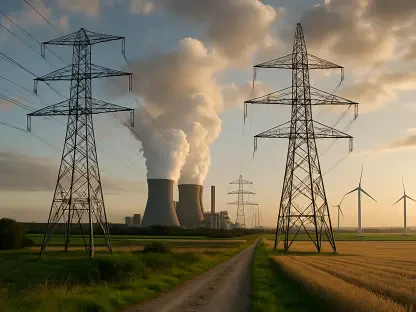
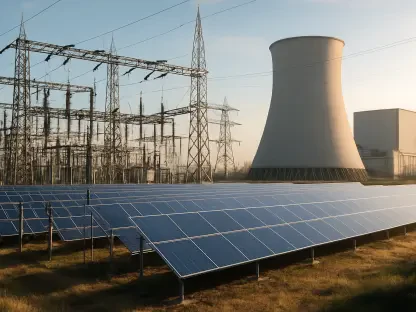
Long before a single line of code is written or a specialized processor is manufactured, the AI revolution draws its power from the most fundamental resource of the modern world: electricity. The recent global scramble for computing power was immediately preceded by a less visible but equally intense rush to secure long-term energy contracts, a market dynamic that has caused electricity prices to soar in key regions. This trend is not an incidental byproduct but a crucial indicator that the demands of AI are deeply rooted in the physical world. Energy is the true Layer One, the non-negotiable starting point upon which the entire intelligent infrastructure is built. The process of generating intelligence in real-time is an inherently energy-intensive activity. Without a stable, sufficient, and continuous supply of power, the most advanced algorithms and sophisticated silicon chips are rendered completely inert, becoming little more than expensive monuments to unrealized potential.
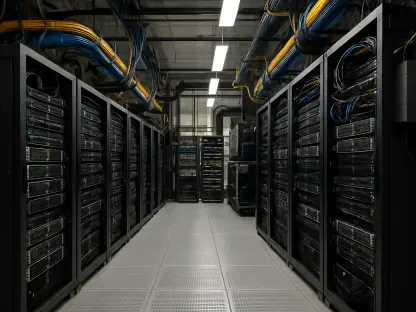
The type of power required to operate modern data centers is fundamentally different from the electricity that services homes and traditional businesses. AI infrastructure demands a highly specialized energy profile characterized by extreme power density to support racks of high-performance servers, low-latency delivery to prevent computational interruptions, and an unwavering, uninterrupted supply to maintain 24/7/365 operations. Fulfilling these requirements necessitates the construction of an entirely new energy supply ecosystem. It is no longer a simple matter of connecting a new facility to the existing grid. Today, builders of AI infrastructure must conduct exhaustive assessments of a region’s grid capacity, the stability of its power generation sources, the adequacy of its energy storage solutions to manage peak loads, and the resilience of its distribution networks to withstand relentless high demand. Consequently, from North America to Southeast Asia, the most critical initial phase of any new AI development is a thorough evaluation of electricity availability, making the act of securing power the first and most vital step toward building an intelligent future.
The Global Wave of Factory Construction
The most tangible evidence of this monumental infrastructure project can be seen in the global proliferation of what are now being called “AI factories.” This term is not merely a clever metaphor but a literal description of a worldwide construction boom dedicated to building the physical hardware that underpins artificial intelligence. The scale of this effort is staggering, with industry titans orchestrating a build-out of the hardware supply chain at a breathtaking pace. Semiconductor giant TSMC, a critical lynchpin in the global tech ecosystem, is constructing 20 new fabrication plants across the globe to produce the specialized chips AI requires. Simultaneously, major contract manufacturers like Quanta, Wistron, and Foxconn are erecting 30 new factories designed specifically to assemble the high-performance AI servers and computer systems that will populate the world’s data centers. Recognizing that advanced AI models require vast and rapid access to data, memory producers are also making colossal investments, with Micron announcing a $200 billion plan for memory production, a move mirrored by significant capital expenditure increases from competitors Samsung and SK Hynix.
This coordinated, multi-billion-dollar effort is methodically constructing the complete hardware stack required for modern AI: advanced chips for computation, high-speed memory for data storage, and the computer factories to assemble these components into functional servers. This wave of construction draws powerful parallels to the foundational infrastructure projects of past eras, such as the development of the steel industry, the electrification of nations, and the building of transcontinental railways. In each historical case, the initial and most capital-intensive phase involved building the factories and physical systems that subsequently enabled the birth of entirely new industries and economic paradigms. The “AI factory” is no longer an abstract concept but a concrete reality, with visible progress in construction sites, recruitment drives, and production output. With hundreds of billions of dollars already invested and estimates suggesting trillions more will be required to complete this infrastructural build-out, it is clear this is a fundamental global economic shift, not a transient, speculative hype cycle.
Reorienting the AI Value Chain
Models as a Component, Not the Centerpiece
For several years, the technology industry and the public narrative surrounding it have been overwhelmingly fixated on the performance and scale of AI models. Conversations have been dominated by metrics like parameter counts, training data size, and leadership on competitive benchmarks. However, the five-layer framework for understanding AI decisively repositions models as just one component—the fourth layer—within a much larger and more complex structure. An AI model, in isolation, has limited intrinsic value. A useful analogy is that of a high-performance engine displayed on a stand in a showroom; it may be a marvel of precision engineering, but it remains functionally useless without the chassis, fuel system, wheels, and driver necessary to transform it into a vehicle. Similarly, an AI model’s potential can only be unlocked when it is integrated into a robust infrastructure of energy, hardware, and cloud services and deployed to solve a specific problem.
This recontextualization signals a crucial and industry-wide shift in focus, moving beyond a narrow obsession with model quality toward a broader understanding of operational deployment. The central challenge facing the industry is no longer simply building a more powerful model but developing the capacity to effectively integrate these models into the broader infrastructure and apply them to real-world challenges. The conversation is rapidly evolving from “Whose model is the most powerful?” to the more practical and value-oriented question, “Who can effectively operationalize AI to deliver tangible outcomes?” A model only begins to generate economic value when it is put into practice within the top layer of the stack: applications. It is this application layer—powering innovations in fields like healthcare, finance, and manufacturing—that directly benefits industries, enhances productivity, and stimulates genuine economic growth, making it the ultimate destination for the entire infrastructure being built beneath it.
The Cambrian Explosion of AI-Native Companies
The ultimate validation of this massive infrastructure investment is found in the rapid emergence and proliferation of “AI-native companies.” These new enterprises, defined by their foundational use of AI, are attracting record-breaking levels of venture capital investment. Unlike the tech giants that build their own foundational models, these companies leverage existing models to completely re-engineer business processes and create novel products and services. A prime example of this trend can be seen in the pharmaceutical industry, where the corporate giant Eli Lilly has shifted a significant portion of its research and development budget away from traditional “wet labs” and toward a large-scale AI laboratory and supercomputer. This strategic pivot is dramatically accelerating the pace of new drug discovery and illustrates a pattern that is now repeating across numerous sectors.
This phenomenon is not isolated to a single industry. In manufacturing, AI is being used to optimize robotic assembly lines and create more resilient supply chains. Within the finance sector, automated trading algorithms and AI-powered compliance review systems are quickly becoming standard practice. In healthcare, AI tools are assisting clinicians with medical diagnoses and automating burdensome administrative tasks, improving both the quality and efficiency of care. Even customer service is being transformed, with AI-powered systems providing 24/7 support at a fraction of the cost of traditional human-led teams. The success of these application-layer companies creates a powerful and self-reinforcing feedback loop. As more AI-native businesses emerge and scale, their collective demand for stable, cost-effective, and large-scale AI resources intensifies. This pressure, in turn, drives further expansion of the underlying infrastructure: more electricity generation, increased chip production, greater factory output, and more resilient cloud services. The infrastructure build-out has only just begun, precisely because the companies that will ultimately consume these resources are just now starting to flourish.
The Human and National Dimension
Reshaping the Workforce and National Priorities
This vast infrastructure project is also having profound and often counterintuitive effects on the labor market and national strategic priorities. Contrary to the common narrative that AI will primarily benefit software engineers, the first wave of workers realizing significant gains from this boom are skilled trade professionals. Plumbers, electricians, and steelworkers are in exceptionally high demand to construct the new chip fabrication plants and data centers, with their salaries in some regions doubling, offering a new pathway for blue-collar workers to re-enter the middle class. Moreover, the prevailing evidence is beginning to counter the pervasive fear of mass job replacement. The data suggests that AI primarily replaces specific tasks, not entire jobs. A clear example is in the field of radiology; once predicted to be made obsolete by AI, the number of radiologists has actually increased. AI has automated the repetitive task of reading scans, freeing doctors to focus on higher-value activities like patient consultation and complex diagnoses, which has allowed healthcare systems to increase patient throughput and revenue, leading to the creation of more positions.
On a national level, the message is one of universal participation. Developing countries should not view AI as a distant technology confined to Silicon Valley but as an accessible tool for sovereign development. The widespread availability of powerful open-source models provides a viable and affordable entry point for any nation to build its own AI capabilities. By fine-tuning these public models with local language data, cultural knowledge, and specific economic information, nations can create sovereign AI systems tailored to their unique needs. The imperative, as stressed by industry leaders, is for every country to treat AI as essential national infrastructure, on par with its electricity grid, road networks, and communication systems. Unlike previous technological revolutions that were often geographically concentrated, this new era offers every nation a chance to participate from the very outset. A country does not need to design its own advanced chips to build valuable, transformative AI applications for its people and its economy.
A Future Built on Shortage, Not Speculation
The evidence presented ultimately leads back to the central question of whether AI constitutes a bubble or a reality. An examination of tangible market signals—from the extreme difficulty in renting GPUs and the rising spot prices for even older hardware to the global race for energy and land—points to a single, undeniable economic condition: a severe shortage of AI infrastructure. The frantic activity observed across all five layers of the AI stack, from energy procurement and factory construction to model development and application deployment, is not driven by speculation but by overwhelming and authentic demand. The world has not just been talking about AI; it has been actively, and at an unprecedented scale, building the foundational infrastructure for an intelligent future. The conclusion is that bubbles do not cause such dramatic price increases. Shortages do.