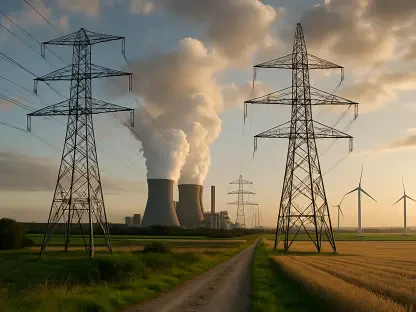

In the quiet hills of Pennsylvania, the colossal smokestacks of the Homer City Generating Station, once the state’s largest coal-fired power plant, are slated for a startling second act not as a relic of the past but as a powerhouse for the future. This shuttered behemoth is being resurrected to fuel the insatiable energy demands of artificial intelligence, a transformation that captures a troubling paradox at the heart of America’s technological ambitions. As the nation races toward AI supremacy, it finds itself tethered to the very carbon-intensive energy sources it has been striving to leave behind, creating a collision between digital progress and environmental promises. This single project is a microcosm of a national trend, raising a critical question about the true cost of the next technological revolution.
The New Silicon Rush a Power Grid Unprepared for the AI Gold Rush
The scramble for AI dominance is triggering an industrial build-out on a scale that, according to former Google CEO Eric Schmidt, has “never been seen before.” The development of the Homer City site into a sprawling data center campus, powered by its own dedicated natural gas stations, exemplifies this new reality. What was once a symbol of 20th-century industrial might is becoming a monument to 21st-century computational power. This trend signals a fundamental challenge: the nation’s push into a futuristic, digital-first economy is running headlong into the limitations of a physical power infrastructure that was not designed for such an explosive increase in demand.
This is not a localized phenomenon but a nationwide rush. Across the country, similar mega-projects are taking shape, from a 5,800-acre complex in the Texas Panhandle to a 10-gigawatt project in Wyoming with the capacity to power the entire state twenty times over. These are not merely data centers; they are new, power-hungry industrial hubs. The consequence is a direct and growing strain on an already aging electrical grid, forcing utility providers and regulators into a difficult position where the pursuit of technological leadership directly conflicts with the goal of maintaining a stable, affordable, and increasingly clean energy supply for the public.
Why AI’s Energy Appetite is a National Concern
The connection between the algorithms powering generative AI and the electricity bills of millions of Americans is becoming increasingly direct. The immense computational power required to train and operate AI models translates into an unprecedented demand for electricity. This surge is not an abstract problem for tech companies alone; it directly impacts the national power grid, threatening to drive up costs for all consumers as utilities scramble to generate more power. The rapid, concentrated growth of data centers in specific regions places immense pressure on local grids, risking instability and raising fundamental questions about who bears the cost of this technological gold rush.
The scale of this energy consumption is staggering. Current projections from industry and government analysts suggest that by 2030, data centers could account for over 10 percent of the nation’s total electricity usage. This represents a potential increase of up to 150 percent from current levels, culminating in a demand of roughly 430 trillion watt-hours. To put that figure in perspective, it is enough electricity to power nearly 16 cities the size of Chicago. This exponential growth is creating an energy deficit that the current infrastructure is unprepared to handle, forcing a national reckoning with the physical cost of digital innovation.
The Anatomy of the AI Energy Crisis
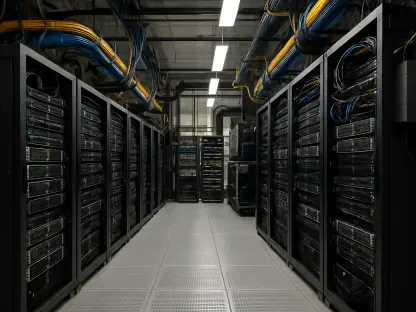
The new generation of AI data centers is fundamentally different from its predecessors, with footprints measured in miles, not feet. The Homer City project, for instance, will demand power equivalent to that of all the homes in the Philadelphia urban area. This is mirrored by a Meta facility in Louisiana nearly the size of Manhattan. These behemoths require a constant, massive flow of energy that far exceeds the capacity of typical industrial sites, forcing developers to build what are essentially private power grids alongside their server farms.
This relentless demand is pushing the public grid to its breaking point. The independent monitor for PJM, the grid operator for 65 million people in the eastern United States, issued a stark warning that it can no longer support the rapid expansion of data centers. The monitor has urged regulators to block new connections to safeguard the reliability of the power supply for existing residential and commercial customers. This situation highlights a critical bottleneck: the pace of AI development and data center construction is dramatically outpacing the grid’s ability to expand and adapt, creating a real risk of overloads and service disruptions.
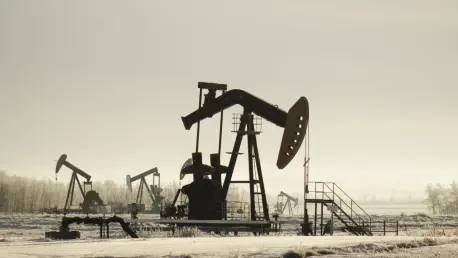
Faced with this crisis, the path of least resistance is leading directly back to fossil fuels. The International Energy Agency has identified natural gas as the “No. 1 power source to meet this need” due to its ability to provide vast, uninterrupted power on demand. This unspoken compromise is quietly derailing decarbonization efforts. Tech companies and utilities, unable to scale renewable sources quickly enough, are increasingly turning to gas as a long-term solution, not a temporary bridge. In some alarming cases, the energy crunch has become so severe that utilities are actively “unretiring coal” plants specifically to meet the power demands of new data centers, representing a significant step backward in the fight against climate change.
Voices from the Crossroads of Progress and Pollution
This energy paradox has placed even the most environmentally conscious tech giants in a difficult position. Google, a long-time champion of clean energy, conceded in a recent environmental report that its ambitious goal of running on 100 percent carbon-free energy by 2030 has become “very difficult” to achieve. The sheer power required by its AI operations is forcing the company to rely on carbon-emitting sources to ensure reliability, illustrating a widening gap between corporate climate goals and the operational realities of the AI boom.
The urgency of this build-out is heavily influenced by geopolitical pressures. The development of a domestic AI infrastructure is framed by many in Washington as an “AI moon shot,” a critical front in the strategic competition between the United States and China. From this national security perspective, the risk of ceding technological leadership in AI is perceived as a more immediate threat than the environmental costs of its development. This has created a high-stakes trade-off where long-term environmental and infrastructural health is being weighed against the perceived imperative to maintain a technological edge over global rivals.
For communities at the center of this boom, the transformation brings both economic salvation and deep-seated apprehension. In Homer City, a town devastated by the closure of its coal plant, the data center project is a lifeline. Shawn Steffee of the International Brotherhood of Boilermakers described the development as having “flipped the entire chess board,” bringing a massive influx of construction jobs to a region in desperate need of economic renewal. However, this optimism is tempered by local concerns about the long-term “ripple effects,” as residents grapple with the environmental and social consequences of hosting such an intensely energy-hungry industry.
Navigating the Energy Paradox a Path Forward
The immediate reality is that the AI boom is locking in fossil fuel dependency for the foreseeable future. Natural gas, once promoted as a “transition fuel” to bridge the gap to renewables, is now becoming a permanent fixture of the energy landscape, with suppliers like EQT already fielding requests to fuel the equivalent of eight more Homer City-scale projects. The environmental impact is stark: projections indicate that by the mid-2030s, the carbon pollution from the world’s data centers could equal the combined output of the New York, Chicago, and Houston metropolitan areas.
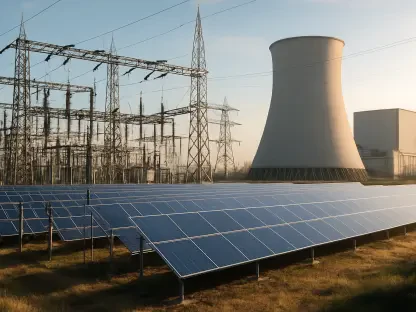
However, some industry leaders see a silver lining in this looming crisis. They argue that this crushing demand could serve as a powerful catalyst for innovation, forcing an accelerated push toward next-generation clean energy solutions. The hope is that the urgent need for massive, reliable, carbon-free power will spur breakthroughs in technologies like advanced nuclear fusion or highly efficient carbon capture systems. Yet, this remains a long-term aspiration. In the present, the technological gap is clear: renewables like solar and wind, in their current form, cannot deliver power at the speed and scale required by these supersized data centers, leaving a void that fossil fuels are readily filling.
The United States found itself at a pivotal crossroads where the drive for technological supremacy collided with the hard limits of its energy infrastructure and environmental commitments. The choices made in this period have begun to shape not only the future of artificial intelligence but also the nation’s energy landscape for decades to come. The reliance on fossil fuels, born of necessity and geopolitical urgency, established a new set of challenges, leaving a complex legacy of economic opportunity intertwined with significant environmental costs. It became clear that the path to a truly sustainable digital future would require not just smarter algorithms, but a fundamental reinvention of the power that fuels them.