
The federal judiciary recently intervened in a high-stakes standoff regarding the nation’s electric vehicle infrastructure by ordering the immediate release of five billion dollars that had been frozen by transportation officials. This decision, handed down by U.S. District Judge Tana Lin, effectively revitalizes the National Electric Vehicle Infrastructure Formula Program, a critical initiative designed to eliminate gaps in the charging network along major highways and high-traffic corridors. For months, the expansion of the domestic charging grid remained in a state of administrative limbo as federal agencies attempted to overhaul guidelines and force states to re-verify existing projects. This judicial intervention serves as a massive win for state governments that had already committed significant resources to these environmental objectives. By ensuring that the original legislative intent of the 2021 Infrastructure Investment and Jobs Act is upheld, the court has provided the necessary certainty for contractors and regional planners to resume work on essential stations. The ruling underscores the difficulty of centralizing control over decentralized state projects and highlights the growing pains of a nation rapidly pivoting toward a sustainable transportation model.
Judicial Oversight: Administrative Accountability and Compliance
The legal dispute centered on whether the Department of Transportation and the Federal Highway Administration possessed the statutory authority to pause the flow of funds for reasons not explicitly detailed in the original legislation. Judge Lin characterized the administration’s attempt to halt the program as capricious, noting that the federal government could not simply yank the cord on established state plans to impose new, retroactive requirements. This ruling emphasized that the Administrative Procedure Act prevents agencies from making sudden, unsubstantiated policy shifts that disrupt long-term infrastructure planning and financial commitments. By declaring the funding freeze unlawful, the court protected the procedural integrity of federal grant programs, ensuring that once a project meets the initial legal criteria, it remains insulated from shifting political winds. This precedent is expected to stabilize the relationship between federal oversight bodies and state departments of transportation, as it clarifies that the executive branch must adhere strictly to the funding mechanisms established by Congress. The restoration of these funds allows for the immediate procurement of hardware and the finalization of site leases that had been stalled since the pause was first implemented.
Before this judicial intervention, several states were forced to navigate a precarious financial landscape, often paying for ongoing construction and site development out of their own limited budgets to avoid project abandonment. The uncertainty surrounding the five billion dollar allocation had created a chilling effect on private-sector partnerships, as many companies were hesitant to invest in high-speed charging hardware without guaranteed federal reimbursements. By forcing states to resubmit previously approved projects under revised guidelines, the federal agencies had inadvertently introduced months of bureaucratic delays that threatened to derail the momentum of the national transition to electric mobility. The court’s decision effectively ends this period of ambiguity, allowing states like Washington, Ohio, and Pennsylvania to proceed with their established rollout schedules without the fear of sudden capital withdrawals. Furthermore, this resolution provides a roadmap for how other federally funded infrastructure projects should be managed, prioritizing consistency and transparency over administrative restructuring. As states regain access to these designated funds, the focus shifts from legal survival to the physical installation of high-power charging units that will bridge the gap between urban centers and rural stretches.
Technical Standards: Ensuring Interoperability and Consumer Confidence
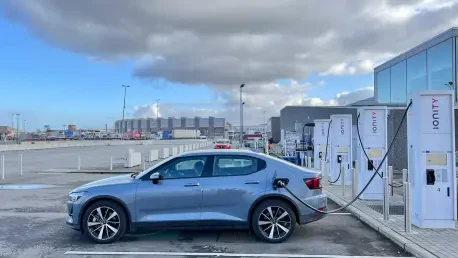
To qualify for the eighty percent federal cost-share provided by the restored funding, projects must adhere to rigorous technical standards designed to ensure a seamless and universal experience for all drivers. These regulations dictate that charging stations must be publicly accessible and non-proprietary, meaning they must support all major vehicle brands rather than being locked to a specific manufacturer’s ecosystem. Each station is required to deliver a minimum of six kilowatts across all ports simultaneously, ensuring that drivers can achieve significant range recovery in a reasonable timeframe during long-distance travel. These standardized requirements are instrumental in alleviating range anxiety, which remains a primary barrier to adoption for consumers transitioning from internal combustion engines to battery-electric alternatives. By creating a reliable and interoperable network, the program aims to make cross-country travel as predictable as traditional refueling, fostering greater confidence in the longevity and utility of electric vehicles. The emphasis on high-traffic corridors ensures that the infrastructure is placed where it is most needed, supporting both personal travel and the electrification of the nation’s commercial logistics fleets.
The resolution of this legal conflict established a clear mandate for the rapid deployment of charging assets while emphasizing the importance of diverse charging strategies for the modern driver. While the restoration of highway funding addressed the needs of long-distance travelers, industry experts encouraged consumers to prioritize integrated home charging solutions as the most cost-effective method for daily operation. Pairing residential chargers with solar energy systems offered a way to further insulate households from fluctuating energy prices and maximized the environmental benefits of the transition. States moved forward by streamlining the permitting process for local contractors, ensuring that the five billion dollars translated into operational hardware within the next two fiscal years. Stakeholders also recognized the necessity of ongoing maintenance, as the judicial ruling protected the capital for installation but left the long-term uptime of the network to regional oversight and private operators. This period marked a transition where the focus shifted from securing financial resources to optimizing the user interface and reliability of the physical grid. Ultimately, the court’s decision functioned as a catalyst that allowed the nation to move beyond administrative gridlock and toward a more resilient, electrified transportation future.