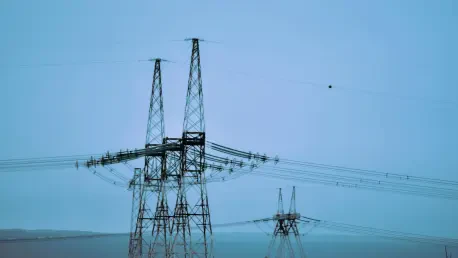

High above the bustling highways and quiet suburbs, thousands of miles of aluminum and steel cables hum with the silent energy that powers modern life, yet these critical veins of civilization remain some of the most under-monitored assets on the planet. For decades, the global power grid has functioned as a collection of passive, “blind” components, operating on the precarious assumption that what worked during the relatively stable climate of the late 20th century will suffice under today’s unprecedented electrical and environmental stress. As the world pushes toward total electrification, these aging wires are being asked to carry more load than ever before, often without the people managing them knowing exactly how close they are to a catastrophic failure.
The disconnect between digital-age demand and industrial-age infrastructure has reached a tipping point. Modern transmission lines are no longer just simple conduits for electricity; they are the front lines of a global energy shift that requires a level of precision the current system cannot provide. Relying on historical data and visual inspections is no longer a viable strategy for a grid that must now accommodate the rapid rise of electric vehicles, massive data centers, and the unpredictable surge of renewable energy sources. To survive, the backbone of the power system must evolve from a series of silent metal strands into an interconnected network of intelligent, self-reporting assets.
The Blind Spots in the Backbone of Modern Power
The traditional model of grid operation has long relied on “static line ratings,” which are essentially conservative, generalized estimates of how much power a line can carry based on historical weather patterns and seasonal averages. This approach is increasingly failing in an era defined by extreme climate stressors and rapidly fluctuating energy flows. When operators rely on these “blind” estimates, they are often forced to leave significant transmission capacity on the table to ensure a margin of safety, or conversely, they may unknowingly push a line past its physical breaking point during an unexpected heat wave.
This lack of visibility creates a dangerous guessing game for utility companies. Without real-time data, it is nearly impossible to determine exactly how much a line is sagging or how much heat it is absorbing from high-intensity sunlight and electrical resistance. These blind spots are not just technical inefficiencies; they are precursors to mechanical degradation and, in high-risk zones, devastating wildfires sparked by lines that expand and sag into vegetation. The current infrastructure is being squeezed from both sides—by soaring demand and by a climate that is becoming increasingly hostile to exposed equipment.
Why Legacy Grid Management Is No Longer Sustainable
The electrification surge is fundamentally changing the physics of the grid. The rapid adoption of electric vehicles and the total electrification of heavy industry are creating massive demand peaks that legacy systems were never designed to handle. Furthermore, the transition to wind and solar energy introduces a layer of complexity that static systems cannot manage. Unlike traditional coal or gas plants, renewable energy is variable and often multi-directional, requiring a flexible grid that can react instantly to sudden shifts in supply and weather conditions.
Climate-driven stressors are further compounding these logistical challenges. Extreme heat waves, high-velocity winds, and heavy ice accumulation are pushing conductors to their physical limits more frequently than in previous decades. When a utility relies on indirect visibility, it loses the ability to respond to these threats with surgical precision. Instead of managing the grid based on what is actually happening in the field, they are forced into “defensive operation,” where power must be throttled or shut down entirely to prevent a potential disaster that they cannot see coming.
From Passive Wires to Self-Reporting Assets
The transition to an intelligent grid is finally being realized through the integration of advanced fiber-optic sensing and cloud-based analytics. This shift moves the industry away from external, point-based sensors toward a holistic, embedded approach. Technologies like CTC Global’s GridVista™ System represent a leap forward by integrating fiber-optic sensing directly into the composite core of the conductor itself. This turns the entire span of the transmission line into a continuous, living sensor that “feels” every change in its environment.
Unlike traditional bolt-on sensors that provide limited snapshots of specific locations, these embedded systems capture meter-by-meter data on temperature, mechanical strain, sag, and vibration. This granular information is then processed through cloud-native platforms that utilize artificial intelligence to translate complex physical movements into actionable operational maps. This technology effectively ends the era of inference, replacing guesswork with direct observation and allowing utilities to see exactly how their assets are performing every second of the day.
Informed Optimization: Expert Insights on Grid Resilience
Industry experts are now advocating for a move toward “informed optimization,” a paradigm shift that provides a competitive edge in grid reliability. By utilizing “ambient-adjusted ratings,” utilities can safely increase power flow during periods of high demand. Because they have access to the exact thermal limits of the wire in real-time, they can confidently push more electricity through existing corridors without risking a sag-related failure. This ability to unlock trapped capacity is essential for integrating new renewable sources without the decade-long delays associated with building new physical lines.
Beyond capacity, this intelligence enables a transition from fixed-interval maintenance to condition-based management. Rather than sending crews to inspect every mile of a line on a pre-set schedule, asset managers can use real-time data to identify specific spans showing signs of abnormal wear or mechanical stress. This targeted approach is particularly critical for wildfire mitigation. By detecting localized thermal anomalies or abnormal sag behavior immediately, utilities can intervene before a mechanical failure turns into a fire, providing a vital layer of safety for communities living near high-voltage corridors.
Strategies for Transitioning to a Modern Intelligent Grid
Implementing this level of technology requires a strategic framework that combines physical hardware upgrades with sophisticated digital integration. Utilities are encouraged to prioritize high-risk corridors—those in areas prone to extreme weather or high congestion—for the first wave of self-reporting conductor upgrades. By focusing on these critical nodes, operators can achieve the highest return on investment in terms of both safety and reliability while testing the integration of live fiber-optic feedback into their existing dispatch systems.
The move toward an intelligent grid also necessitates a change in how partnership ecosystems are managed. Combining materials science expertise with advanced data analytics allows for a grid that scales alongside the growing demands of the 21st century. As these technologies become standard, the “blind” grid will become a thing of the past. The infrastructure of the future was not just built to carry power; it was designed to communicate its own health, ensuring that the lights stay on through the most challenging conditions imaginable.
The successful pilot programs of these self-reporting systems demonstrated that visibility was the missing link in modern energy management. By replacing conservative thermal models with actual, high-fidelity data, engineers found that they could safely bypass traditional bottlenecks that had previously constrained renewable energy distribution. Decision-makers began shifting capital toward “smart” conductors that provided long-term forensic data, allowing for a more forensic understanding of how wind and ice impacted specific geographies. This evolution turned a once-passive network into a proactive participant in the energy transition, proving that the most effective way to modernize the grid was to give it a voice.