
New Jersey is decisively steering its transportation sector towards a cleaner horizon with a significant investment of nearly $32 million in grant funding aimed at accelerating the state’s transition to a zero-emission vehicle future. This dual-pronged initiative targets two critical areas: replacing diesel-powered school buses with clean electric models and expanding the public network of electric vehicle (EV) charging stations. This strategic funding, announced by the New Jersey Department of Environmental Protection (NJDEP), is a key component of the state’s comprehensive plan to combat climate change by reducing greenhouse gas emissions. As transportation remains the largest single source of pollution in New Jersey, these grants represent a direct and impactful effort to improve air quality, protect public health, and lay the groundwork for the widespread adoption of electric mobility across the Garden State. By tackling both fleet electrification and public infrastructure simultaneously, the state is addressing key barriers to EV adoption and moving closer to its ambitious environmental goals.
Accelerating the Shift to Electric School Buses
In its second funding round, the Electric School Bus Grant Program has awarded over $18 million to facilitate the purchase of 53 new battery-electric school buses and 41 associated fast-charging stations, representing a major step in modernizing student transportation. Sourced from the New Jersey Board of Public Utilities’ Clean Energy Fund, this investment is a substantial part of a three-year, $45 million commitment to decarbonize the state’s school bus fleet, which will directly improve air quality and protect the health of students and their communities from harmful diesel exhaust. To ensure a successful and seamless transition, the state is providing comprehensive technical assistance beyond the financial award. Grant recipients will benefit from the New Jersey Fleet Advisor service, which helps schools and contractors develop a personalized Fleet Electrification Roadmap. This crucial support system offers expert analysis on vehicle selection, projects long-term operational costs, and provides on-site infrastructure assessments to streamline the integration of these new, cleaner fleets into daily operations.
The distribution of the grant awards reflects a strong commitment to both geographic and social equity, ensuring the benefits of this green transition reach communities across northern, central, and southern New Jersey. A significant portion of the program is targeted at areas that have been disproportionately affected by pollution, with 11 of the awards specifically designated for “overburdened communities.” This focus aims to deliver the direct air quality and health advantages of zero-emission vehicles to the residents who need them most. Environmental advocates, including the NJ Sierra Club, have lauded the initiative, emphasizing that the 53 new buses will nearly double the state’s existing zero-emission school bus fleet. This expansion is particularly critical in districts with high rates of childhood asthma, where replacing aging diesel buses can have a profound and immediate positive impact on public health. This round builds upon the success of the first, which already funded 48 electric school buses.
Bolstering the State’s Public Charging Grid
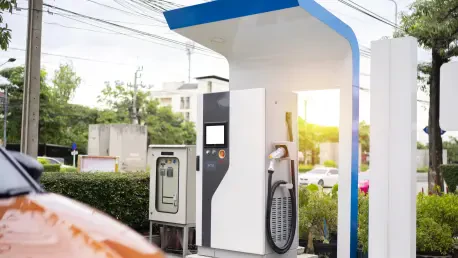
Complementing the school bus program, the NJDEP also awarded $13.6 million through its EV Charging Grant Program, a key component of the broader “It Pay$ to Plug In” campaign designed to make electric vehicle ownership more accessible for all residents. This substantial funding, financed through proceeds from the Regional Greenhouse Gas Initiative (RGGI) auctions and the Volkswagen Environmental Mitigation Trust, is dedicated to building out a more robust and reliable public charging network. By strategically expanding infrastructure, the state aims to alleviate common “range anxiety” concerns that can deter potential EV buyers, thereby encouraging a faster transition away from gasoline-powered cars. This latest round of funding will support 26 distinct projects led by 15 different private and governmental entities. The ambitious outcome will be the installation of 82 new charging stations, which will feature a total of 136 fast-charging ports, significantly reducing charging times and enhancing convenience for EV drivers across 16 counties.
These new charging stations are strategically planned for high-traffic and high-need locations to ensure they provide maximum utility to the public. Installation sites will include easily accessible town and retail centers, multi-unit housing developments where home charging can be a challenge, and critical transit hubs that serve commuters and travelers. The grants were awarded to a diverse mix of recipients, showcasing a collaborative public-private approach to building out this vital infrastructure. Awardees include private companies like Chargeflex LLC, Blink Network, LLC, and EV Edison, as well as local government bodies such as the City of Passaic, the Township of Ewing, and Mercer County itself. These new installations will augment New Jersey’s already substantial network, which currently consists of over 1,900 fast-charging ports and more than 3,100 Level 2 charging ports. Since its inception, the “It Pay$ to Plug In” program has successfully awarded a total of $19 million, a testament to the state’s ongoing commitment.
A Strategic Step in New Jersey’s ZEV Roadmap
This nearly $32 million investment was not an isolated action but rather a direct and tangible implementation of the state’s broader strategic vision. The funding for both electric school buses and public chargers aligned perfectly with the goals outlined in the New Jersey Zero-Emission Vehicle (ZEV) Roadmap, a comprehensive report released by the Governor’s Office in late 2025. That roadmap charted a clear course for accelerating the state’s transition to ZEVs, affirming the need for a multi-faceted approach that addresses infrastructure, incentives, and equity simultaneously. It advocated for strategies such as enhancing the reliability of the charging network, investing in necessary grid upgrades, and prioritizing the needs of underserved communities. The allocation of these funds demonstrated a firm commitment to transforming that strategic plan into concrete reality, moving New Jersey significantly closer to its ambitious emissions reduction targets and fostering a healthier environment for all its residents. The grants represented a critical step in building an electric future that mitigates climate change and improves public health outcomes statewide.