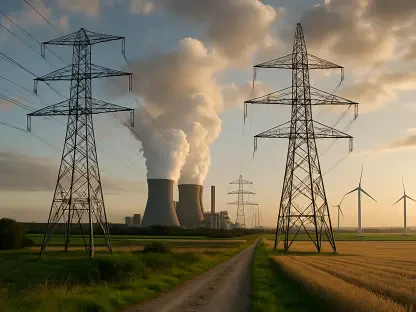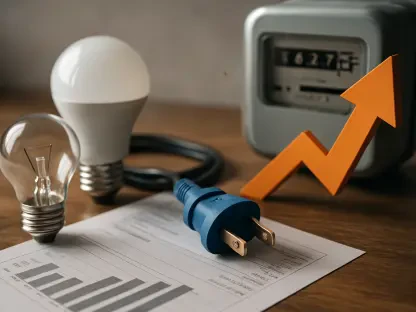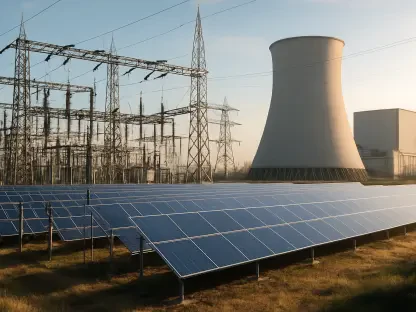

Modern industrial facilities are no longer willing to wait for half a decade to secure a reliable connection to a traditional electrical grid that is increasingly buckling under the weight of digital expansion. This frustration has birthed a movement toward onsite power generation, a sector that has evolved from providing simple emergency backup to serving as a primary strategic asset for large-scale energy consumers. The traditional utility model, characterized by centralized generation and miles of aging transmission lines, is facing an interconnection crisis that threatens the pace of technological innovation. Consequently, the ability to co-locate power generation directly with the load has become the most viable pathway for rapid industrial growth, allowing companies to secure their energy future independently of sluggish infrastructure upgrades.
The shift in electricity procurement represents a fundamental departure from the passive consumption of the previous century. For decades, large industrial players viewed the grid as an inexhaustible resource, but recent transmission constraints have turned power access into a competitive bottleneck. Modern onsite systems now function as prime power sources, capable of operating independently or in tandem with the utility network to ensure operational continuity. This shift is primarily reactive, born from the reality that digital expansion, particularly in high-compute sectors, is outpacing the speed at which physical substations can be permitted and built. By adopting these systems, developers essentially jump the queue, achieving operational status years ahead of those relying solely on traditional utility timelines.
The Paradigm Shift in Electricity Procurement
The evolution of onsite power from a niche redundancy tool to a core operational strategy is rooted in the necessity of time-to-power. In the current landscape, the financial opportunity cost of waiting for a utility connection often outweighs the capital expenditure required to build a private energy plant. This is particularly true for sectors like artificial intelligence and cloud computing, where being first to market provides a significant advantage. Unlike the backup generators of the past, these modern systems are integrated into the facility’s architecture from the design phase, ensuring that energy supply is as scalable as the data processing capacity it supports.
Moreover, this transition is redefining the relationship between the private sector and public utilities. Instead of competing for limited capacity, onsite generation allows industrial loads to become self-sufficient during peak periods, which reduces the overall stress on the public grid. This synergy transforms the facility from a potential liability into a stabilizing force. By generating power locally, these large-scale users can bypass the transmission losses and congestion fees associated with long-distance electricity transport, leading to a more efficient and predictable cost structure over the long term.
Key Components: Flexible Onsite Infrastructure
Dispatchable Generation and Prime Power Systems
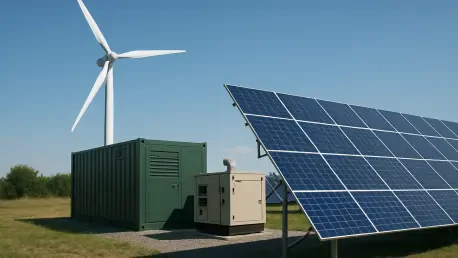
At the heart of modern onsite infrastructure lies dispatchable generation, a technology that offers the ability to ramp power up or down in response to immediate demand. This differs significantly from intermittent renewable sources like solar or wind, which require massive battery arrays to provide the same level of reliability. Most current systems utilize cleaner-burning natural gas engines or turbines that can operate continuously for thousands of hours. These assets provide the steady, high-capacity output required by 24/7 industrial operations, filling the gap left by a utility grid that may only be able to provide partial or unreliable service.
Smart Interconnection: Demand Flexibility Tools
The intelligence of a modern onsite power system is found in its control layer, which manages the complex interface between the local plant and the external utility. Smart interconnection technology uses real-time data to determine whether to pull power from the grid, rely on onsite assets, or feed excess energy back to the community. This flexibility is what enables non-firm service models, where a facility agrees to reduce its grid draw during peak demand in exchange for faster connection approval. The software-defined management system ensures that these transitions happen in milliseconds, protecting sensitive hardware from voltage fluctuations or sudden outages.
Emerging Trends: Grid Access and Flexible Interconnection
The industry is currently moving toward a hybrid model of grid access that prioritizes speed over guaranteed permanence. In the past, a developer would wait until the utility could guarantee a firm connection before breaking ground. Today, the trend is to connect while building, using onsite power as a bridge to full grid maturity. This strategy allows a facility to begin generating revenue through an interim service agreement, where the onsite plant provides the bulk of the power while the utility gradually expands its local capacity. This staggered approach aligns the timelines of fast-moving tech companies with the slower, more deliberate cycles of utility infrastructure projects.
Furthermore, there is a growing emphasis on the standardization of these energy templates. Rather than designing unique power solutions for every site, developers are creating modular, repeatable generation blocks that can be deployed quickly across different geographic regions. This modularity reduces engineering costs and simplifies the permitting process, as local regulators become familiar with the low-emission profiles and safety standards of these pre-configured systems. This trend toward “productization” of onsite power is making it easier for mid-sized industrial players to adopt technologies that were once reserved for the largest hyperscale operators.
Real-World Applications: Industrial Sectors
Hyperscale Data Centers and Digital Infrastructure
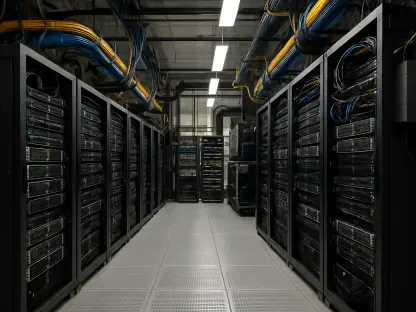
The most visible application of this technology is found within the hyperscale data center sector, where energy demands have reached unprecedented levels. Modern AI clusters require gigawatts of power, a scale that traditional utility planning never anticipated. By deploying onsite generation, data center operators can bypass the three-to-six-year wait times common in major tech hubs. These facilities utilize onsite assets to power high-density cooling systems and server racks, ensuring that the local grid is not overwhelmed by the sudden influx of demand. This self-sufficiency has become a prerequisite for site selection in an era of energy scarcity.
Grid Support: Public Utility Mitigation
Onsite generation also serves a vital role in protecting public utility interests and the broader community of ratepayers. Modeling has indicated that when large industrial loads self-supply during peak hours, they can save the public grid tens of millions of dollars per gigawatt of demand by deferring the need for massive, ratepayer-funded substation expansions. This creates a more equitable energy ecosystem where the costs of industrial growth are borne by the developers themselves rather than the general public. In this way, onsite power acts as a buffer that prevents residential electricity rates from skyrocketing as a result of rapid regional development.
Technical Hurdles: Regulatory Obstacles
Despite the clear economic and operational benefits, the widespread adoption of onsite power is not without its challenges. Technical hurdles remain, particularly regarding the need for noise mitigation and the reduction of local emissions to meet strict zoning requirements. While natural gas is cleaner than diesel, it still produces carbon that must be accounted for in corporate sustainability goals. The industry is currently exploring carbon-capture-ready designs and the integration of hydrogen-blending capabilities to ensure these assets remain viable in a future focused on deep decarbonization.
Regulatory frameworks have also struggled to keep pace with the speed of technological change. Traditional utility models were designed for one-way power flow from large, central stations to passive consumers. Transitioning to a decentralized model where industrial sites act as mini-utilities requires a complete overhaul of tariff structures and interconnection rules. While federal mandates like those from the Federal Energy Regulatory Commission have begun to open doors for non-firm service, the lack of standardization across different states and regional transmission organizations continues to create a fragmented landscape that can slow down national deployment strategies.
Future Outlook: Technological Breakthroughs
The future of this sector will likely be defined by the integration of low-emission fuels and advanced energy storage. As long-term energy strategy shifts toward sustainability, onsite generation assets will transition from being strictly bridge solutions to permanent components of a carbon-neutral hybrid grid. We can anticipate breakthroughs in modular small-scale reactors or advanced geothermal systems that provide the same dispatchable reliability as current gas-powered units but with zero operational emissions. These technologies will allow facilities to operate entirely behind the meter, further insulating them from the volatility and physical vulnerabilities of the public transmission network.
Additionally, the role of artificial intelligence in managing these decentralized energy networks will become indispensable. AI-driven forecasting will allow onsite systems to predict grid stress hours in advance, optimizing fuel consumption and maintenance schedules to maximize efficiency. This level of autonomy will transform industrial sites into active participants in the energy market, where they can trade excess capacity or provide frequency regulation services to the utility in real-time. The result will be a more resilient, decentralized power architecture that is capable of supporting the massive energy requirements of the digital age while minimizing the environmental impact.
Summary: Technical Advancements and Impact
The review of onsite power generation demonstrated that these systems became an essential pillar of modern industrial infrastructure. This technology was not merely a backup solution but a sophisticated mechanism that addressed the critical bottleneck of grid access and time-to-power. By integrating dispatchable generation with smart interconnection tools, developers successfully bypassed the multi-year delays associated with traditional utility upgrades. The analysis showed that these private energy investments provided a dual benefit, securing operational stability for the owner while simultaneously shielding the public grid from the financial and physical strain of rapid industrial expansion.
The implementation of onsite power also proved to be a catalyst for regulatory evolution, pushing authorities to adopt more flexible interconnection policies. It was observed that the shift toward modular, repeatable generation templates significantly reduced the complexity of permitting and construction. Ultimately, the adoption of onsite power generation resulted in a more resilient and decentralized energy landscape, ensuring that the growth of the digital economy was not hindered by the limitations of legacy infrastructure. The technology established a new standard for how large-scale energy consumers interacted with the grid, turning a period of energy scarcity into an opportunity for structural modernization and strategic independence.