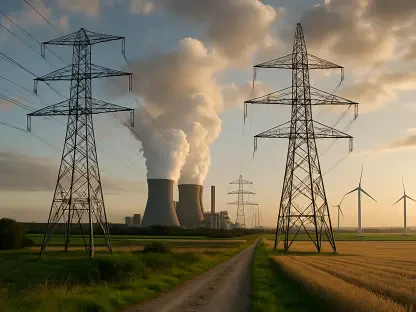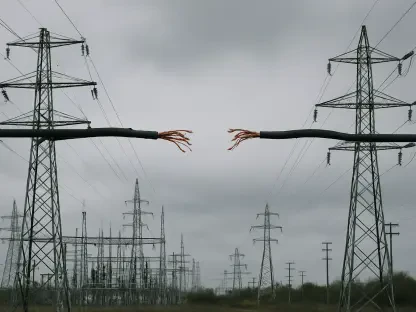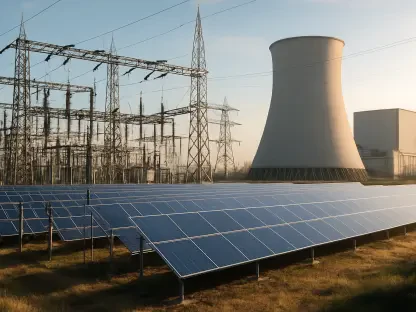

Australia’s National Electricity Market is currently caught in a precarious struggle, not between competing companies or political ideologies, but between the abstract economic theories driving investment and the immutable physical laws governing grid stability. While newly proposed market frameworks are designed to attract urgently needed capital for new generation capacity, they conspicuously sidestep the complex engineering solutions required to manage an electrical system increasingly powered by intermittent renewables. This creates a dangerous chasm between economic incentives and operational reality, setting the stage for a conflict where market forces alone are proving insufficient to overcome the fundamental principles of physics, threatening the very reliability of the nation’s power supply.
The Collision of Markets and Mechanics
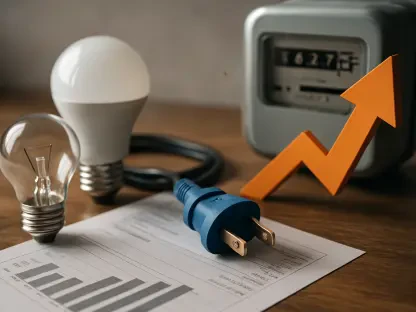
The national energy debate is further complicated by a politically charged environment and persistent, often misinformed, criticism directed at wind and solar power. This has compelled the Australian Energy Market Operator (AEMO) to adopt a decidedly conservative and exceptionally costly strategy for integrating renewable sources. The current approach involves deploying grid-following battery systems, which are only considered safe when buttressed by a massive network of synchronous condensers (syncons) to provide essential system strength and inertia. Consequently, transmission operators have received near-automatic approval from the Australian Energy Regulator for these monumental investments, with the substantial financial burden being passed directly to consumers through escalating electricity tariffs. This strategy represents a reactive, brute-force fix rather than an elegant or efficient long-term design for a modern, intelligent grid, treating the symptoms of instability instead of engineering a resilient cure.
At the technical core of this escalating crisis is a principle articulated by Dutch engineer Bernardus Tellegen, whose network theorem dictates that the sum of all instantaneous power across every branch of a network must equal zero at all times. While seemingly straightforward, the implications for a grid with high penetrations of variable renewables are profound. Unlike the predictable, dispatchable power systems of the past, a modern grid experiences constant, rapid fluctuations from wind and solar generation, making the task of maintaining this zero-sum power balance—and by extension, stable frequency and voltage—an immensely complex and continuous challenge. There is a critical disconnect between the energy market’s signals, which prioritize dispatching the lowest-cost generator, and the grid’s immediate physical requirements for stability. The cautionary experience of Spain, where market conditions failed to ensure sufficient synchronous capacity was online for voltage control, powerfully underscores the dangers of allowing market logic to operate divorced from physical necessity.
A System on the Brink of Immobilization
This widening gap between market operations and physical imperatives is progressively forcing Australia’s energy market into a metaphorical “half-Nelson.” In this wrestling hold, the non-negotiable laws of physics will increasingly compel grid operators to intervene, constraining or completely overriding market functions to maintain system security. As grid volatility grows with the influx of renewables, security will inevitably become the paramount concern, effectively immobilizing the economic mechanisms of the market. This isn’t a sustainable equilibrium but a state of perpetual, reactive crisis management where the grid’s physical needs systematically suffocate its economic operation. Left unaddressed, this trajectory does not lead to a balanced solution but rather to an increasingly fragile system teetering on the edge of failure, where market principles are rendered irrelevant by the urgent need to simply keep the lights on.
Escaping this impending chokehold requires a fundamental paradigm shift away from traditional, human-operated control philosophies toward a system founded on high-speed, automated decision-making. The future grid cannot be managed effectively from a control room by people reacting to events; it must be preemptively stabilized by an intelligent architecture. This system would be driven by sophisticated machine learning (ML) and artificial intelligence algorithms, fed by real-time data streams from an expanding network of Phasor Monitoring Units (PMUs) deployed across the grid. These algorithms could make instantaneous control decisions—such as managing syncon excitation or controlling reactive power from STATCOMs—while providing high-level directives to human operators for larger actions like islanding a region. AEMO’s ongoing development of a “digital twin” of the grid is a crucial and commendable foundation, providing the necessary virtual environment to develop, test, and validate these advanced control systems before they are deployed on the live network.
The Unseen Danger in the Network
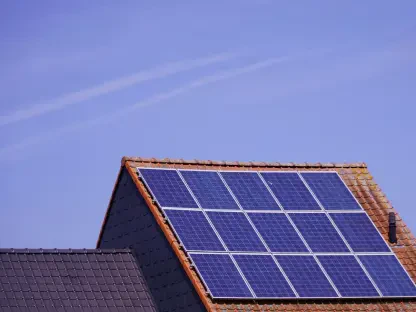
Despite these technological advancements, the current national strategy harbors a significant and perilous blind spot: the vast and complex distribution network. While sophisticated monitoring and control systems are being designed for the high-voltage transmission grid, the low-voltage networks—where virtually all energy is consumed and where millions of Distributed Energy Resources (DERs) like rooftop solar and batteries are connected—remain dangerously outside the scope of these advanced developments. The prevailing approach treats these DERs not as an integrated resource to be harnessed for stability but as an unpredictable problem to be managed through the crude tactic of disconnection during periods of grid stress. This methodology, which essentially throws away vast amounts of clean energy and grid-supporting potential, stands in stark opposition to the principles of intelligent system design and represents a profound failure of holistic planning.
A Systemic Overhaul Was Required
This fundamental oversight in failing to integrate and control the immense resources of the distribution network ultimately made the vision of solving the “millisecond-by-millisecond” balancing equation an unattainable fantasy. Without a comprehensive control architecture that encompassed the entire power system, from large-scale generators down to individual rooftop solar installations, the National Electricity Market remained critically vulnerable. The system’s trajectory was clear. The failure to address this critical blind spot meant that the restrictive “half-Nelson” of constant security interventions was not a final state but a prelude to something far worse. A holistic and intelligent redesign that recognized every component of the grid as an active participant was the only path forward. Without it, the system was destined to slide from mere constraint into a crippling collapse on the mat—a full-scale, catastrophic failure of the nation’s electricity supply that could have been averted with foresight and a deeper respect for the laws of physics.