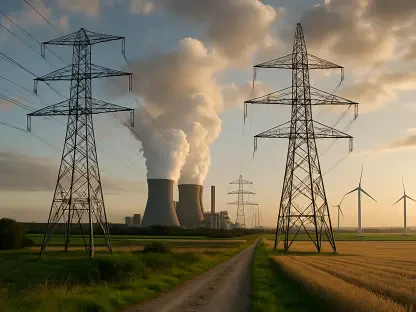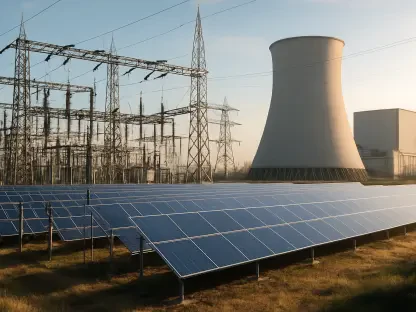

Pennsylvania is currently witnessing an unprecedented surge in energy demand that threatens to reshape the fundamental relationship between a public utility and its diverse customer base. PPL Electric Utilities is navigating a massive project pipeline featuring approximately 20 GW of contracted large loads, a staggering figure that nearly triples its current peak operating capacity of 7.8 GW. This monumental shift, fueled by the relentless expansion of the digital economy and energy-intensive data centers, has forced a critical reimagining of how the grid is funded and managed to prevent traditional homeowners from bearing the weight of industrial progress.
The resolution of this challenge comes in the form of a landmark settlement that seeks to harmonize the rapid expansion of high-tech infrastructure with the financial security of the average resident. By establishing a modern regulatory framework, PPL Electric is moving away from outdated models to address the reality of a high-demand, electrified future. This strategic pivot ensures that the utility can support the growing needs of global tech giants while simultaneously reinforcing the local grid for the families who have long formed the backbone of its service territory.
Bridging the Gap: Legacy Grids and the Data Center Boom
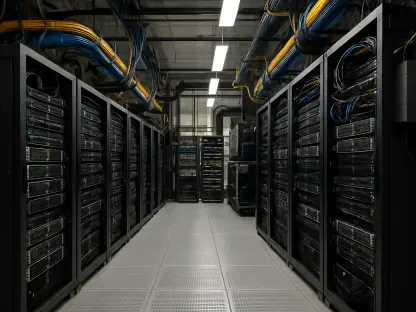
The sheer scale of the energy demand currently facing Pennsylvania’s power infrastructure is difficult to overstate. With 20 GW of potential new load on the horizon, the utility is staring at a future where the requirements of a few massive facilities could dwarf the entire historical consumption of the region. This influx is driven primarily by data centers, which require constant, high-volume power to sustain the cloud computing and artificial intelligence systems that define modern life.
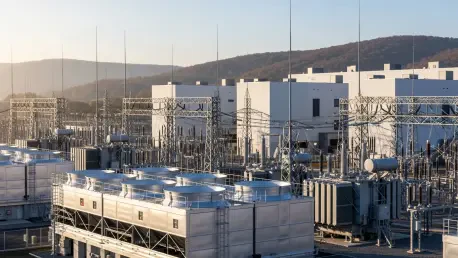
Managing such a drastic leap in capacity requires more than just new wires and substations; it requires a radical shift in planning. PPL Electric has identified that the traditional “build and they will come” approach is no longer sustainable when the incoming “visitors” consume more power than entire cities. The settlement serves as a bridge, allowing the utility to integrate these massive loads into a system originally designed for much more modest consumption levels without compromising reliability for existing users.
Why a Decade-Old Rate Structure Needed a Modern Overhaul
Before this recent agreement, PPL Electric had not adjusted its distribution rates since 2016, a period during which the technological and economic landscape underwent a total transformation. The emergence of high-capacity customers introduced a new phenomenon known as “stranded asset” risk. This occurs when a utility invests billions in specific infrastructure for an industry that might eventually move or shut down, leaving the remaining residential customers to pay off the debt for equipment they do not use.
By updating a rate structure that had remained static for nearly a decade, the utility is finally aligning its financial model with the actual costs of modern service. The overhaul addresses the fact that the grid of the past was never intended to handle the concentrated, massive power draws seen in the current era. This correction is essential for maintaining the utility’s financial health and ensuring that the costs of building a 21st-century grid are allocated fairly and transparently among those who benefit most from the upgrades.
Balancing Revenue Growth: The New Large Load Tariff
At the center of the settlement is a refined revenue request, which was negotiated down from an initial $356 million to a $275 million annual increase. The most innovative feature of this deal is the introduction of a “large load” tariff specifically designed for facilities requiring a minimum of 50 MW of demand. This first-of-its-kind mechanism ensures that the companies driving the need for massive grid expansions are the ones writing the checks for the necessary construction and maintenance.
Beyond infrastructure funding, the tariff incorporates a significant social component. Large-load customers are now slated to contribute $11 million annually toward universal service programs and low-income weatherization efforts. This creates a direct pipeline of funding from high-revenue industrial sectors to the most vulnerable members of the community. It represents a sophisticated compromise where industrial growth serves as a catalyst for improving the quality of life for residential neighbors.
Protecting Residential Interests: Industrial Accountability
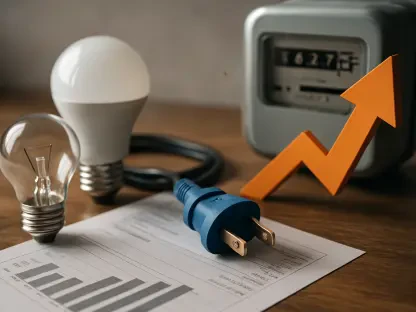
The settlement prioritizes consumer protection by shifting the burden of risk toward industrial users. While residential customers will see their average monthly bills rise by approximately 4.9% to roughly $184, the agreement successfully lowered the proposed fixed customer charge from $17 to $15. This negotiation ensures that while everyone pays for a better grid, the increase remains manageable for the average household, particularly those on fixed incomes who are most sensitive to price fluctuations.
Furthermore, the deal mandates that large-scale users provide robust financial security for grid upgrades and agree to specific exit fees. These measures serve as an insurance policy for the public, guaranteeing that if a data center or industrial plant closes, the utility—and by extension, its residential ratepayers—is not left holding the bag for specialized equipment. This accountability reinforces the idea that large-scale energy consumption is a privilege that comes with specific financial responsibilities toward the broader community.
Implementing the 50 MW Framework: A Blueprint for Grid Stability
To provide long-term predictability, the settlement establishes a mandatory ten-year service term for any user falling under the 50 MW framework. This stability is paired with an updated Storm Damage Expense Rider of $32 million, which helps the utility manage the rising costs of repairing the grid after severe weather events. By stabilizing earnings in the face of climate volatility, the agreement allows PPL Electric to focus on long-term resilience rather than short-term financial recovery.
The forward-looking nature of the agreement also extends to the growing electric vehicle market. A new time-of-use charging rebate program, scheduled to run through 2030, encourages EV owners to charge during off-peak hours, further balancing the grid’s load profile. With a two-year rate freeze for existing customers, the settlement provides a period of calm and predictability. It established a clear path for future utility commissions to manage the intersection of private industrial expansion and public infrastructure, ensuring that the lights stayed on for everyone as the digital economy continued its rapid ascent.