
With the AI revolution demanding power on a scale we’ve never seen, the U.S. electrical grid is facing an unprecedented stress test. To understand the immense challenges and potential solutions, we’re speaking with Christopher Hailstone, a leading expert in energy management and electricity delivery, whose work focuses on grid reliability and security in this new era. He offers a stark look at the hurdles ahead, from regulatory logjams to the fundamental question of who will pay for the future of power.
With data center power needs jumping from kilowatts to megawatts, new 800-volt DC systems are emerging. How does this leap in power density affect local grid infrastructure, and what are the immediate, practical challenges utilities face when integrating these next-generation facilities? Please share some details.
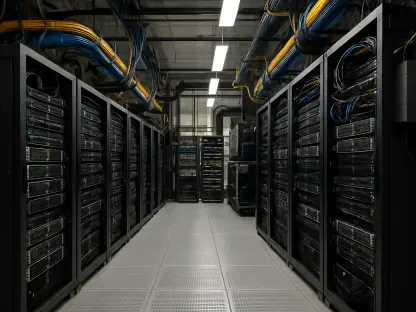
The speed of this change has been truly shocking. For years, we operated under a principle where, as transistors on a chip got smaller, their power density stayed constant. That relationship has completely broken down. Now, as chip counts soar, the total power consumption is skyrocketing. We’re moving from in-rack systems designed for a few kilowatts to entire facilities demanding megawatts, supported by new 800-volt systems. This isn’t an incremental step; it’s a monumental leap. For utilities, the immediate challenge is that their traditional forecasting models are rendered obsolete. They are suddenly faced with a concentrated load that can destabilize a local network, demanding infrastructure upgrades that were never planned for on such an accelerated timeline.
The U.S. interconnection queue for new generation and storage has reached 2.6 terawatts, more than double the grid’s current capacity. What are the most significant bottlenecks causing this backlog, and what specific, collaborative steps can utilities and regulators take to begin clearing it more quickly?
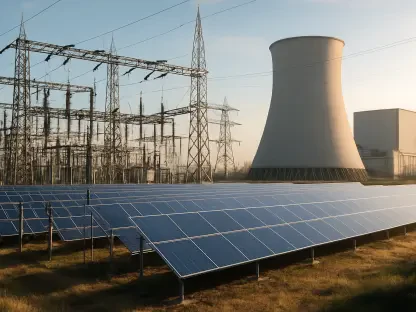
It’s an astonishing figure. We have more than 2.6 terawatts of proposed generation just sitting in a queue, waiting to connect to a grid that currently only has about 1.2 terawatts of total capacity. The backlog is so massive that what’s waiting is more than double what we even have online today. The single largest hurdle is transmission. We simply don’t have the lines to move all that potential power from where it’s generated to where it’s needed. Clearing this requires comprehensive reform with clear leadership. We saw an attempt at this in July 2023 to reduce backlogs and ensure access for new technologies, but the reality is we need it to happen much, much faster than anyone originally anticipated. The solution isn’t just about tweaking the rules; it’s about a fundamental, unified push to get steel in the ground.
Permitting new transmission lines often involves a complex web of federal, state, and local authorities, leading to years of delays. What kind of innovative, multi-stakeholder models could realistically streamline this process, and what would be the first step to implementing such a framework?
The current process is a tangled mess. Our grid was built as a series of regional networks, not a cohesive whole. So, when you try to build a major transmission line, you’re immediately caught in a web of jurisdictions. You might need dozens of permits spanning federal, state, tribal, and even local zoning boards. This isn’t just bureaucratic; it’s paralyzing. I’ve seen projects get bogged down for years, threatened by litigation or even blocked by states that don’t want to subsidize another state’s economic growth. The only way forward is a unified framework where hyperscalers, governments, and the private sector work together. The first step has to be establishing clear leadership and a shared sense of urgency to plan transmission ahead of generation, creating a more predictable and streamlined path that everyone agrees to follow.
There is significant debate about who should pay for the massive grid upgrades needed to support data centers. What creative financing or cost-sharing models could ensure developers bear a fair portion of these costs without passing the entire burden onto residential ratepayers?
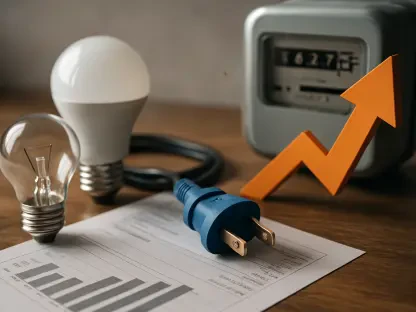
This is a very real and emotional issue. You have states and provinces looking at these massive infrastructure bills and asking, “Why should our local ratepayers foot the bill for the AI revolution, especially if it doesn’t directly benefit them?” It’s a completely valid question. However, we’re reaching a point where AI won’t be an optional luxury. It will become the backbone of everything from our transportation to our grocery stores, much like a car or a cell phone is today. Technology drives changes in what we consider a necessity. The solution has to involve creative cost-sharing models where the data center developers make significant contributions to the infrastructure they require, but we must also recognize that this is becoming a foundational service that will eventually benefit everyone, justifying a broader, though carefully balanced, investment.
Building new power plants is a lengthy process, often slowed by supply chain backlogs for materials like copper and aluminum. How can utilities use advanced procurement strategies and lock in long-lead equipment orders earlier to de-risk projects and better align generation timelines with transmission development?
The problem is that even if we solved the interconnection queue tomorrow, it still takes a huge amount of time to actually build the generation. A nuclear plant can take nearly a decade. Even faster options like natural gas or wind face their own supply chain headaches. I’ve seen these backlogs firsthand with critical materials like copper and aluminum, and I’ve had to react in real time to the challenges tariffs present. A crucial strategy for utilities is to be more proactive and pull forward their procurement timelines. By working with suppliers to lock in long-lead equipment orders much earlier in the process, they can de-risk these massive projects. This kind of foresight is essential if we want to have any hope of aligning the construction of new power plants with the transmission lines needed to support them.
What is your forecast for the U.S. electrical grid’s ability to meet AI-driven demand over the next five years?
I am cautiously optimistic, but only if we act with a sense of extreme urgency. The next five years will be a critical test. Without immediate and comprehensive reform in permitting, and without genuine collaboration between utilities, regulators, and the tech industry, we risk facing significant reliability problems. However, this challenge also presents a major opportunity. If we can come together to plan transmission ahead of generation, streamline approvals, and invest smartly, we can build a more robust, reliable, and equitable grid. The technology and the will are there; the question is whether we can overcome the inertia of our old systems quickly enough to build for this new era.