
I’m thrilled to be speaking with Christopher Hailstone, a seasoned expert in energy management and grid reliability with deep insights into the challenges facing regional power systems like the PJM Interconnection. With his extensive background in renewable energy and electricity delivery, Christopher has been at the forefront of navigating the complex intersection of technology and energy policy, especially as data centers increasingly strain our grids. Today, we’re diving into the pressing issues of skyrocketing electricity costs, looming reliability risks, and innovative solutions to balance the needs of massive data centers with the public’s right to affordable, dependable power. We’ll explore the financial burdens on consumers, the technical hurdles of grid integration, and forward-thinking strategies to ensure a sustainable energy future.
How did the staggering $9.4 billion increase in electricity bills for PJM customers this summer come about, and what does this mean for the families in the region?
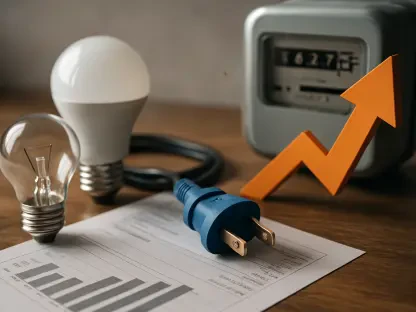
Thanks for having me, Silvia. That $9.4 billion spike this summer was a real gut punch for the 67 million people served by PJM, and it’s largely tied to the explosive growth of data centers driving up demand faster than our supply can keep pace. These facilities, powering everything from cloud computing to AI, are connecting to the grid at a breakneck speed, pushing PJM to procure more capacity at higher costs, which gets passed directly to consumers. I’ve spoken with families in rural parts of the region who’ve seen their bills jump unexpectedly, like a single mom I met who had to cut back on groceries just to keep the lights on—her bill went up by nearly $50 in one month. The metrics behind this surge are tied to PJM’s capacity auctions, where prices soar when demand forecasts—often overestimated by developers—signal a need for more power three years out. It’s a vicious cycle, and without intervention, we’re looking at another $1.4 billion hike next summer.
Can you break down the projected $100 billion cost to PJM consumers by 2033 due to data center demand, and paint a picture of who might be hit hardest by this?
Absolutely, Silvia. That $100 billion figure through 2033 comes from NRDC’s analysis of data center growth outpacing supply, with costs accumulating from capacity over-purchasing and grid upgrades that the public shoulders—over 80% of these costs, to be exact. We’re talking about an extra $70 a month on bills for the average family by 2028, which is devastating for low-income communities in places like inner-city areas of PJM’s footprint, where I’ve seen households already stretching every dollar. Imagine a retiree on a fixed income in one of these neighborhoods, already choosing between heat and medication, now facing this added burden—it’s heartbreaking. Steps to curb this include pushing data centers to fund their own capacity and integrating flexibility in their operations, alongside policies to prevent speculative demand forecasts that leave ratepayers on the hook even if the projected need never materializes.
What are the key factors driving PJM’s grid reliability crisis by June 2027, and how does this compare to past challenges you’ve seen?
The reliability crisis looming by June 2027 is driven by a perfect storm of data centers connecting faster than we can build new power supply, and PJM’s current lack of authority to halt those connections even when supply is inadequate. By 2026, we’ll be at the razor’s edge of just enough power to stay reliable, and any surge—think summer heat waves or winter storms—could push us below standards, risking rolling blackouts. This reminds me of the early 2000s in another region I worked with, where rapid industrial growth led to a blackout during a heatwave; businesses shut down, families sweltered without AC, and the economic ripple was felt for months. My proposal focuses on interruptible service for data centers—giving them power 99.97% of the time but not guaranteeing the last 0.03% during peak stress—to avoid overbuilding capacity. We’re also advocating for energy storage and demand response to bolster the grid, ensuring we don’t repeat history’s mistakes.
Your idea of data centers bringing their own capacity sounds promising. Can you explain how this model works and why it’s a win for everyday consumers?
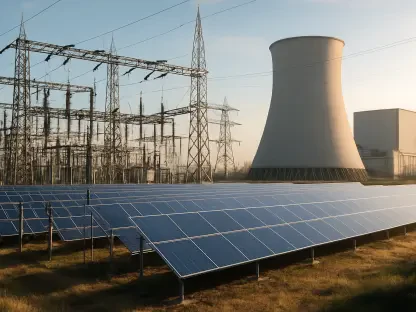
I’m glad you brought that up, Silvia. The “bring-your-own-capacity” model shifts the burden of new power supply to data centers themselves, meaning these tech giants invest in their own generation or storage rather than leaning on public funds to expand capacity for their massive needs. Imagine a major cloud provider partnering with a renewable energy developer to build a dedicated solar farm with battery backup—something we’re starting to see interest in across the sector—that directly supports their energy draw without taxing the grid. For consumers in PJM, this is a huge win because it saves tens of billions in capacity costs that would otherwise hit their bills; they’re not subsidizing corporate growth or risking blackouts if supply runs short. It’s about fairness—when I think of the families already struggling, it feels right to ensure the biggest players pay their share while we maintain reliability for everyone else.
I’m intrigued by the idea that a 6-hour battery outperforms a gas-fired turbine for reliability in PJM’s winter conditions. Can you elaborate on why this is and how data centers can leverage this technology?
You’ve hit on a fascinating shift, Silvia. A 6-hour battery outshines a gas-fired turbine in PJM’s winter conditions because batteries don’t face the same cold-start issues or fuel supply disruptions that gas plants do during extreme freezes—they’re ready to dispatch instantly and reliably. I recall a pilot project I consulted on a few years back where a battery system kicked in during a brutal winter storm, keeping critical loads online when traditional plants faltered; the hum of that system firing up was a sound of pure relief for the operators. For data centers, integrating large-scale, grid-connected storage means they can store power during off-peak times and release it during shortages, directly supporting their climate goals while reducing strain on PJM’s grid. It’s a modest investment relative to their budgets, and it paves the way for zero-carbon operations, which I’ve seen tech companies increasingly prioritize as part of their public commitments. Plus, it’s a faster solution than waiting years for transmission upgrades, keeping their timelines on track.
Flexibility in data center operations seems central to easing grid stress. What does this look like in practice, and how does it benefit other PJM users?
Flexibility is a game-changer, Silvia, and in practice, it means data centers adjusting their power usage during peak demand periods—say, scaling back non-critical processes during a heatwave when everyone’s cranking the AC. Picture a data center I’ve worked with that participates in demand response programs, temporarily shifting workloads to off-peak hours based on grid signals; their operations team described it as a choreography of servers, almost like a dance to balance the load. This directly lowers costs for other PJM users by reducing the need for expensive peak capacity purchases, saving billions over time. It also boosts reliability—less strain on the hottest or coldest days means fewer blackout risks for households. I’ve seen the relief on utility planners’ faces when these big loads step back at the right moment; it’s like giving the grid a much-needed breather.
With PJM members recently voting no-confidence on 12 proposals to manage large loads, what do you see as the path forward to protect the public from these challenges?
That no-confidence vote on November 19 was a frustrating setback, Silvia, and it stemmed from deep disagreements over how to balance data center growth with public interest—some stakeholders prioritized economic development, while others saw the blackout risks and bill hikes as non-negotiable red lines. I’ve been in rooms where these debates get heated, and you can feel the tension as each side digs in, worried about either jobs or reliability slipping away. A potential compromise could center on a hybrid model—offering incentives for data centers to bring capacity while enforcing strict interruptible service as a backstop, ensuring the public isn’t left holding the bag. I believe the board of directors needs to prioritize transparency and fast-track a revised plan, engaging state legislators and consumer advocates to rebuild trust. We can’t afford delays; every month without a solution pushes us closer to those 2027 reliability cliffs, and I think the board must act decisively to shield residents from both blackouts and soaring costs.
What is your forecast for the future of grid reliability in PJM if data centers continue to grow at this pace?
Looking ahead, Silvia, I’m cautiously optimistic but deeply concerned if we don’t act swiftly. If data center growth continues unchecked, by 2030 we could face severe shortages as PJM’s own scenarios suggest, with rolling blackouts becoming a grim reality during extreme weather—imagine entire communities in the dark during a polar vortex. However, if we implement policies like bring-your-own-capacity, invest in storage, and enforce operational flexibility, I believe we can turn this challenge into an opportunity for a more resilient, low-carbon grid. I’ve seen regions bounce back from similar pressures with the right leadership, and I think PJM has the talent and resources to lead the way—if we muster the political will. The clock is ticking, and the next few years will define whether we’re remembered for innovation or for failing to protect the public.