
Despite a landscape marked by significant federal headwinds and policy reversals, the push toward comprehensive electrification in commercial and industrial buildings is not just surviving but advancing with undeniable force. This strategic migration from fossil fuels to high-efficiency electric systems represents one of the most fundamental shifts in modern property management and design. The transition is critical for achieving ambitious carbon neutrality goals, but its significance extends far beyond environmental stewardship, promising enhanced building resilience against grid instability and generating substantial, long-term operational savings. This analysis will explore the core drivers propelling this trend, dissect the major federal and practical barriers creating friction, and examine the resilient strategies and innovative technologies that are ensuring electrification’s continued momentum.
The Unstoppable Momentum of Electrification
The shift toward all-electric buildings is less a fleeting trend and more a foundational change in how energy is consumed and managed within the built environment. This momentum is sustained by a potent combination of economic necessity, regulatory pressure from state and local governments, and the maturation of key technologies that make electrification a practical and profitable decision for a growing number of building owners and facility managers.
Powerful Drivers Fueling Adoption
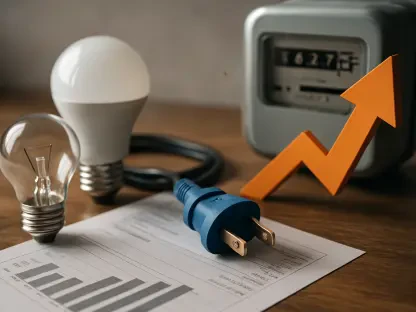
The primary catalyst for electrification is its compelling economic value proposition, which resonates clearly in an era of rising energy demand and price volatility. For businesses, the pursuit of energy efficiency has transitioned from a sustainability goal to a critical operational strategy for controlling costs. Research from the National Laboratory of the Rockies quantifies these benefits, showing that buildings can cut energy consumption by 10% to 50% simply by switching from traditional fossil fuel systems to high-efficiency electric heat pumps. These savings create a powerful, self-sustaining business case that persists regardless of external political climates.
This economic argument is further strengthened by a groundswell of support at the state and local levels, which often acts as a counterweight to federal inaction. The American Clean Power Association has noted a clear trend of increasing adoption of electric space and water heating over natural gas in new commercial constructions nationwide. This shift is actively encouraged by proactive policies, such as California’s ambitious goal to install six million heat pumps by 2030. Concurrently, municipalities are stepping in with direct financial incentives; for example, Columbia, Missouri, offers substantial rebates to encourage the transition, demonstrating a localized commitment to decarbonization that continues to drive the market forward.
Technological Advancements as Key Enablers
Modern technological breakthroughs have effectively dismantled the old arguments against all-electric buildings, making the transition viable and attractive across diverse climates and building types. Core to this evolution are high-efficiency air-source heat pumps and advanced Variable Refrigerant Flow (VRF) systems, which can now deliver reliable heating and cooling even in sub-zero temperatures, overcoming previous performance limitations. These systems are not just replacements for gas furnaces but are sophisticated, adaptable technologies that offer superior performance and efficiency.
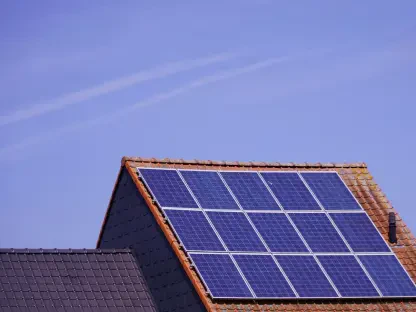
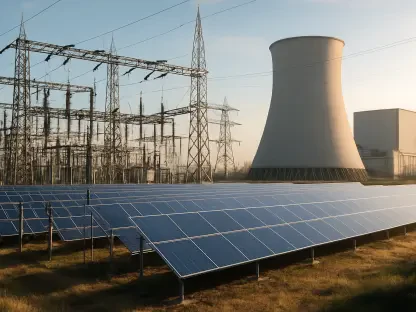
Moreover, the integration of distributed energy resources (DERs) is transforming buildings from passive energy consumers into active participants in the energy ecosystem. The strategic combination of rooftop solar panels, on-site battery storage, and localized microgrids empowers buildings to generate, store, and intelligently manage their own power. This integrated approach dramatically reduces reliance on an often-strained utility grid, provides a powerful hedge against price fluctuations, and critically fortifies facilities against power outages and other forms of instability, adding a crucial layer of operational resilience.
Expert Perspectives on the Industrys Trajectory
Industry leaders across the technology, energy management, and academic sectors confirm that the move toward electrification is a permanent and structural shift, driven by fundamentals that transcend temporary policy changes. Jennifer Nuckles, CEO of R-Zero, captures this sentiment definitively, stating, “Electrification is here to stay, and that’s been across the board,” affirming the industry’s broad-based commitment to this new paradigm. This perspective highlights that the market has reached a tipping point where the inherent benefits are too significant to ignore.
This consensus is echoed by experts who see technology and intelligent automation as the keys to overcoming implementation challenges. Tyler Haak, VP at Schneider Electric, emphasizes the critical role of integrating DERs and leveraging advanced automation not only for efficiency but also to counteract the effects of a shrinking skilled labor pool. Similarly, Ian Shapiro from Syracuse University confirms that technological progress has rendered past debates obsolete, noting that modern heat pump technology is now suitable for virtually any building, making electrification a universally applicable strategy.
The enduring logic of cost savings remains the bedrock of the movement. Patrick Towbin from Ecosave notes that while government programs can accelerate adoption, the core business case remains constant. He frames electrification as a long-term capital planning decision rooted in the undeniable truth that “saving energy” is a timeless business objective. This view positions electrification not as a reaction to incentives but as a proactive strategy for future-proofing assets and ensuring their long-term financial and operational viability.
Navigating the Future: Challenges and Resilient Strategies
While the trajectory is clear, the path forward is not without significant obstacles. The industry must navigate a complex landscape of federal policy reversals, practical implementation hurdles, and coordinated opposition from incumbent interests. However, the response has been one of adaptation and innovation, with the development of resilient strategies that leverage protected technologies and new business models to sustain progress.
Confronting Federal Headwinds and Practical Barriers
A primary challenge stems from federal policies designed to slow the clean energy transition, such as the “One Big Beautiful Bill Act” (OBBBA). This legislation curtails or terminates key tax credits for technologies like heat pumps, solar, and wind, including the vital 179D deduction and the 48E investment tax credit. These changes introduce financial uncertainty and require building owners to navigate complex “safe harbor” deadlines to maximize remaining benefits. The Department of Energy has amplified this uncertainty by rescinding the federal “zero-emissions building” definition and signaling the potential cancellation of over $83 billion in clean energy loans, undermining key support structures for large-scale projects.
In parallel with these federal actions, a coordinated legal and legislative assault is targeting municipal “gas bans,” a key regulatory tool used by local governments to promote electrification in new construction. Successful legal challenges have created a chilling effect, forcing some cities to withdraw their ordinances and creating an unpredictable regulatory environment for developers. Compounding these policy issues are practical industry challenges, most notably the shrinking pool of skilled labor required to install and maintain the complex, integrated systems that define the next generation of smart, electrified buildings.
Innovative Solutions and Protected Technologies
In response to these headwinds, the industry is demonstrating remarkable resilience by pivoting toward technologies with protected incentives and adopting advanced energy management solutions. The OBBBA, for instance, preserves favorable tax treatment for geothermal heat pumps and battery storage systems, creating a powerful incentive to invest in these specific areas. This has spurred increased interest in geothermal applications for large facilities and has accelerated the integration of battery storage to enhance grid independence and manage energy costs.
Furthermore, the focus is shifting to smarter, more dynamic energy management. Thermal Energy Storage (TES) is emerging as a critical tool, allowing facilities to capture and store thermal energy—often from waste heat—for later use, effectively shifting energy loads to off-peak hours to reduce costs. This is complemented by the rise of AI-driven platforms that automate and optimize energy consumption in real time. These systems enable buildings to participate actively in demand response programs and Virtual Power Plants (VPPs), transforming them from simple consumers into intelligent, revenue-generating grid assets. To overcome upfront cost barriers, innovative financing models like Energy Savings Performance Contracts (ESPCs) and Energy-as-a-Service (EaaS) are gaining traction, allowing organizations to fund major retrofits using the future energy savings the projects themselves generate.
Conclusion: A Resilient and Inevitable Electric Future
The trend of building electrification continues its confident advance, propelled by powerful economic, technological, and local regulatory drivers that are proving more than capable of outweighing significant federal obstacles. The fundamental business case—rooted in deep energy savings, enhanced operational resilience, and long-term asset value—remains unshakable. This transition is no longer a niche environmental movement but a core component of strategic, forward-thinking capital planning for facility managers and building owners across the globe. As technology continues to evolve and local commitments strengthen, the shift to an all-electric built environment stands as a resilient and inevitable pillar of a sustainable and efficient future, regardless of the prevailing political climate.