
The relentless computational demands of the artificial intelligence revolution are now fundamentally rewriting the century-old rules of how electricity is priced and sold for industrial-scale consumers across the nation. This seismic shift is not a distant forecast but a present-day reality, forcing utilities and regulators into a frantic race to establish new frameworks capable of managing an unprecedented wave of energy demand. The critical significance of this trend lies in the creation of large load tariffs—specialized rate structures designed to accommodate massive new customers, primarily data centers, without destabilizing the electrical grid or unfairly burdening existing residential and commercial ratepayers with the costs of expansion. This analysis dissects the explosive growth of these new tariffs, examines the key risk-mitigation strategies utilities are deploying to protect their systems, and explores the emerging tensions between state-level caution and federal ambitions to accelerate development.
The Surge of Large Load Tariffs A Utility Response to the AI Boom
The rapid proliferation of large load tariffs represents one of the most significant and accelerated regulatory shifts in the modern history of the American energy sector. Driven almost exclusively by the power-hungry data center industry, this movement reflects a utility sector grappling with a new class of customer whose needs and characteristics diverge sharply from the industrial loads of the past. The scale and speed of this transformation are forcing a fundamental reevaluation of how utilities plan for growth, manage risk, and allocate costs.
The Data Driven Boom in Tariff Creation
The statistical evidence for this trend is compelling and paints a picture of a sector in rapid transformation. According to data compiled by the Smart Electric Power Alliance (SEPA), by the close of 2025, a remarkable 65 large load tariffs were either formally established or pending approval in regulatory proceedings across 34 states. This nationwide movement underscores the widespread nature of the challenge. The acceleration of this trend is even more staggering, with a full 46 of these tariffs being introduced within 2025 alone, indicating that utilities have moved from a reactive posture to a proactive and urgent one.
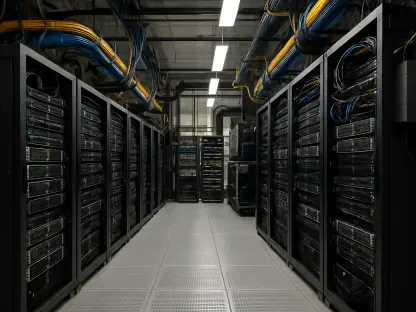
This surge is a direct response to the unique operational profile of hyperscale data centers. Unlike traditional industrial facilities, such as manufacturing plants or smelters, which have more predictable and often cyclical power needs, data centers present a distinct set of challenges. Their sheer scale of consumption can equal that of a small city, they operate at exceptionally high load factors, meaning they draw a massive amount of power almost constantly, and their developers demand rapid deployment timelines that are often incompatible with the multi-year planning cycles for new generation and transmission infrastructure. This mismatch has rendered legacy rate structures obsolete and necessitated the creation of these new, more robust tariffs.
Pioneering Tariffs in Action
In this unsettled landscape, several utilities have emerged as pioneers, crafting defensive tariffs that are already setting new industry standards for risk management. AEP Ohio’s tariff, approved in July 2025, serves as a prime example of a defensive strategy designed to weed out speculative projects. The tariff mandates that any new data center with a load exceeding 25 megawatts must enter into a “take-or-pay” style contract, obligating them to pay for 85% of their contracted capacity each month, regardless of their actual energy use. The impact was immediate and profound, as the utility’s queue of anticipated data center load shrank from a speculative 30 gigawatts to a more manageable 13 gigawatts of formal study requests, demonstrating the tariff’s effectiveness in securing firm commitments.
Similarly, Evergy Kansas has implemented a tariff squarely focused on protecting its existing ratepayer base from subsidizing the grid upgrades required by new large loads. Approved in November 2025, this tariff introduces a 10% rate “adder,” which ensures that data centers cover the marginal costs of the new generation and transmission infrastructure built to serve them. This structure is reinforced by powerful backstop provisions, including a requirement for new customers to provide upfront collateral equivalent to two years of their minimum monthly bills. These financial safeguards transfer a significant portion of the development risk from the utility and its customers to the data center developer, creating a more equitable financial arrangement.
Expert Perspectives Navigating the Dual Mandate of Attraction and Protection
At the heart of this regulatory evolution is a fundamental tension utilities must navigate: a dual mandate to attract the significant economic benefits associated with data center development while simultaneously protecting the electrical grid and existing customers from the immense financial and operational risks these new facilities introduce. This balancing act requires a delicate and innovative approach to rate design, moving beyond historical precedents to address the unique realities of the digital age.
Ryan Hledik, a principal at the Brattle Group, emphasizes that this wave of regulatory innovation was not optional but necessary. He notes that while utilities have long had rate structures for large industrial customers, those legacy mechanisms were simply not built to handle the unprecedented scale, speed, and potential volatility of the modern hyperscale data center market. The inadequacy of old rules forced utilities and their regulators to develop new frameworks from the ground up, designed specifically to manage the risks of stranded assets and cost overruns.
This new reality has led to a paradigm shift in contracting norms, as identified by Lauren Shwisberg of RMI. She points to a clear trend toward substantially longer-term commitments. Whereas a three-year contract was once standard for a large industrial customer, more than a dozen of the new tariffs introduced in 2025 incorporate minimum contract lengths of 15 years. This extension is critical for utilities, as it provides the long-term revenue certainty required to justify the massive, multi-billion-dollar capital investments in new power plants and high-voltage transmission lines needed to serve these loads.
The Evolving Tariff Landscape Future Trajectories and Federal Intervention
While the initial wave of large load tariffs has focused primarily on establishing defensive financial guardrails, the landscape continues to evolve rapidly. The next phase of tariff design is expected to move beyond simple risk mitigation and toward more sophisticated and dynamic structures that integrate these massive loads more flexibly into the grid. However, this state-level innovation is now unfolding under the shadow of potential federal intervention, creating a complex and uncertain future.
A notable absence from the majority of the tariffs approved or pending in 2025 is the inclusion of provisions for demand flexibility. Although the concept of data centers modulating their energy use to support grid stability has generated significant industry discussion, it has yet to be translated into standardized, scalable tariff features. The initial focus has been on establishing foundational risk-mitigation tools. Experts now predict that the integration of flexibility—incentivizing onsite generation, battery storage, or participation in virtual power plants—will be the next major frontier for experimentation in 2026.
With direct rate discounts largely considered an unsustainable attraction strategy, utilities are devising more creative methods to appeal to desirable large loads. One emerging approach involves specialized tariffs that cater to corporate decarbonization goals, allowing a data center to pay a premium for a guaranteed supply of carbon-free energy. Another innovative pathway is the development of “bring-your-own-capacity” provisions, which would permit a data center to bypass lengthy interconnection queues if it co-locates its facility with its own generation or storage resources, thereby reducing its net impact on the grid.
This patchwork of state-level strategies is further complicated by a proceeding at the Federal Energy Regulatory Commission (FERC), initiated in October 2025, which aims to develop a standardized framework for large load interconnection. The federal government’s primary goal is to accelerate deployment, a mission that is not always aligned with the more cautious, risk-averse posture adopted by many state utility commissions. This has ignited a jurisdictional debate, with states pushing back against perceived federal overreach. A pivotal ruling from FERC, expected by April 2026, will be a defining moment, potentially creating a new layer of complexity or providing the certainty needed to shape the next generation of tariff design.
Conclusion Redefining the Power Paradigm
The events of 2025 marked a definitive turning point in the relationship between the energy and technology sectors. In response to the unprecedented demands of the AI boom, a rapid proliferation of defensive large load tariffs established new standards for risk mitigation across the country. The widespread adoption of mechanisms like “take-or-pay” clauses, significant rate adders, and extended contract terms created a new baseline for how utilities protect their systems and existing customers from the financial exposure associated with massive new loads.
These tariffs have become far more than mere regulatory filings; they have effectively written a new rulebook for the critical intersection of the digital and energy economies. This framework is now actively shaping investment decisions, determining where data centers are built, and defining the financial responsibilities of the world’s largest technology companies. The clear absence of demand flexibility provisions in this first wave, however, highlighted that this rulebook is still a work in progress, with significant evolution yet to come.
Ultimately, the power industry found itself at a critical juncture where the trajectory of the nation’s grid would be determined. The interplay between state-level innovation, driven by local needs and risk tolerance, and the push for federal oversight, aimed at standardization and speed, created a dynamic tension. How this relationship resolves itself will dictate the future stability, fairness, and growth potential of an energy system tasked with powering the next era of technological advancement.