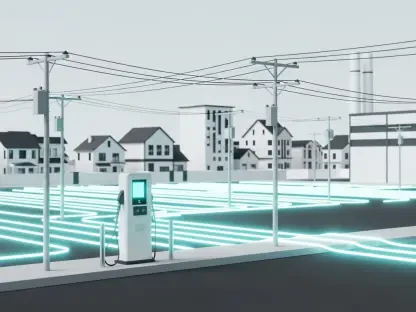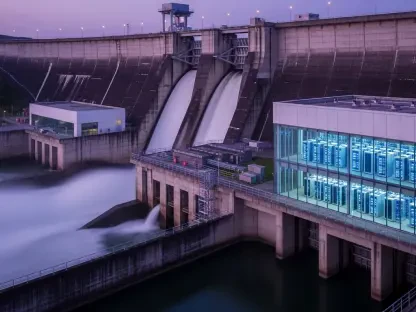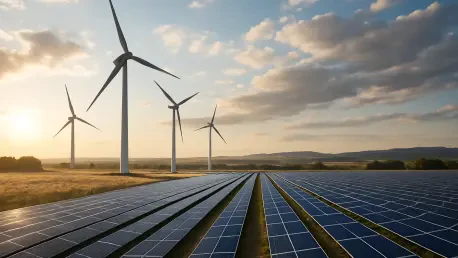

For over a century and a half, the United States has powered the world through innovation and resourcefulness, but today it stands on the precipice of an energy revolution where its historic dominance is no longer guaranteed. This moment presents a critical choice: either commit to a strategic, forward-thinking investment in clean energy technologies or risk ceding economic leadership, national security, and global influence to determined competitors like China. The outcome of this decision will define the nation’s trajectory for generations, determining whether it remains a global superpower or becomes a follower in the most significant technological transition of the 21st century.
An Innovation Cliff Looms Over America’s Energy Superpower Status
The central question facing policymakers is whether the nation will proactively shape its energy destiny. The global shift toward clean energy is inevitable, driven by technological advancements and environmental imperatives. For the U.S., this transition is not merely an option but a strategic necessity. Continuing with the status quo means accepting a future where America is dependent on foreign nations for the very technologies that will power its homes, industries, and military.
The stakes of this decision are immense. Ceding leadership in the clean energy sector would trigger a cascade of negative consequences, from vulnerabilities in critical supply chains to a diminished role in international affairs. Economic prosperity is also on the line, as the countries that innovate and deploy these new technologies will capture the vast majority of the new jobs and economic growth associated with this global industrial transformation.
The Four Front Challenge Defining America’s Energy Future
America’s energy landscape is currently defined by a convergence of four distinct but interconnected challenges. First, a national security imperative has emerged from the growing reliance on foreign supply chains for essential components like batteries and solar panels, a dependency that grants significant leverage to geopolitical rivals. Compounding this risk is an affordability crisis, where volatile energy costs strain household budgets and threaten broader economic stability, making the development of cheap, domestic energy sources more critical than ever.
Conversely, these challenges also present historic opportunities. The global energy transition represents a massive economic opening for the United States to spearhead innovation, creating millions of well-paying domestic jobs in manufacturing, installation, and research. Simultaneously, the decarbonization mandate to combat climate change provides a powerful incentive to overhaul the nation’s energy system, creating a cleaner, more resilient, and more sustainable infrastructure for the future.
A Two Pronged Strategy for Dominance Investment and Reinvention
Addressing this complex situation requires a decisive, two-pronged strategy, beginning with a significant financial commitment. A strategic federal investment of $25 billion annually for the Department of Energy’s (DOE) research, development, and demonstration programs by 2030 is essential. This figure, representing less than one percent of the projected federal budget for that year, is a modest price to pay to avoid a looming “innovation cliff” as crucial funding initiatives from earlier this decade are set to expire. This investment would provide the certainty needed to fuel long-term projects and attract private capital.
Financial investment alone, however, is insufficient. The second prong of the strategy is a fundamental institutional overhaul of the DOE itself. The agency must be reformed from the inside out to become a more agile, effective, and reliable partner for American innovators. This requires fostering a new culture that prioritizes collaboration with the private sector, accelerates the pace of technological deployment, and adopts long-term strategic thinking to anticipate and overcome future energy challenges.
Learning from History The 1970s Oil Crisis as a Blueprint for Success
The path to renewed energy leadership has a historical precedent. As Evan Chapman, senior director of policy for Clean Tomorrow, has argued, the urgency of federal action today mirrors past crises. The U.S. response to the 1970s oil crisis provides a powerful case study. Faced with crippling energy shortages, the nation established the Department of Energy and initiated massive investments in research. This concerted effort directly led to transformative technologies, including the development of viable solar cells and the innovations that unlocked the shale gas boom, fundamentally reshaping the global energy market.
The lessons from that era are directly applicable to the challenges of today. Just as a focused national effort overcame the oil shocks of the 20th century, a similar commitment can tackle the modern imperatives of widespread electrification, AI-driven industrial optimization, and grid modernization. History demonstrates that when the nation unites behind a clear technological goal and provides the necessary resources, it can achieve breakthroughs that once seemed impossible, securing its energy independence and economic strength in the process.
The Path Forward A Concrete Plan for Securing America’s Energy Future
The strategy for securing America’s energy future must be built on clear, actionable goals. The first strategic pillar is to secure the $25 billion annual federal commitment for DOE innovation programs by 2030. This sustained funding is not just about inventing new technologies in a lab; it is about ensuring a continuous pipeline from development to demonstration and ultimately to large-scale deployment across the country. This ensures that next-generation energy solutions become commercially viable and widely accessible.
The second strategic goal is to initiate a comprehensive structural and cultural reform of the Department of Energy. This means streamlining processes, breaking down bureaucratic silos, and creating new partnership models that better support the fast-paced, risk-taking environment of the private sector. The DOE must evolve from a mere funding agency into a true strategic partner that helps American companies out-compete their global rivals.
The ultimate objective of this combined approach is to empower the United States to act decisively and shape its own energy destiny. By investing in its innovators and reforming its institutions, the nation can ensure that its energy future is built on its own terms, driven by American technology, supported by American workers, and secured against foreign manipulation.
The United States stands at a historic juncture where the decisions made over the next few years, from 2026 to 2028, will dictate its global standing for the remainder of the century. The path forward requires more than just acknowledging the challenges; it demands bold action and sustained investment. By embracing a strategy of robust public funding for innovation and a revitalization of its key energy institutions, the nation can not only avert the risks of dependency and economic decline but also seize the unparalleled opportunity to lead the world into a cleaner, more prosperous, and more secure energy era. The choice is clear, and the time to act is now.