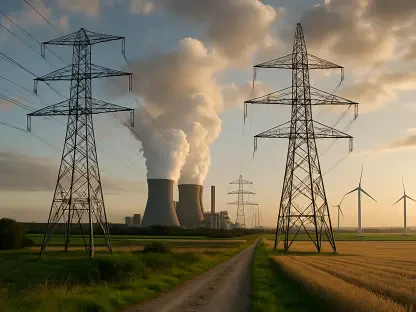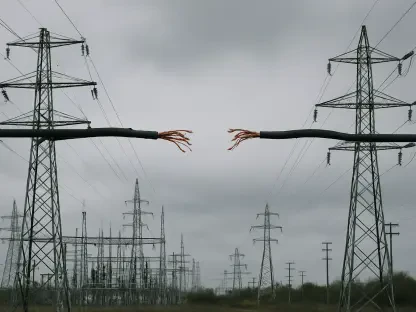

A comprehensive new analysis has revealed that the electrical grid infrastructure underpinning modern American society is facing a severe and escalating cybersecurity crisis, characterized by systemic vulnerabilities and defense mechanisms that lag more than a decade behind standard corporate practices. Based on a study of over one hundred operational technology systems at power facilities, the findings paint a deeply troubling portrait of an industry that has systemically prioritized operational continuity at the expense of robust security preparedness. This has left the nation’s most essential infrastructure dangerously exposed to a growing number of sophisticated nation-state adversaries and cybercriminals. The core of the issue lies within the Operational Technology (OT) networks—the specialized systems of hardware and software that directly monitor and control physical processes such as power generation and distribution. These systems, many engineered in an era preceding modern cyber threats, were never designed with security as a primary consideration, and their increasing connectivity has transformed them from isolated industrial controls into highly attractive and vulnerable targets for malicious actors seeking to cause widespread societal disruption.
Pervasive Failures in Basic Security
One of the most significant and concerning findings is the widespread failure in fundamental authentication and access control, creating multiple pathways for potential attackers. A substantial percentage of the energy facilities analyzed have not implemented multi-factor authentication (MFA) for their critical OT systems, continuing instead to rely on antiquated single-password controls—a practice long abandoned in other sensitive sectors. This critical oversight means that a single compromised password, whether stolen through phishing, social engineering, or a data breach, could be sufficient for an adversary to gain complete and unfettered control over essential infrastructure components, such as circuit breakers, relays, or power generation turbines. The problem is further compounded by the discovery of systems still operating with default, factory-set credentials that were never changed upon installation, providing a trivial entry point for any attacker with knowledge of the equipment’s documentation. These vulnerabilities are not complex or novel; rather, they represent a failure to implement the most basic and widely accepted security hygiene principles.
Equally alarming are the deep-seated architectural flaws in network design and password management practices that would be considered grossly negligent in almost any other industry. The study uncovered that many facilities maintain direct, poorly secured connections between their corporate Information Technology (IT) networks and their sensitive OT systems. This lack of proper network segmentation creates a direct bridge for attackers, enabling a common attack scenario where an adversary first compromises the less-secure corporate IT network and then “pivots” into the OT environment to manipulate physical processes. Security experts have long advocated for “air-gapping”—physically isolating OT networks—or implementing heavily segmented and firewalled networks, but implementation remains inconsistent. Furthermore, investigators found frequent instances of shared credentials being used by multiple operators, negating individual accountability. In some cases, passwords were found physically written on sticky notes near workstations, while the authentication systems themselves often lacked policies to enforce regular password rotation or complexity requirements, allowing weak passwords to persist for years.
Compounding Challenges Legacy Systems Skills Gaps and Regulation
The security crisis is exacerbated by a confluence of technical, economic, and personnel challenges that create a formidable barrier to modernization. A primary technical hurdle is the prevalence of legacy systems, with a significant portion of the nation’s energy infrastructure operating on OT hardware and software that is decades old. Some control systems identified were over 20 years old, designed long before internet connectivity was a consideration. This aging equipment often runs on outdated operating systems that no longer receive security patches or support from manufacturers, leaving known vulnerabilities permanently unaddressed. Retrofitting these legacy systems is a technically complex and expensive undertaking, and the economic calculus for energy utilities, which operate on multi-decade replacement cycles, often favors extending the life of vulnerable but functional equipment rather than undertaking costly security modernization projects. This situation is compounded by a significant human resources challenge, as securing OT environments requires a unique, hybrid expertise that spans both electrical engineering and modern cybersecurity, a skill set many utilities lack internally.
The existing regulatory frameworks have also struggled to keep pace with the rapidly evolving threat landscape, creating an environment where compliance does not guarantee comprehensive security. While standards such as the North American Electric Reliability Corporation’s Critical Infrastructure Protection (NERC CIP) establish a baseline of security requirements, the recent analysis suggests that many facilities can meet the minimum regulatory thresholds while still harboring significant and exploitable vulnerabilities. The highly fragmented ownership structure of the American power grid—comprising thousands of different investor-owned utilities, municipal providers, and independent operators—further complicates efforts to enforce high, uniform security standards. This decentralization creates a critical “weakest link” problem, where an attacker can target a less-secure, smaller utility to potentially trigger a cascading failure that impacts broader grid stability. Without a more rigorous and universally applied set of standards, the grid remains a patchwork of varying security postures, leaving the entire system vulnerable to an attack on its least-defended component.
The High Stakes Nation State Threats and Catastrophic Consequences
The vulnerabilities identified in the power grid exist in the context of active and documented threats from sophisticated nation-state actors. U.S. intelligence agencies have issued repeated warnings that adversarial nations, including Russia and China, have successfully pre-positioned malware within American critical infrastructure. This dormant malware could be activated during a geopolitical conflict to cause widespread blackouts and cripple the nation’s ability to function. The security gaps related to weak authentication, poor network segmentation, and unpatched legacy systems provide a clear and actionable roadmap for how such devastating attacks could be executed. The 2015 and 2016 cyberattacks on Ukraine’s power grid, which were attributed to Russian state-sponsored hackers and caused blackouts for hundreds of thousands of citizens, serve as a stark real-world precedent. Those attacks successfully exploited the very same types of vulnerabilities now found to be widespread across U.S. infrastructure, demonstrating that these are not merely theoretical risks but proven methods for disrupting a nation’s power supply.
The potential consequences of a successful large-scale cyberattack on the American power grid are catastrophic and extend far beyond the immediate loss of electricity. Modern society’s profound dependence on a stable power supply means that a sustained grid failure would trigger a domino effect of cascading failures across all other critical sectors, bringing the nation to a standstill. Healthcare systems would be crippled as hospitals lose power to essential life-support systems, communications would go down, water treatment plants would cease to function, and financial systems would grind to a halt. Experts estimate that a coordinated attack causing multi-week blackouts in major metropolitan areas could result in economic damages measured in the hundreds of billions of dollars and lead to a significant loss of life. This dire scenario underscores the urgency of addressing the grid’s deep-seated security flaws before they can be exploited to inflict irreversible harm on the country’s economy, security, and population.
A Call for Unified Action
The urgent need to address the vulnerabilities plaguing America’s power grid demanded a unified commitment from utility leaders, regulators, policymakers, and technology partners. It became clear that moving beyond a compliance-based, checkbox approach to security was essential for survival in the modern threat landscape. A fundamental cultural transformation was recognized as necessary within energy operations, where the guiding principles of reliability and uptime evolved to include robust cybersecurity as an indispensable component of service delivery. This shift was driven by leadership and reinforced through comprehensive training programs that equipped frontline operators with critical cybersecurity awareness. Technologically, the industry moved toward more modern security architectures, with forward-thinking utilities adopting “zero-trust” principles that mandated continuous authentication for all system access.
Confronting this critical threat required not only a cultural shift but also significant financial investment and a modernization of the workforce. It was understood that comprehensive OT security modernization, estimated to cost between $500,000 and $5 million per facility, was non-negotiable. Navigating the question of who would bear these costs—ratepayers, utility shareholders, or taxpayers—necessitated clear policy and regulatory guidance. Recent federal infrastructure legislation allocated funds for grid security, and these programs were implemented swiftly to begin closing the vast investment gap. As the energy grid became increasingly digitized and interconnected, its security foundations were rebuilt to withstand sophisticated threats. The alternative—waiting for a catastrophic attack to compel action—was deemed a gamble that the nation could not afford to take.