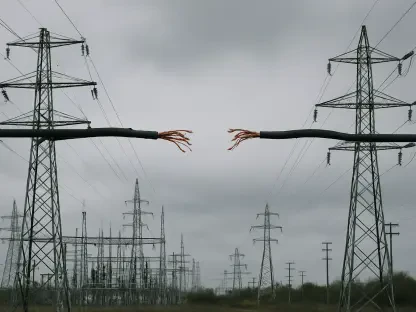

Imagine a darkened city, millions of homes without electricity, and entire communities scrambling to cope as storms rage outside. In 2024, this wasn’t just a fleeting nightmare but a stark reality for countless Americans, as power outages soared to record-breaking levels. With electricity customers facing an average of 11 hours without power—nearly double the average of the past decade—this crisis exposed the fragility of the nation’s energy grid. The year became a turning point, demanding attention to the vulnerabilities that left so many in the dark. What unfolded serves as a critical lesson on the intersection of extreme weather and outdated infrastructure, urging a deeper look into the events that defined this historic disruption.
Capturing the Scale: A Year of Unrelenting Blackouts
The magnitude of the 2024 power outage crisis gripped the nation, as reported data painted a grim picture of reliability. Across the United States, the surge in disruptions wasn’t just a statistic but a lived experience for millions, with the average duration of power loss shattering previous benchmarks. This wasn’t a localized issue but a widespread challenge, touching nearly every corner of the country, though some regions felt the sting far more than others. The significance lies in what this reveals: a power system struggling to keep pace with escalating natural threats.
Beyond the numbers, the human toll of these outages became evident as families and businesses grappled with the fallout. From spoiled food to disrupted medical care, the ripple effects underscored a growing dependence on a grid that faltered under pressure. This year’s events didn’t just break records; they broke trust in a system many had taken for granted, setting the stage for a closer examination of the forces behind the blackouts.
Diving into the Causes: Nature’s Fury and Systemic Flaws
Hurricanes Take Center Stage: The Storms That Shattered Records
At the heart of the 2024 crisis were monstrous hurricanes, with names like Beryl, Helene, and Milton becoming synonymous with devastation. These storms alone accounted for a staggering 80% of outage hours, leaving communities in chaos for an average of nearly nine hours per major event—a sharp contrast to the four-hour average of prior years. The sheer power of these tempests overwhelmed infrastructure, ripping through power lines and substations with unrelenting force.
Experts pointed to a troubling trend: the increasing frequency and intensity of such weather events, driven by broader climate shifts. This wasn’t just about one bad season but a glimpse into a new normal where storms pose an ever-growing threat to grid stability. The challenge now lies in preparing for a future where nature’s wrath shows no sign of easing.
Regional Hardships: The Southeast’s Heavy Burden
While the crisis spanned the nation, the southeastern states bore an outsized share of the pain. South Carolina, in particular, endured an astonishing average of 53 hours without power, largely due to Hurricane Helene’s catastrophic impact on 1.2 million customers. Neighboring states like North Carolina and Florida also reeled under the weight of Helene and Milton, with the latter leaving 3.4 million Floridians in the dark.
The physical destruction in these areas was staggering, with utility giants like Duke Energy forced to rebuild entire systems and replace thousands of transformers. In contrast, states such as Arizona and Massachusetts escaped with minimal disruptions, averaging less than two hours of outages per customer. This uneven impact highlights how geography and weather patterns can dictate the severity of such crises, leaving some regions far more exposed than others.
Hawaii’s Distinct Struggle: Frequent but Fleeting Interruptions
Far from the mainland, Hawaii faced a unique set of challenges in 2024, marked by the highest frequency of outages in the country. Customers there dealt with an average of 4.4 interruptions—well above the national average of 1.5—stemming from a mix of adverse weather, volcanic activity, and unexpected failures at oil-fired plants. However, the total time without power remained under 10 hours, a stark contrast to the prolonged blackouts elsewhere.
This pattern reflects localized vulnerabilities, where the islands’ isolated grid and environmental factors create a different kind of risk. Delays in connecting new power generation capacity only compounded the issue, illustrating how diverse the nation’s energy challenges can be. Hawaii’s story adds a critical layer to understanding the broader outage crisis, showing that solutions must be tailored to specific regional realities.
Exposed Weaknesses: An Aging Grid Under Siege
Beyond the storms, the 2024 outages laid bare the systemic frailties of an aging power grid. Transmission lines and substations, many decades old, crumbled under the strain of modern threats, unable to withstand the battering of extreme weather. This infrastructure, designed for a different era, proved ill-equipped to handle the demands and dangers of today.
Insights from industry analyses underscored the mounting toll of such disasters, with utilities facing unprecedented repair costs and logistical hurdles. The urgent need for modernization became undeniable, as each blackout served as a reminder of the gap between current capabilities and future needs. Addressing these deep-rooted issues stands as a pivotal task for ensuring reliability in the years ahead.
Reflecting on the Crisis: Lessons Learned and Paths Forward
Looking back, the record-setting power outages of 2024 unfolded as a sobering chapter in the nation’s energy history, driven by relentless hurricanes, stark regional disparities, and glaring infrastructure shortcomings. The southeastern states endured the worst of the disruptions, while places like Hawaii revealed unique vulnerabilities, painting a complex picture of a grid under strain. These events underscored the fragility of a system pushed to its limits by nature’s increasing ferocity.
Moving forward, the focus shifted to actionable strategies, with a clear call for investment in climate-resilient infrastructure. Upgrading transmission networks, integrating smarter grid technologies, and prioritizing renewable energy sources emerged as vital steps to prevent similar crises. Additionally, policymakers and utilities began exploring ways to better support vulnerable regions, ensuring that no community remains disproportionately at risk. The legacy of 2024 became a catalyst for change, urging a collective push toward a stronger, more adaptive energy future.