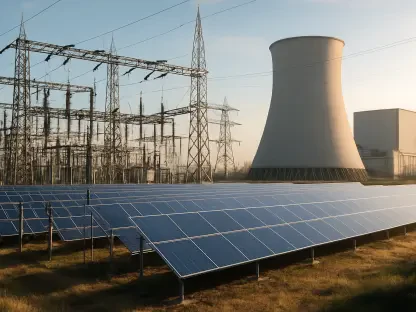

In a market designed to guarantee the lights stay on for millions, the latest auction results have paradoxically signaled a future where consumers will pay historically high prices for a power grid that is less reliable than ever before. This outcome from the nation’s largest grid operator, PJM Interconnection, has sent shockwaves through the energy sector, raising fundamental questions about market stability, the pace of the energy transition, and whether the current system can cope with the demands of a rapidly electrifying world. The convergence of record costs and a significant reliability deficit has created a high-stakes dilemma for regulators, utilities, and the 65 million people who depend on the grid’s performance.
The PJM Power Market a Critical System at a Crossroads
PJM Interconnection operates the largest wholesale electricity market in North America, coordinating the movement of electricity across 13 states and the District of Columbia. Its role is essential, acting as a central nervous system for the regional power grid to ensure that supply and demand are balanced in real time. The reliability of this complex system underpins the economic activity and daily life of a significant portion of the country, making its stability a matter of national importance.
At the heart of PJM’s long-term reliability strategy is its capacity market. Through a series of competitive auctions, PJM procures commitments from power generators to be available to produce electricity three years in the future. This forward-looking mechanism is intended to provide clear price signals that incentivize investment in new power plants and the maintenance of existing ones, thereby securing a sufficient supply buffer to handle unexpected events like extreme weather or plant outages.
The market involves a diverse set of actors, each with distinct interests. Power generators, from large nuclear and fossil fuel operators to emerging renewable developers, compete to sell their capacity. Utilities and other electricity suppliers purchase these commitments to meet their obligations to serve customers. Large industrial consumers actively participate to manage their energy costs, while state and federal regulators, primarily the Federal Energy Regulatory Commission (FERC), oversee the market rules to ensure they are just and reasonable.
A Paradoxical Outcome Analyzing the 2027-2028 Auction Results
The Alarming Trend Skyrocketing Prices Meet a Widening Reliability Gap
The auction for the 2027-2028 delivery year marked the third consecutive event to clear at a record-high price, signaling deep-seated stress within the market. Prices hit the established cap of $333.44 per megawatt-day, a ceiling put in place temporarily through an agreement with Pennsylvania’s governor. Without this intervention, PJM estimates prices would have skyrocketed to nearly $530/MW-day, revealing a severe underlying scarcity of available generation resources. The future of this price cap remains uncertain, creating significant anxiety about potential price volatility in upcoming auctions.
More alarming than the price, however, was the auction’s failure to procure enough capacity to meet PJM’s own reliability standards. The process secured 145,777 MW of power, leaving a 6,625 MW shortfall below the target needed to maintain a 20% reserve margin. This buffer is designed to limit the risk of large-scale outages to just one day every ten years. Missing this target by such a wide margin is a critical failure that, under PJM’s rules, automatically triggers a formal investigation into the causes.
This combination of record prices and a reliability deficit has been described by consumer advocates as a “worst of all worlds” scenario. Customers are now facing the prospect of paying more for a less secure grid, while incumbent power plant owners reap the financial benefits of the high clearing price. This outcome directly challenges the market’s core premise: that competitive auctions should deliver reliability at a reasonable cost.
Decoding the Numbers a Soaring Price Cap and Stagnant Generation Mix
Despite the record-setting price per megawatt-day, the total cost of procured capacity rose only modestly to $16.4 billion from $16.1 billion in the prior auction. PJM officials noted that because the clearing price was similar to the last result, the immediate impact on customer bills would be minimal, as capacity costs are only one component of the total electricity price. However, the high price signal failed to stimulate new supply, with a mere 774 MW of new generation and plant upgrades clearing the auction.
An analysis of the generation mix reveals a market still heavily reliant on traditional power sources. Natural gas-fired plants secured the largest share at 43%, followed by nuclear at 21% and coal at 20%. Renewables played a minor role, with wind and solar combining for just 3% of the cleared capacity. This stagnant generation mix highlights the systemic challenges facing the energy transition within the PJM market framework.
Consequently, the high clearing price will deliver a significant financial windfall to existing power producers. Constellation Energy, a major nuclear operator, is projected to earn approximately $2.2 billion in capacity revenue. Similarly, Vistra and Talen Energy, with large fleets of natural gas and other conventional power plants, anticipate revenues of $1.3 billion and $1.1 billion, respectively. These figures underscore the concerns of consumer groups that the current market structure disproportionately benefits incumbent generators during periods of supply constraint.
The Root of the Crisis Surging Demand Collides with a Supply Bottleneck
A primary driver behind the auction’s strained outcome was a massive 5,250-MW upward revision in PJM’s demand forecast. Officials attribute this surge almost entirely to the voracious and rapidly growing energy needs of new data centers, many of which are being developed to power artificial intelligence infrastructure. This trend is not unique to PJM but reflects a nationwide challenge where the digital economy is placing unprecedented stress on regional power grids.
This explosion in demand is colliding with a significant supply-side bottleneck that is stifling the development of new power generation. Industry analysts point to a confluence of systemic barriers, including lengthy and complex permitting processes that can delay projects for years. Furthermore, a difficult financing environment and persistent supply chain constraints, such as shortages of critical components like gas turbines and transformers, are making it challenging to bring new resources online at the pace required.
The result is a fundamental market imbalance. The rapid load growth from data centers and electrification is far outpacing the slow, arduous process of developing and connecting new generation resources. The 2027-2028 auction results are a clear symptom of this growing disconnect, serving as a warning that the grid’s supply cannot keep up with its projected demand.
Navigating the Fallout PJM’s Mitigation Strategy and Regulatory Interventions
In response to the reliability shortfall, PJM officials have outlined a multi-pronged strategy to mitigate the risk before the 2027-2028 delivery year begins. A new load forecast is expected to be released soon, which PJM anticipates will be “appreciably” lower due to a more rigorous vetting of potential large-scale power users and a moderated economic outlook. Additionally, PJM expects some planned power plant retirements may be delayed, and it retains the ability to procure more resources through a series of “incremental auctions” held closer to the delivery date.
The temporary price cap that prevented an even more dramatic price spike has become a central point of debate. Its future application is uncertain, but many market observers expect it will be reinstated for the next auction to prevent runaway prices. This ad-hoc approach, however, raises questions about long-term market predictability and whether such interventions mask the underlying supply problem rather than solve it.
The severity of the reliability gap has also led to speculation about more drastic regulatory actions. Some analysts predict that PJM’s board may be forced to seek FERC approval for a “backstop procurement” process. This would involve launching a special request for proposals to secure capacity-only resources outside the normal auction process, likely through costly long-term contracts, to guarantee that sufficient generation is built.
A Divided Path Forward The Battle Over PJM’s Market Future
The auction results have ignited sharp criticism from consumer advocates and industrial groups, who argue the market is fundamentally broken. Organizations like the Ohio Manufacturers’ Association contend that customers are being forced to overpay to keep inefficient legacy power plants online instead of funding the construction of modern, efficient generation. The Citizens Utility Board of Chicago has called for sweeping reforms, including making the price cap permanent and eliminating the auction’s price floor to better protect ratepayers.
In contrast, power generator groups have cautioned against disruptive policy changes that could chill investment. They argue that the auction’s outcome does not reflect recent announcements of new power projects, which have long development timelines. These groups warn that policies allowing utilities to build their own power plants and pass the costs directly to customers—a practice known as rate-basing—would not accelerate construction and would ultimately harm affordability.
This deep division reflects a core conflict over the future of PJM’s market design. The central question is whether the current auction structure can be adjusted to incentivize the massive investment required for the energy transition, or if a more fundamental overhaul is needed. The debate pits those who believe market forces will eventually self-correct against those who see a system failing to deliver on its promises of reliability and affordability.
Paying More for Less The Verdict on PJM’s Grid and the Imperative for Change
The 2027-2028 auction delivered a clear and troubling verdict: PJM’s market is signaling a severe supply crisis that jeopardizes both grid reliability and energy affordability for millions. The results confirm a growing structural imbalance where unprecedented demand growth, driven by new technologies like AI, is clashing with a constrained and slow-to-evolve supply of power generation. This is not a temporary anomaly but a systemic challenge demanding immediate and thoughtful attention.
A profound disconnect now exists between the market’s price signals and its performance. Consumers are being asked to pay record-high prices, yet the system is failing to secure the resources needed to meet its own minimum reliability standards. This outcome erodes confidence in the market’s ability to manage the clean energy transition while maintaining the integrity of the grid. The current trajectory points toward a future of escalating costs for diminishing security, a scenario that is untenable for both households and businesses.
Therefore, a comprehensive re-evaluation of PJM’s market rules is no longer an option but an imperative. Stakeholders, regulators, and policymakers must collaborate to design a framework that can foster timely investment in a diverse and reliable resource mix. The market must be reformed to ensure it can deliver a secure and affordable energy future in an era of rapid technological change and accelerating demand. Failure to act decisively risks undermining the foundation of the regional economy and the well-being of the public it serves.