
As the demand for energy-intensive facilities like data centers continues to skyrocket, the tension between grid stability and rapid infrastructure development has reached a boiling point. Christopher Hailstone, an expert in utility regulation and power delivery, joins us to discuss the complexities of the PJM Interconnection’s latest colocation proposals. With years of experience navigating the intersection of renewable energy and grid security, Hailstone provides a deep dive into why current regulatory frameworks might be falling short of industry needs.
In this discussion, we explore the challenges posed by a five-year implementation lag for new transmission rules and the operational risks inherent in treating colocated power as a general network resource. Hailstone also breaks down the severe penalties associated with load-shed compliance and the ongoing debate over how to fairly distribute transmission costs between massive data center projects and everyday ratepayers.
With some grid operators suggesting a 2029 implementation date for new transmission rules, how does this timeline affect the immediate needs of developers facing rising power demands, and what interim strategies can be used to navigate these delays while ensuring project viability?
A timeline that pushes implementation to June 1, 2029, creates a massive vacuum for developers who are ready to break ground today. For companies like Vistra and Constellation Energy, waiting five years is simply not an option when the demand for AI and cloud computing is surging right now. In the interim, developers are forced to rely on “behind-the-meter” configurations that bypass traditional grid queues, though this often leads to friction with regional transmission owners. To ensure viability, many projects are pursuing phased interconnection agreements where they accept “non-firm” status initially, essentially gambling that the grid can handle their load until the formal software and system changes are finally integrated by the end of the decade.
If colocated loads are treated as part of a general network resource pool rather than having dedicated rights to onsite generation, what specific risks does this create for facility reliability, and how should energy contracts be structured to mitigate the threat of unexpected curtailment?
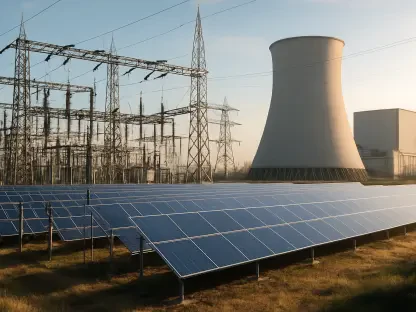
The primary risk is that even if a data center builds its own dedicated power plant right next door, the grid operator could technically divert that electricity to a city hundreds of miles away during a peak event. Under the proposed Interim Network Integration Transmission Service, a facility loses its primary rights to its own generated electrons, which the Data Center Coalition argues makes the entire investment feel redundant. To mitigate this, energy contracts must move away from simple delivery agreements and toward complex “Physical PPA” structures that include ironclad availability guarantees and liquidated damages for curtailment events. Without these protections, a facility faces the sensory nightmare of a total blackout—silencing thousands of servers and triggering millions of dollars in downtime costs—simply because they were categorized as a general network resource rather than a dedicated user.
When a failure to follow load shed orders carries the penalty of a complete loss of transmission service, what operational safeguards must a facility implement to ensure compliance, and how can these rigid requirements be balanced with the need for flexible, phased project development?
The penalty for failing a load shed order is essentially the “death penalty” for a data center: a total loss of transmission service that could shutter operations indefinitely. To safeguard against this, facilities must implement automated Power Management Systems that can shed non-critical loads within milliseconds of receiving a signal from PJM, ensuring that human error never enters the equation. Balancing this with phased development requires a modular approach to infrastructure, where each “block” of load has its own independent shedding protocol and dedicated backup generation. It is a high-stakes balancing act where a developer must prove to regulators that they can drop 100 megawatts of demand instantly, or risk being disconnected from the grid entirely.
Some experts argue that non-firm contract demand services allow large loads to bypass their share of transmission system costs. How can a regulatory framework be designed to ensure fair cost-sharing among all users while still providing the low-cost incentives necessary to attract large-scale colocation projects?
The market monitor, Monitoring Analytics, has rightly pointed out that if colocated loads use the grid as a “subsidized backup” without paying into the system, the financial burden shifts unfairly to residential and small business customers. A balanced framework should utilize a “sliding scale” fee structure where colocated loads pay a reduced transmission rate during normal operations but are hit with high-intensity usage fees during peak grid stress. We could also implement a “system benefit charge” specifically for large-scale data centers, where the funds are directly reinvested into local transmission upgrades that benefit both the facility and the surrounding community. This creates a win-win scenario: the developer gets the low-cost onsite power they crave, while the grid receives the capital necessary to maintain reliability for everyone.
What is your forecast for the future of data center colocation within the PJM region?
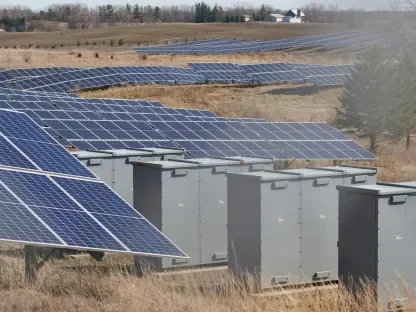
I anticipate a period of intense legal and regulatory friction through 2026 as stakeholders fight to pull the 2029 implementation date forward, but ultimately, the sheer economic gravity of data centers will force a compromise. We will likely see the emergence of “hybrid” zones where PJM grants special, accelerated status to projects that include significant onsite battery storage to act as a buffer for the grid. While the current proposals are viewed as overly rigid, I expect market pressure to eventually yield a more flexible, three-tiered transmission service that treats large loads as assets to grid stability rather than just liabilities. The PJM region will remain the global hub for these projects, but the “wild west” era of easy interconnection is over; the future will be defined by sophisticated, software-driven energy management and much tighter integration between generators and consumers.