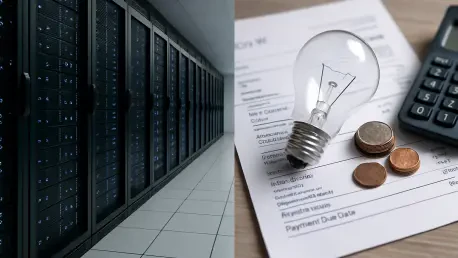

The rapid proliferation of massive artificial intelligence hubs across the American landscape is currently reshaping the fundamental economics of the national power grid in ways that few residential customers truly understand. While headlines often warn of an impending energy crisis, the influx of these power-hungry giants might actually be the key to reducing monthly utility expenses for the average family. This counterintuitive reality centers on the scale of corporate investment versus individual consumption. If handled correctly by policymakers, the sheer volume of electricity purchased by big tech could dilute the overhead costs that currently weigh down every household bill.
The tension between increasing energy demand and consumer pricing is the defining challenge of the current decade. For decades, electricity demand remained largely flat, meaning the costs of maintaining wires and power plants were split among a stagnant pool of users. Now, as the era of artificial intelligence accelerates from 2026 to 2028, the arrival of hyperscale data centers provides a massive new customer base. This surge in demand creates a rare opportunity to rebalance the scales of utility financing, provided the regulatory framework forces companies to pass these benefits along to the public.
The Surprising Math: Modern Power Consumption
Every time a massive data center plugs into the grid, it brings the potential to drive down the price of electricity for every residential household in its vicinity. This dynamic hinges on a simple principle of scale: the more power a utility sells to corporate giants, the less individual homeowners should theoretically have to pay to keep the lights on. Currently, the expansion of AI infrastructure is generating unprecedented demand, which provides a massive new revenue stream for utilities that have seen stagnant growth for decades.
Data centers are the ultimate “high-utilization” customers because they operate at near-constant levels throughout the day and night. Most residential customers use energy in peaks, forcing utilities to build expensive infrastructure that sits idle during off-peak hours. In contrast, data centers draw power consistently 24/7, making the entire grid more efficient. This constant usage helps absorb the fixed operational costs of the grid, spreading the financial load across a much larger volume of sales and lowering the per-unit cost of electricity for everyone else.
Understanding the Tension: Burden and Benefit
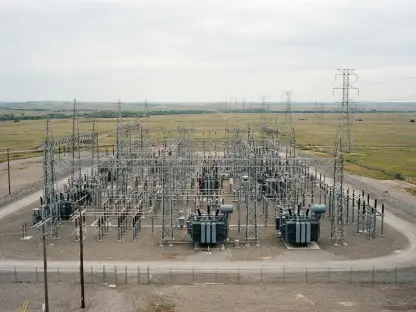
The rapid expansion of hyperscale data centers has created a unique friction point in the American energy sector as of 2026. Critics often point to the massive infrastructure requirements—new substations, transmission lines, and power plants—as a financial burden that will inevitably land on the desks of small business owners and families. There is a legitimate concern that the speed of this expansion will outpace the regulatory system’s ability to protect the average citizen from front-loaded costs.
However, the consistent nature of data center demand makes them the most predictable and profitable customers a utility can serve. When a tech giant signs a long-term agreement for hundreds of megawatts, it provides a level of financial stability that residential neighborhoods cannot match. If the revenue from these contracts is properly accounted for, the massive capital investments required for new transmission lines are quickly offset. The real danger lies not in the consumption of the data centers themselves, but in how utilities handle the transition between construction and revenue collection.
How Utility Companies Manipulate the Rate-Making Formula
To determine what a consumer pays, regulators use a fundamental fraction: total utility costs, the numerator, divided by total electricity sales, the denominator. When this formula is used honestly, an increase in the denominator should lead to a lower price per kilowatt-hour. If sales increase significantly due to new data centers, the denominator grows. If the denominator grows at a faster rate than the numerator, the price per unit of electricity should naturally decline for every person connected to that grid.
Utilities often attempt to game this math by including the costs of building new infrastructure in the numerator while keeping the sales figures in the denominator frozen at outdated levels. By ignoring projected revenue from new data centers, utilities can secure rate hikes from the public while pocketing the massive windfall once the data centers go online. Furthermore, many states allow Construction Work in Progress charges, which let utilities bill customers for new power plants years before they are operational. This forces residential customers to finance the expansion today, while the promised rate relief is delayed for half a decade or more.
Examining Real-World Tactics: Recent Rate Cases
Recent filings across the United States reveal how utilities are actively working to decouple the costs of data centers from the financial benefits they provide to the public. In a recent request for a 15% rate increase, Duke Energy used a denominator frozen at 2024 levels. Expert testimony revealed that if the utility had used its own internal growth projections for data centers, the requested increase could have actually been a 4% decrease for consumers. This demonstrates how “reverse regulatory lag” allows companies to lock in high prices before acknowledging massive new revenue streams.
In Missouri, Evergy sought to charge customers for new gas-fired generation meant specifically to serve data centers while omitting the corresponding sales revenue from those centers in their rate-making formula. This creates a scenario where the utility earns a windfall profit while existing customers foot the bill for infrastructure they do not strictly need. Similarly, in a case involving a new Meta facility in Louisiana, the influx of revenue was so significant it could have triggered immediate refunds for current customers. Instead, the utility proposed accounting maneuvers to defer those benefits over 20 years, effectively denying the public immediate relief.
Strategies to Protect Consumers: Ensuring Fair Rates
State regulators recognized that the burden of energy infrastructure needed to shift away from vulnerable populations to ensure the AI revolution remained sustainable for the public. They implemented mandatory load forecast updates that synchronized utility construction needs with expected revenue. By adjusting cost-recovery mechanisms, officials ensured that the financial risk of building for tech giants remained with the utility companies rather than the individual ratepayers. It was observed that when utilities were forced to use the same aggressive forecasts for revenue as they did for infrastructure needs, consumer bills remained stable or even declined.
Legislators also determined that shifting financial risk toward utility shareholders ensured a more equitable distribution of expansion costs. It was observed that by adopting full revenue decoupling models, the incentive to manipulate sales figures was successfully removed, providing a stable path for future energy affordability. The successful integration of data centers into the national grid eventually proved that large-scale corporate growth could serve the common good. By the time these policies were fully enacted, the transparency of the rate-making formula allowed the economic benefits of the digital age to reach every household.