
With a career spanning energy management and electricity delivery, Christopher Hailstone has become a leading voice on the intricate challenges facing our power grid. As utilities expert, he provides invaluable insights into the delicate balance between grid reliability, corporate finance, and consumer protection. Today, we sit down with him to unpack a looming financial crisis for Wisconsin ratepayers, who find themselves caught between paying off yesterday’s obsolete power plants and funding a massive build-out for tomorrow’s energy-hungry data centers.
Our conversation will explore the historical missteps that led to over a billion dollars in “stranded assets”—shuttered coal plants that consumers are still paying for, profit included. We will delve into the regulatory frameworks that incentivize utilities to build, sometimes to excess, and the financial mechanisms like securitization that could offer relief but remain underutilized. Finally, we will turn our gaze to the future, examining how the unprecedented energy demand from new data centers threatens to create a new generation of stranded assets and what, if anything, can be done to protect ratepayers from being left to foot the bill once again.
Looking back at a decision like the nearly $1 billion investment in the Oak Creek plant in 2011, which now has $650 million in debt, could you walk us through the mindset at the time? What created this environment where doubling down on coal seemed like a prudent choice, and how did that decision sour so quickly?
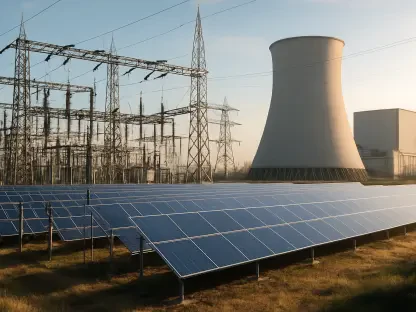
You have to understand the inertia of the system. For decades, coal was king, and the regulatory environment was built around that reality. The Public Service Commission, or PSC, operates on precedent. If they approved a plant years ago, approving an expansion or a costly retrofit to keep it running seems like the logical next step. There was also a strong political appeal; building these massive projects meant creating upwards of a thousand construction jobs, which is always popular. But the biggest driver is the utility business model itself. Utilities profit from building things—”putting steel in the ground,” as the saying goes. There’s a powerful financial incentive to build, and perhaps even to overbuild. In 2011, they sank nearly a billion dollars into Oak Creek to meet federal environmental rules, banking on another 30 years of operation. But the market shifted under their feet. By 2016, natural gas had already eclipsed coal nationally as the cheaper fuel, and suddenly that massive investment in an aging plant looked like a terrible bet.
Ratepayers are still paying a nearly 10% profit on the closed Pleasant Prairie plant. Can you explain the regulatory compact that justifies this? How does the PSC rationalize allowing a utility to earn a profit on an asset that no longer produces anything, and what does that feel like from the consumer’s perspective?
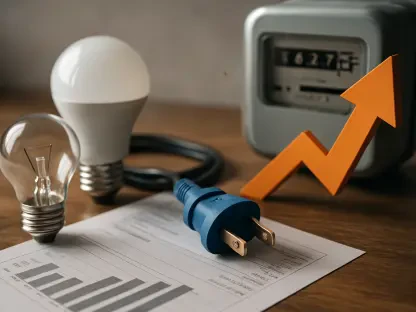
It stems from the foundational deal of utility regulation. In exchange for granting a regional monopoly, the state, through the PSC, allows the utility to recover its investments plus a guaranteed rate of return—in this case, typically around 9.8%. This compact is meant to ensure financial stability so utilities can make the huge, long-term investments needed to keep the lights on. The problem is that the framework wasn’t designed for a world where massive, approved assets become obsolete overnight. When Pleasant Prairie shut down in 2018, its remaining value was pegged at nearly $1 billion. Even now, about $500 million remains on the books, and under the PSC’s ruling, ratepayers continue to pay that down, plus the nearly 10% profit margin. From a consumer perspective, it’s a gut punch. You’re paying a premium for a silent factory. Our Citizens Utility Board calculated that simply eliminating the profit on these closed plants would save ratepayers $300 million. It highlights a core flaw: the system incentivizes building, but not necessarily building the most cost-effective solution for the long run.
The article points to a missed opportunity of $117.5 million in savings on the Oak Creek plant by not using securitization. Why is this financial tool, which is essentially like refinancing a mortgage, so limited and optional in Wisconsin, and what are the real-world barriers preventing its wider use?
Securitization is a commonsense financial tool. It lets a utility take the debt from a stranded asset, convert it into a special bond with a much lower interest rate, and pass the savings on to customers. It’s a win-win, in theory. Michigan’s Consumers Energy saved its customers over $120 million this way. The primary barrier in Wisconsin is that the utilities often don’t want to do it. They prefer the “status quo” where they continue collecting their guaranteed 9.8% return from ratepayers, which is much higher than the interest on a securitized bond. Our state law is incredibly weak here. First, it only allows securitizing the cost of pollution control equipment, not the entire plant. Second, and most critically, it’s completely optional. We Energies chose to use it for Pleasant Prairie, saving customers a respectable $40 million. But when it came to the Oak Creek plant, they simply refused, leaving $117.5 million in potential savings on the table. The PSC even expressed its “disappointment,” but its hands were tied. Legislative efforts to expand securitization and make it mandatory have been consistently opposed by the Wisconsin Utilities Association and stripped from the state budget.
With the massive energy demands of new data centers, there’s a real fear of history repeating itself. What concrete safeguards and planning metrics should regulators be putting in place right now to ensure that if this boom turns into a bubble, ratepayers aren’t once again ‘left holding the bag’?
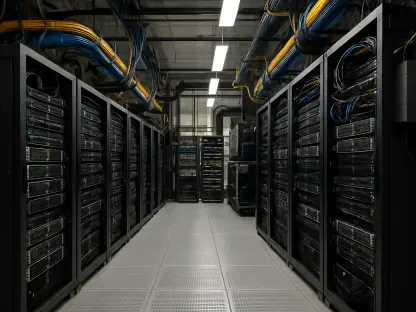
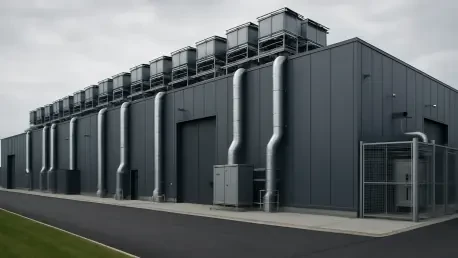
This is the billion-dollar question right now. The scale is staggering; We Energies alone wants to add enough power for over 2 million homes, largely for just one Microsoft data center. The great fear is building all this new generation and then having a data center scale back, move, or close after just a few years. The first and most critical safeguard is to ensure the data centers pay their own way. Leaders in both parties are calling for this, and utilities are proposing special fee structures, or tariffs, to isolate these costs. But we need to go further. Regulators should look at what states like Minnesota have done, where laws explicitly prohibit the costs of stranded assets tied to these specific projects from being passed on to the general ratepayer base. We could require performance bonds from the data center companies to cover decommissioning costs or a portion of the infrastructure investment if they leave early. The key is to shift the financial risk from the public onto the private entities creating that risk. Right now, Wisconsin has no such laws, which is a massive vulnerability.
Wisconsin is one of the few regulated states without a comprehensive planning tool like an Integrated Resource Plan, leading to what’s described as a ‘piecemeal’ approach. Can you give a concrete example of how this lack of a big-picture view harms ratepayers and how a major decision might have turned out differently under an IRP system?
The lack of an Integrated Resource Plan, or IRP, is a fundamental weakness in our regulatory system. An IRP forces utilities to look 15 to 20 years into the future and map out the most cost-effective, reliable way to meet projected energy needs, considering all possible resources—renewables, natural gas, efficiency, and more. In Wisconsin, we don’t do that. The PSC reviews each proposed power plant in isolation. This “piecemeal” process is exactly how we ended up over-invested in coal. For example, think about the cluster of major coal investments in the early 2010s—the Oak Creek retrofits, the Columbia plant upgrades. Under an IRP, a regulator would have seen all these proposals together and asked, “Are we becoming dangerously over-reliant on a single, aging fuel source whose economics are starting to look shaky?” An IRP would have forced a comparison against a portfolio of alternatives, like natural gas or large-scale renewables. It’s very likely that a comprehensive plan would have flagged that strategy as too risky and pushed for a more diversified, and ultimately cheaper, path, potentially saving ratepayers hundreds of millions of dollars on assets that are now being retired early.
What is your forecast for the future of stranded assets in Wisconsin, considering the push for data centers and the current regulatory environment?
My forecast is, frankly, troubling. Wisconsin is poised to repeat the mistakes of the past, but potentially on an even grander scale. All the structural flaws that led to the billion-dollar coal plant problem still exist. We still have a piecemeal project approval process without a mandatory IRP to guide long-term strategy. We still have a financial model that incentivizes utilities to build massive infrastructure. And we still have weak, optional tools like securitization to clean up the mess afterward. Now, superimpose the enormous, and somewhat speculative, energy demand of the AI and data center boom onto that flawed system. While there’s public outcry and some legislative proposals to make data centers pay their own way, the fundamental risk remains. Unless the Legislature provides the Public Service Commission with stronger tools—mandating comprehensive planning and creating clear rules about who bears the financial risk for these new plants—I believe it is highly likely that in 10 or 15 years, we will be having this exact same conversation about a new wave of stranded natural gas plants, and Wisconsin ratepayers will once again be holding the bag.