
Modern financial markets now fluctuate more based on atmospheric movements than on interest rate shifts, as the global economy tethers its stability to the predictive power of machine learning algorithms. The integration of Artificial Intelligence (AI) into meteorological science marks a transformative shift in how humanity anticipates the behavior of the atmosphere. For decades, weather prediction was the domain of massive supercomputers crunching complex physical equations, a “physics-first” approach that, while effective, began to reach its practical limits. We are now witnessing a pivotal transition toward “data-first” modeling. This evolution is not merely a technical upgrade; it is a fundamental reimagining of predictive science that promises to stabilize global infrastructure. By replacing traditional simulations with high-speed pattern recognition, AI is poised to reduce the economic cost of climatic uncertainty, providing a vital shield for a world facing increasing atmospheric volatility.
The Dawn of a Data-Driven Meteorological Era
The shift toward automated intelligence represents a departure from the heavy computational lifting that characterized the previous century of forecasting. As the complexity of global climate patterns increases, the ability of traditional numerical models to keep pace has faltered, leading to a surge in demand for more agile, adaptive solutions. This era is defined by the utilization of neural networks that can ingest billions of data points simultaneously, identifying subtle correlations that remain invisible to the human eye or standard algorithmic processing. Consequently, the reliance on raw physical laws is being augmented by a sophisticated understanding of historical precedent, allowing for a more nuanced interpretation of how small changes in pressure or temperature can lead to massive shifts in localized weather events.
Furthermore, the integration of these technologies into the mainstream meteorological workflow has redefined the relationship between public safety and private enterprise. While government agencies once held a monopoly on high-quality data, the efficiency of AI has leveled the playing field, allowing for a diverse ecosystem of specialized providers. This decentralization ensures that specific industries—ranging from maritime shipping to urban planning—can access tailored forecasts that address their unique vulnerabilities. The result is a more resilient global economy where the risks associated with unforeseen storms or heatwaves are systematically mitigated through superior foresight and advanced data synthesis.
From Folklore to Fluid Dynamics: The Evolution of Prediction
Understanding the significance of the AI revolution requires a look at the three distinct eras of meteorology. For millennia, weather forecasting was a qualitative practice rooted in localized observation and cultural folklore, lacking the instruments for precise measurement. This period was defined by the human ability to recognize natural cues, such as cloud formations or bird behavior, yet it offered little in the way of long-range planning or systemic reliability. The second era emerged in the 17th century with the invention of the barometer and thermometer, but it was not until the 1940s that meteorology became a computational science. John von Neumann pioneered Numerical Weather Prediction (NWP) by treating the atmosphere as a fluid system governed by thermodynamics.
This mechanical paradigm has governed the industry for eighty years, providing steady improvements in accuracy through increasingly powerful hardware. However, as traditional models hit a ceiling of diminishing returns—becoming increasingly energy-intensive and expensive to maintain—the need for a new foundational concept has become clear. The transition from 2026 to the close of the decade is expected to solidify the role of machine learning as the primary driver of meteorological innovation. While the physics-based models of the past century provided the necessary groundwork, the current reliance on static equations is proving insufficient for the dynamic, rapidly changing climate conditions of the modern world.
The Paradigm Shift in Atmospheric Modeling
Statistical Pattern Recognition vs. Physical Simulation
The advent of AI introduces a methodology that differs fundamentally from traditional physics-based models. While traditional systems divide the atmosphere into a grid and simulate “frame-by-frame” changes using laws of physics, AI models from pioneers in the field utilize decades of historical data to recognize statistical relationships. Instead of asking how the physics suggests the air should move, AI asks what usually happens next based on trillions of past observations. This shift has already yielded a 20% improvement in accuracy over state-of-the-art traditional systems. Notably, AI-driven models can now predict hurricane trajectories up to 12 hours further in advance, providing critical lead time for emergency responders to coordinate evacuations and secure critical resources.
Radical Gains in Computational and Energy Efficiency
Perhaps the most disruptive aspect of the AI transition is the dramatic reduction in the resources required to generate a forecast. Traditional supercomputing is notoriously capital-intensive and consumes vast amounts of electricity to solve millions of simultaneous linear equations. Recent research indicates that AI-driven models can operate using as little as 0.5% of the capital investment and 0.3% of the energy required by their predecessor systems. This democratization of high-fidelity forecasting allows for more frequent updates and more granular local data. By lowering the barrier to entry, AI enables smaller nations and private enterprises to access elite-level meteorological insights that were once reserved for the wealthiest governments, fostering a more equitable global approach to disaster preparedness.
Strengthening Grid Resilience and Renewable Integration
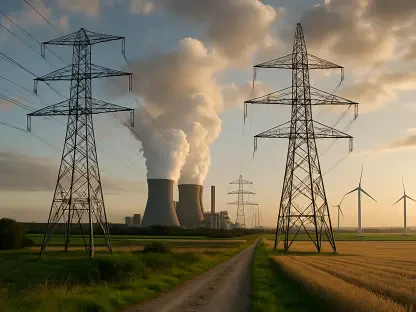
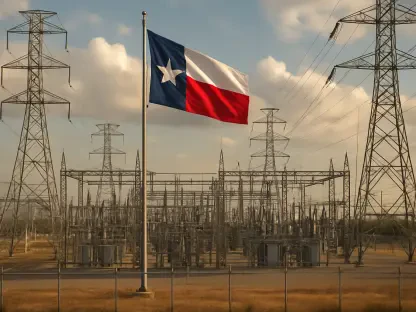
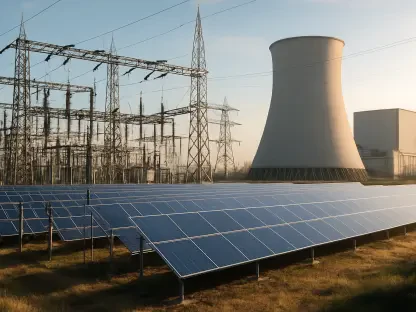
The practical application of these advancements is most visible in the global energy sector, which is increasingly dependent on weather-variable sources like wind and solar. Improved forecasting directly addresses the “imbalance charges” utilities face when production deviates from predictions. In the United States, enhanced modeling has already saved consumers an estimated $150 million annually by optimizing supply and demand matching. Beyond cost, AI-driven forecasts are essential for grid resilience. During extreme events, such as the 2021 winter storms in Texas, more accurate “heads-up” periods allow operators to pre-stage crews and protect vulnerable infrastructure, potentially preventing catastrophic blackouts and the associated economic fallout that accompanies large-scale power failures.
Emerging Trends and the Future of Climate Intelligence
Looking ahead, the synergy between AI and meteorology will likely drive a “digital twin” of the Earth—a real-time, high-definition simulation of the planet’s climate. We can expect a shift toward hyper-local forecasting, where AI provides block-by-block weather intelligence for smart cities and autonomous logistics networks. This level of granularity will transform how urban environments manage heat islands and storm runoff, allowing for real-time adjustments in energy consumption and traffic flow. Regulatory landscapes are also expected to shift, as governments recognize meteorological accuracy as a pillar of national security and economic stability. By treating high-resolution data as a public utility, states can better protect their populations from the escalating costs of environmental volatility.
Moreover, the convergence of satellite technology and machine learning is creating a new market for climate intelligence services. Businesses are no longer content with general forecasts; they require predictive analytics that can quantify the risk to specific assets, such as offshore wind farms or agricultural yields. This trend is driving investment into edge computing, where AI models are processed directly on sensors and drones to provide immediate feedback in the field. As these technologies mature, the “cone of uncertainty” for natural disasters will continue to narrow, allowing heavy industries like oil refining and shipping to remain operational longer and recover faster, further stabilizing global supply chains in an increasingly turbulent environment.
Strategic Takeaways for a Weather-Dependent Economy
The transition to AI-enabled forecasting offers several actionable insights for businesses and policymakers. First, organizations should prioritize the integration of high-resolution weather data into their operational risk management strategies to mitigate the impacts of volatility. Second, energy providers should leverage AI to refine their renewable output projections, which can significantly lower operational costs and consumer prices. By adopting these tools, utilities can transition away from fossil fuel backups more confidently, accelerating the shift toward a carbon-neutral grid. Finally, the move from expensive supercomputing to efficient AI models suggests that localized, specialized forecasting is now more accessible than ever for smaller players.
Professionals in agriculture, logistics, and construction should look toward these emerging tools to transform atmospheric data into a competitive advantage. For instance, precision farming can utilize hyper-local forecasts to optimize irrigation schedules, while logistics firms can reroute fleets in real-time to avoid micro-storms. The democratization of this data means that even mid-sized enterprises can now afford the same level of predictive insight that was previously the sole domain of multi-national conglomerates. As the availability of high-quality data increases, the primary differentiator between successful and struggling firms will be the speed and accuracy with which they can interpret and act upon meteorological intelligence.
Conclusion: Securing a More Predictable Future
The transition to AI-driven meteorology represented a fundamental shift in the human relationship with the natural world. By moving away from the computational heavy-lifting of physics simulations and toward the pattern-recognition capabilities of machine learning, the industry entered an era of unprecedented foresight. The findings indicated that the benefits were twofold: first, a drastic reduction in the energy and capital required to generate forecasts; and second, a significant boost to the reliability and affordability of the global energy grid. As the climate became more unpredictable, the tools used to monitor it became more sophisticated, transforming vast, chaotic data sets into actionable intelligence. This evolution eventually provided the structural stability required for a modern, weather-dependent global economy to flourish, proving that AI was the essential catalyst for safeguarding both human life and economic prosperity against the vagaries of the atmosphere. Moving forward, stakeholders must continue to invest in the ethical and transparent deployment of these models to ensure that the gains in accuracy are shared across all sectors of society. Increasing the interoperability of data between private and public sectors emerged as a vital next step to maximize the utility of these predictive breakthroughs. Ultimately, the successful integration of machine learning into meteorology showed that while the weather remained beyond human control, the ability to anticipate its movements reached a level of precision once thought impossible.