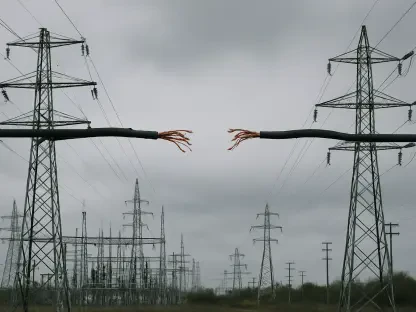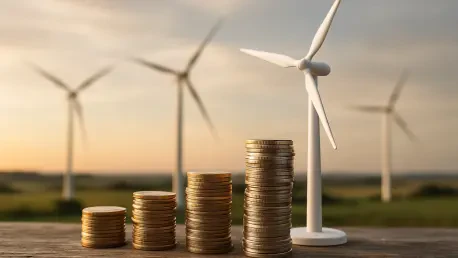

A profound and financially painful divide is cleaving the American energy landscape, creating two distinct realities where the cost of keeping the lights on is increasingly determined by political geography. In states primarily led by Republican administrations, electric rates often remain stable and affordable, but in many Democratic-led states, residents and businesses are being confronted with exorbitant energy bills that strain budgets and stifle economic activity. This growing disparity has ignited a fierce debate, with critics alleging that a deliberate campaign of misinformation is underway. The central accusation is that politicians in these Blue states are actively promoting wind power with false promises of affordability and reliability, while their state-mandated green energy policies are, in fact, the principal cause of these skyrocketing costs. This push for wind energy is being framed not as a pragmatic solution, but as an ideologically driven agenda, advanced through political rhetoric that critics contend directly contradicts the economic reality faced by millions of ratepayers. The debate reached a fever pitch following a federal decision to pause offshore wind farm construction along the East Coast, a move that exposed the deep and acrimonious fault lines in America’s energy future.
The Promise Versus the Price Tag
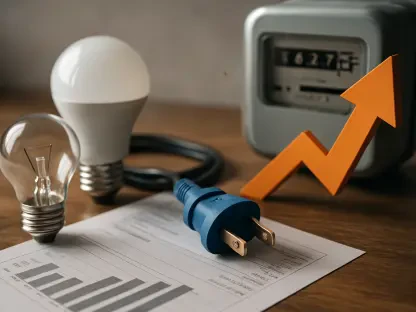
A core assertion in the critique of current green energy policies is that politicians are engaging in a calculated deception regarding the true cost of wind power. Proponents of these policies, including prominent governors in states like New York and Connecticut, have consistently framed wind energy as a pathway to lower energy costs for families and a more resilient power grid. However, opponents argue that the data on the ground tells a completely different story. They point to the fact that New York residents are currently paying 58% more for their electricity than the national average, a premium they attribute directly to state mandates that prioritize expensive renewables over more cost-effective sources like natural gas. The situation in Connecticut is presented as even more severe, with ratepayers facing electricity bills that are nearly double the national average. This evidence is marshaled to argue that the promise of affordable green energy is not just an unmet goal but a direct inversion of the truth, with consumers bearing the financial burden of these political decisions.
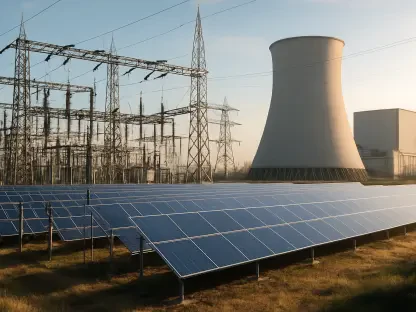
This discrepancy is not explained as a temporary market fluctuation but as a fundamental economic characteristic of current renewable technologies. Detailed cost-per-kilowatt analyses form a crucial part of this argument, with studies indicating that offshore wind power is at least twice as expensive as electricity generated from traditional sources like natural gas. This claim is bolstered by broader, international data that appears to confirm the trend. Research analyzing the energy markets of 70 different countries has revealed a clear pattern: the greater the share of solar and wind power in a nation’s energy mix, the higher the price of electricity for its citizens. This global perspective is used to contend that the high energy costs seen in states like New York and California are not anomalies, but rather the predictable and unavoidable consequence of integrating large-scale, intermittent renewable sources into the grid, directly challenging the narrative of affordability being advanced by their political leaders.
A Question of Grid Stability
Beyond the steep financial costs, the assertion that wind power enhances the reliability of the energy grid is also coming under intense scrutiny. Critics often present Germany as a stark cautionary tale of what can happen when a nation commits heavily to renewables without addressing their inherent limitations. Despite monumental investments aimed at having solar and wind power meet a significant portion of its energy needs, Germany now faces a critical reliability problem. On days with overcast skies or calm winds, a frequent occurrence, the output from these renewable sources can plummet to as little as 4% of their installed capacity. To prevent widespread blackouts during these periods, the country has been forced to maintain a complete, parallel power generation system running on conventional fuels. This costly duplication of infrastructure has resulted in German consumers paying some of the highest electricity prices in the developed world, more than double the rates paid by their neighbors in Canada.
This difficult experience is not unique to Germany, and a growing number of governments are reportedly beginning to reconsider their most aggressive green energy timelines as the practical and economic challenges become insurmountable. In a significant policy shift, the United Kingdom recently paused its mandated transition to net-zero carbon emissions, citing the immense financial burden it would place on families. Similarly, Scotland’s government was forced to abandon its ambitious goal of achieving a 75% reduction in CO2 emissions by 2030, acknowledging it was unattainable. These international reversals are being held up as crucial lessons for American states, particularly those in New England, which are pursuing similar paths. The argument is that these global examples provide undeniable proof that a rapid, mandated shift to renewables is a “budget-buster” that compromises grid stability rather than strengthening it, a warning that opponents say is being willfully ignored by policymakers in Blue states.
The Tangible Consequences at Home
The negative impacts of these energy policies are no longer theoretical and are being felt directly by American households and businesses. California, a state that has long positioned itself as a leader in renewable energy, now sees 39% of its grid powered by these sources. This transition has coincided with the state having the second-highest electricity rates in the entire nation, trailing only Hawaii. Critics contend that these high costs are actively “hobbling growth” and have given rise to a disturbing phenomenon known as “energy poverty,” where an increasing number of low-income residents are unable to afford their basic utility bills. This outcome reframes the state’s green policies not as a progressive victory, but as a regressive measure that inflicts the most harm on its most economically vulnerable populations, forcing them to choose between keeping the lights on and other essential expenses.
These economic strains have inevitably spilled over into the political arena, becoming a potent issue in state elections. A recent gubernatorial race in New Jersey, for instance, saw high electric bills emerge as a central campaign topic after the outgoing administration retired several fossil fuel plants. The Democratic candidate was accused of winning the election after making what opponents called a “blatantly false statement” that massive investments in offshore wind projects would ultimately “lower energy costs for families.” In stark contrast, the Republican candidate had pledged to ban the costly offshore farms in favor of a more affordable and diverse energy portfolio. Beyond the economic and political fallout, a further critique has been leveled against the aesthetic and environmental impact of these massive industrial projects. Opponents argue that the “magnificent ocean landscapes destroyed by towering hardware” represent a form of environmental degradation that would provoke widespread outrage from activists if the structures were oil rigs instead of wind turbines.
An Impasse in the Energy Debate
The clash over wind power ultimately revealed a fundamental divide in energy philosophy and public trust. The arguments against current renewable energy mandates sought to dismantle the narrative of affordable, reliable green power, portraying it as a politically motivated fiction with severe economic consequences. By presenting evidence from high-cost states like California and New York alongside international case studies from Germany and the U.K., critics constructed a case that these policies were not only failing to deliver on their promises but were actively harming consumers and regional economies. The debate highlighted a deep-seated skepticism toward official assurances, framing the push for wind power as an agenda driven more by ideology and lobbying than by sound economic or engineering principles. The controversy surrounding the federal pause on offshore wind development served as a catalyst, forcing a confrontation over the true costs and benefits of the nation’s energy transition. This moment crystallized the conflict, leaving voters to grapple with competing visions for their energy future and to decide whether the promises of a green tomorrow justified the high price they were being asked to pay today.