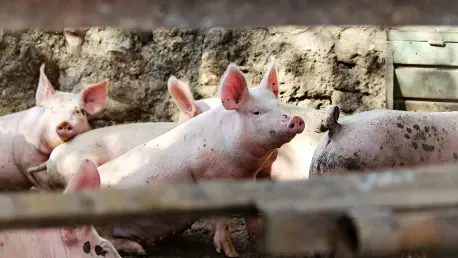

In the heart of Argentina’s agricultural belt, a revolutionary facility is demonstrating how one of the industry’s most significant environmental challenges can be transformed into a powerful engine for sustainable growth. Large-scale livestock farming, while essential to the food supply, generates massive quantities of waste that, if mismanaged, release potent greenhouse gases and pose risks to local ecosystems. However, one pioneering biogas plant in Roque Pérez, Buenos Aires, has successfully reimagined this liability. Pacuca Bioenergía is not just treating waste; it is converting the effluents from a 50,000-pig farm into a continuous source of clean energy and valuable agricultural resources. This concrete implementation of the circular economy provides a compelling and highly successful model where environmental stewardship and economic prosperity are inextricably linked, offering a glimpse into the future of sustainable agriculture. By closing the loop, the facility turns a potential pollutant into a cornerstone of its own operational and ecological success.
From Environmental Liability to a Powerful Asset
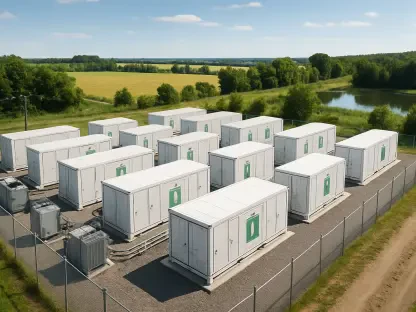
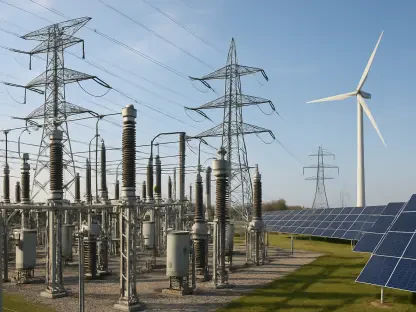
The core of the operation involves a sophisticated process that begins where traditional waste management ends. Instead of being left in open lagoons to decompose and release methane, a greenhouse gas far more potent than carbon dioxide, the swine effluents are channeled into three advanced biodigesters. Inside these sealed environments, through a natural process called anaerobic digestion, microorganisms break down the organic matter and produce biogas. This gas, rich in methane, is then used to fuel a large engine that generates over 8,000 MWh of electricity annually—enough to supply clean power to approximately 5,000 people. The electricity is fed directly into the national grid, contributing to the country’s renewable energy targets. The system’s design reflects a deep commitment to efficiency, utilizing a cogeneration scheme that captures waste heat from the engine to maintain the optimal temperature within the biodigesters, thereby minimizing energy loss and maximizing output from the nearly $6 million investment.
This integrated system yields profound and measurable environmental benefits that extend far beyond clean energy generation. The plant’s impact is quantified by its remarkable reduction of greenhouse gas emissions, which in 2024 alone amounted to 12,232 tons of CO₂ equivalent. To put this figure into perspective, it is comparable to removing the annual emissions of 2,851 passenger cars from the road. This achievement is a direct result of capturing methane that would have otherwise escaped into the atmosphere from conventional waste lagoons. Furthermore, the process generates valuable agricultural byproducts that complete the circular model. The solid fraction of the digested waste is composted into a high-quality biofertilizer, while the nutrient-rich liquid is used for targeted fertigation across 300 hectares of farmland. This practice not only improves soil health and structure but also significantly reduces the farm’s dependence on synthetic, inorganic fertilizers, closing the nutrient loop and fostering a more regenerative approach to agriculture.
A Strategic Model for a Greener Future
The financial architecture of the Pacuca Bioenergía plant ensures its long-term viability and positions it as an attractive investment model. A cornerstone of its economic stability is a 20-year contract for the sale of the energy it produces, providing a predictable and consistent revenue stream. This long-term security is crucial, as it underpins the initial investment and ongoing operational costs, proving that sustainable practices can be economically sound. Moreover, the facility’s certified and sustainable operation strategically anticipates a critical global trend: the increasing importance of decarbonization and carbon footprint measurement as metrics for international competitiveness. As global markets and consumers place a higher premium on sustainability, businesses with a proven low-carbon footprint gain a significant advantage. This proactive stance not only enhances the company’s brand but also opens doors to green financing opportunities and preferential access to environmentally conscious markets.
Ultimately, the successful operation of the plant for over five years provided a powerful and replicable blueprint for Argentina’s broader agro-industrial landscape. It moved the concept of a circular economy from theoretical discussion to a practical and profitable development strategy. The project definitively showed that by transforming waste into clean energy and valuable fertilizers, a comprehensive solution was achieved that simultaneously addressed environmental sustainability, agricultural productivity, and economic resilience. This proven model offered a clear path forward for other intensive farming sectors, including dairy, poultry, and feedlots, establishing itself as a strategically vital component for the future of the nation’s agricultural industry. It demonstrated that investing in green technology was not a cost but a catalyst for innovation and long-term growth.