
Navigating the High-Stakes Conflict Over the West’s Lifeline
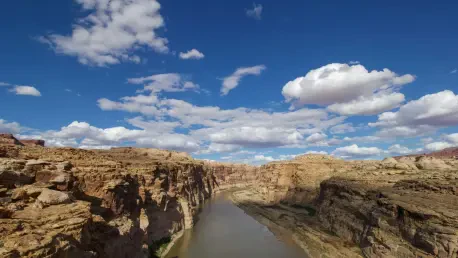
The arid landscapes of the American Southwest have transitioned into a high-stakes economic chess match where the most valuable currency is no longer liquid capital but the shrinking flow of the Colorado River. Arizona has officially entered a period of strategic legal escalation to protect its access to this vital waterway, signaling a definitive shift from diplomatic patience to aggressive defense. As a persistent 25-year “megadrought” continues to deplete the critical elevations of Lake Mead and Lake Powell, the leadership in Phoenix has moved to safeguard a resource that supports 40 million people, 30 Native American tribes, and millions of acres of productive farmland. This analysis explores the multi-million dollar investment in elite legal counsel and the complex interstate dynamics that have brought the region to the precipice of a definitive Supreme Court showdown.
Stakeholders are now forced to confront the “Law of the River” as a living, albeit aging, document that determines the economic survival of the Grand Canyon State. The widening gap between conservation efforts and consumption patterns has created an environment where previous gentlemen’s agreements are no longer sufficient. With the expiration of current operating guidelines looming, the legal strategies deployed today will dictate the environmental and financial trajectory of the region for decades. This shift toward litigation represents a realization that the era of surplus is over, and the era of equitable apportionment through judicial intervention has begun.
The Foundation of a Century-Old Water Crisis
The current dispute finds its origins in a complex legal framework anchored by the 1922 Colorado River Compact, an agreement that originally divided the basin into two management zones. Historically, this system separated the Upper Basin—consisting of Colorado, New Mexico, Utah, and Wyoming—from the Lower Basin, which includes Arizona, California, and Nevada. For more than a century, this division functioned under the assumption of high annual river flows, a premise that modern climate data has proven to be dangerously unsustainable. Understanding this historical foundation is vital because the legal hierarchies established during the industrial era now dictate which modern economies must endure mandatory water cuts first.
The historical precedents that once provided regional stability have now transformed into the primary source of interstate friction. As the existing operational rules approach their sunset, the friction between the two basins has intensified, revealing deep-seated flaws in the initial allocation math. The 1922 Compact did not account for the drastic reduction in runoff that the region now experiences annually. Consequently, the legal rigidities of the past are colliding with the hydrological realities of the present, leaving Arizona in a position where it must fight to prevent being the sole bearer of the regional water deficit.
The Collision of Legal Precedent and Modern Scarcity
The Vulnerability of the Central Arizona Project
Arizona occupies a uniquely precarious position within the legal hierarchy of the Colorado River due to the “junior” status of some of its most critical infrastructure. The Central Arizona Project (CAP), a massive canal system delivering water to the Phoenix and Tucson metropolitan areas, holds water rights that are subordinate to many users in California and the Upper Basin. Under existing legal frameworks, junior users are typically the first to face mandatory reductions during federally declared shortages. This legal reality creates a scenario where a standard “pro-rata” cut could result in catastrophic losses for Arizona’s municipal and agricultural sectors while other states remain relatively untouched.
To mitigate this vulnerability, state negotiators are leveraging a dedicated legal defense fund to argue that the 1922 Compact must be interpreted through the lens of modern delivery obligations. The state contends that the Upper Basin must fulfill its mandatory delivery requirements regardless of the declining snowpack levels in the Rocky Mountains. By emphasizing the mandatory nature of these historical obligations, Arizona is attempting to shift the legal focus from its junior status to the collective responsibility of all basin states to maintain the viability of the entire system. This strategy aims to ensure that the burden of scarcity is shared equitably rather than falling disproportionately on the newest infrastructure.
The Divergence of Conservation and Consumption
A critical point of contention in the ongoing legal battle is the measurable disparity in water usage trends between the two basins over the last several years. Recent data reveals that while the Lower Basin states—led by Arizona’s aggressive conservation initiatives—reduced their consumption from 7.4 million acre-feet in 2015 to approximately 6 million in 2024, the Upper Basin has followed an opposite trajectory. Usage in the Upper Basin actually rose from 3.9 million acre-feet in 2021 to 4.4 million in 2024. This trend provides Arizona with a powerful moral and legal argument in the courtroom: the state should not be penalized for its efficiency while neighboring states increase their draw on a diminishing resource.
This friction highlights the significant challenge in reaching a voluntary agreement before federal intervention occurs. Arizona’s legal team is prepared to argue that “equitable apportionment,” a Supreme Court doctrine, should take precedence over rigid seniority when one party is demonstrably wasting or expanding use during a crisis. The divergence in consumption patterns has essentially broken the trust required for collaborative management, making a judicial ruling seem like the only path toward a fair resolution. The state’s ability to document its conservation successes serves as a primary pillar in its defense against further mandatory reductions.
Strategic Escalation and Professional Advocacy
The decision to retain Sullivan & Cromwell, an elite international law firm, represents a significant shift in how Arizona manages its natural resource interests. Traditionally, water disputes were the domain of state-level attorneys and technical hydrologists; however, the hiring of a firm known for representing global financial giants signals that Arizona views this as an existential economic threat. This move directly addresses the misconception that the water crisis is a purely engineering or environmental issue. By dedicating millions of dollars to high-level legal advocacy, the state is signaling to both the federal government and its neighbors that it is prepared for a multi-year litigation process to protect its long-term viability.
Professional advocacy at this level changes the dynamic of interstate negotiations by introducing a credible threat of systemic disruption. Arizona is no longer just a participant in a regional committee; it is a litigant-in-waiting with the resources to challenge the very foundations of Western water law. This strategic escalation is designed to provide maximum leverage as the federal Bureau of Reclamation prepares to finalize new management guidelines. The goal is to ensure that any post-2026 framework includes ironclad protections for Arizona’s “fair share,” backed by the threat of a Supreme Court case that could upend a century of established rights.
Emerging Trends in Western Water Governance
The future of the Colorado River is being shaped by three major shifts: increased federal oversight, rapid technological innovation in water recycling, and a transition toward “total system” management. As the federal government warns of its intent to impose a unilateral plan if states cannot reach a consensus, the trend is moving away from state-led negotiations toward a more centralized regulatory environment. This shift suggests that the era of state sovereignty over water may be yielding to a period of federal crisis management, where the priority is the physical integrity of the dams and the stability of the power grid.
Furthermore, we are witnessing a fundamental change in how “seniority” is viewed by legal scholars and policymakers. Future litigation is expected to challenge 100-year-old rights in favor of “equitable apportionment” that accounts for modern climate realities and the actual needs of urban populations. If the current legal strategy succeeds, it could set a global precedent where conservation efforts are rewarded rather than punished by traditional seniority systems. This evolution in governance reflects a broader recognition that the survival of the American West requires a departure from the rigid legal interpretations of the 1920s in favor of a more flexible, data-driven approach.
Strategic Frameworks for a Water-Scarce Future
For Arizona to emerge successful, it must continue its dual-track strategy of negotiation backed by the credible threat of high-stakes litigation. Stakeholders, including municipal planners and large-scale agricultural businesses, must prepare for a future where water allocations are highly volatile and increasingly dependent on real-time reservoir elevations. The best practice for the state remains the aggressive diversification of its water portfolio. This includes investing in advanced brackish water desalination and scaling up wastewater reclamation projects to reduce the state’s total reliance on the Colorado River.
Professionals operating in the region must remain focused on the forthcoming federal environmental impact statements, as these documents will serve as the technical blueprint for the next twenty years of river management. Success in this new era requires a move toward “decoupling” economic growth from water consumption. By integrating legal defense with technological adaptation, Arizona can create a framework that survives even the most restrictive judicial rulings. The strategic goal is to transform from a state that is vulnerable to river fluctuations into a regional leader in water resilience and legal innovation.
Securing Arizona’s Thirst for a Sustainable Future
In summary, the legal battle for the Colorado River was a fight for the very survival of the state’s economic and social fabric. Arizona challenged the consumption habits of the Upper Basin and prepared for a Supreme Court showdown that redefined the limits of historical water law in a warming world. The core themes of this struggle—equity, conservation, and the modernization of century-old compacts—remained the most significant factors in the regional discourse. By refusing to accept a future of disproportionate cuts, the state established a new precedent for how Western water should be managed during a permanent shift in climate.
The resolution of this conflict determined whether the “Law of the River” could evolve to save the entire system or if it would facilitate a collapse through rigid adherence to an obsolete past. Actionable strategies emerged from the crisis, including the implementation of large-scale recycling and the formalization of basin-wide conservation standards. These insights provided a roadmap for other water-stressed regions globally, proving that legal aggression can sometimes be the most effective tool for ensuring long-term cooperation. Ultimately, the state’s proactive defense of its resources secured a more stable, albeit leaner, future for the millions who call the Grand Canyon State home.