
New England has long grappled with some of the highest electricity costs in the nation, a challenge compounded by its ambitious climate goals and a persistent dependence on volatile natural gas markets. In a landmark development for the region’s energy future, Avangrid, an American subsidiary of Iberdrola, has officially commissioned the New England Clean Energy Connect (NECEC), a monumental $1.65 billion High-Voltage Direct Current (HVDC) transmission line. This project represents a new era of cross-border energy cooperation, designed to channel a massive and steady flow of clean Canadian hydropower directly into the regional grid. The NECEC is now actively transmitting 1,200 megawatts of renewable energy from Quebec, promising not only a significant shift in the area’s energy mix but also substantial economic relief for consumers. This infusion of hydropower, connecting at a strategic point in Lewiston, Maine, is poised to reshape the energy landscape for millions of households and businesses across six states.
A Landmark Infrastructure Project
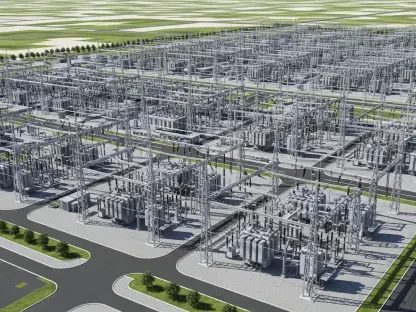
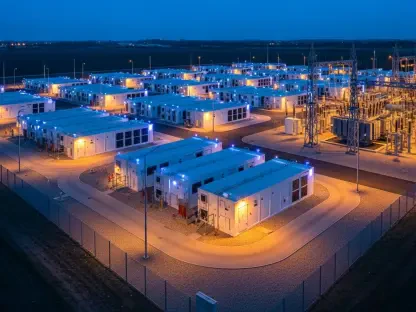
The completion of the NECEC was an immense engineering feat, involving the strategic development of a 145-mile (approximately 233-kilometer) transmission corridor. The project’s design carefully balanced new construction with the modernization of existing infrastructure; developers laid 54 miles of entirely new transmission lines while comprehensively upgrading 91 miles of existing corridors to handle the increased capacity. Central to the operation are the newly constructed converter and substation facilities, which are critical for transforming the direct current power from Canada into the alternating current used by the New England grid. To ensure the stability and reliability of this massive energy influx, the project also incorporated advanced grid-balancing technology. Two state-of-the-art STATCOM (Static Synchronous Compensator) devices were installed. These sophisticated systems play a crucial role in maintaining consistent voltage levels and improving the overall quality of the power supply, especially during periods of high demand or grid fluctuation, thereby safeguarding the integrity of the regional electrical network.
Economic and Environmental Ripple Effects
The operational launch of the NECEC is projected to deliver transformative benefits that extend far beyond simple power generation, promising a profound impact on both the region’s environment and its economy. Environmentally, the transmission line is expected to displace a significant amount of fossil-fuel-based energy, leading to a reduction in regional carbon emissions by an estimated 3.0 to 3.6 million metric tons annually. This is a crucial step forward in helping New England states meet their aggressive climate targets. For consumers, the project heralds a new era of cost savings and energy security. The 1,200 megawatts of clean power is sufficient to supply approximately 1.2 million households with stable, renewable energy. Over the next two decades, the influx of this competitively priced hydropower is forecast to reduce consumer electricity spending by a staggering $3.9 billion. On a more granular level, annual savings are anticipated to reach $150 million for Massachusetts and $40 million for Maine, providing tangible financial relief. The project’s long-term viability is underpinned by regulated 40-year contracts with Massachusetts distributors and Hydro-Québec, ensuring a stable financial framework for decades to come.
A New Chapter for Regional Energy
The commissioning of the New England Clean Energy Connect marked a pivotal moment in North American energy policy and infrastructure development. This ambitious project successfully demonstrated that large-scale, cross-border transmission of renewable resources could be a viable and powerful tool for decarbonizing regional power grids. It established a significant precedent for future initiatives, proving that complex regulatory, engineering, and financial challenges could be overcome to achieve shared climate and economic goals. By directly linking Quebec’s vast hydropower reserves with New England’s high-demand energy market, the NECEC created a durable energy corridor that fundamentally altered the region’s power supply dynamics. This achievement not only provided a template for other regions looking to integrate large-scale renewables but also solidified a new strategic partnership aimed at fostering a cleaner and more affordable energy future for millions.