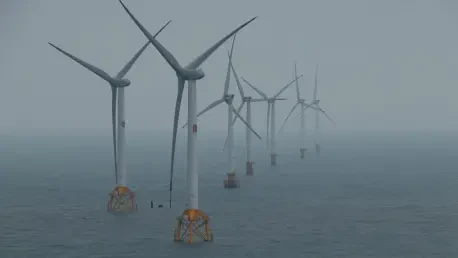

The federal judiciary has recently emerged as a primary obstacle to the second Trump administration’s efforts to dismantle the American offshore wind industry, asserting its authority in a series of decisive rulings. By February 2026, the courts completed what many observers are calling a “clean sweep” of legal decisions against the Department of the Interior, effectively blocking repeated attempts to halt multi-billion-dollar energy projects through executive fiat. The most recent decision by Judge Royce Lamberth regarding the 924-MW Sunrise Wind project marks a significant turning point, suggesting that executive orders alone cannot bypass established legal protections for infrastructure developers. This legal confrontation represents a high-stakes clash between the executive branch’s policy shift and the administrative laws that govern federal leases. By securing preliminary injunctions, wind developers successfully argued that the government’s sudden interference was both economically reckless and procedurally flawed.
National Security: The Procedural Black Box
The conflict began in earnest in late 2025 when the Department of the Interior issued a sweeping directive to suspend operations on five major offshore wind farms currently under construction along the Atlantic coast. Under the direction of Secretary Doug Burgum, the administration cited “national security risks” found in classified reports as the primary justification for the immediate freeze. This maneuver was ostensibly designed to allow various federal agencies to re-evaluate the impact of massive wind turbines on maritime defense systems and radar capabilities. However, the administration provided no clear path for developers to address or mitigate the alleged concerns, leading to immediate legal challenges from the affected energy firms. The suddenness of the order caught the industry by surprise, especially given that many of these projects had already cleared years of federal environmental and security reviews during previous terms. This reversal signaled a shift toward using national security as a broad regulatory tool.
The administration’s refusal to share specific details regarding these security risks created what developers described as a “black box” in the regulatory process that prevented any meaningful dialogue. By withholding even unclassified summaries of the findings, the government effectively prevented companies from defending their interests or understanding the basis of the stop-work order. This lack of transparency became a central theme in the ensuing lawsuits, as industry leaders argued that the executive branch was using national security as a blanket excuse to ignore the due process rights of leaseholders. Even representatives with the highest levels of security clearance were reportedly denied access to the relevant documents, suggesting a coordinated effort to stonewall the industry. This procedural opacity forced the courts to intervene, as the fundamental principles of administrative law require that government actions be based on a visible and rational foundation rather than secret deliberations that exclude the stakeholders who are most impacted.
Financial Stability: Impact of the Judicial Record
The judicial response to the moratorium has been a total rejection of the administration’s immediate methods, resulting in a flawless “0-5” record in favor of the offshore wind industry. Major projects, including the 2.6 GW Coastal Virginia Offshore Wind and the 800 MW Vineyard Wind 1, have all successfully obtained relief from the federal courts. Notably, the rulings have come from a diverse group of judges, including conservative appointees, indicating a broad judicial consensus that the government’s actions lacked the necessary legal grounding to justify such a massive disruption of private investment. These judges emphasized that while the executive branch has significant leeway in matters of national defense, it does not have the power to unilaterally void contracts or stop construction without following the specific procedures outlined in the Outer Continental Shelf Lands Act. This string of defeats has severely undermined the administration’s legal strategy and provided a temporary reprieve for the sector.
The financial consequences of the work stoppage were a driving force behind the courts’ decision to grant preliminary injunctions to the developers. Companies highlighted the staggering costs associated with the freeze, with Ørsted reporting losses of over $1.25 million per day for the Sunrise Wind project due to idle equipment, specialized vessels, and workforce delays. The courts determined that these costs constituted “irreparable harm,” recognizing that a prolonged moratorium could permanently damage the domestic supply chain and jeopardize the long-term viability of the nation’s renewable energy infrastructure. Beyond the immediate daily losses, the uncertainty created by the stop-work orders threatened to drive up insurance premiums and interest rates for future energy projects. By recognizing the economic reality of these large-scale investments, the judiciary sent a clear message that the government must consider the financial stability of the private sector when implementing major policy shifts that affect existing federal permits.
Legal Precedent: Defining Executive Authority
In granting the injunctions, the courts focused on the likelihood that the developers would ultimately win their cases based on the merits of administrative law. The rulings signaled that the executive branch cannot unilaterally freeze construction on projects with valid federal leases without providing a robust and evidence-based rationale that withstands public scrutiny. By prioritizing the rule of law over shifting political goals, the judiciary has asserted its role as a vital check on executive overreach, ensuring that federal agencies follow established protocols when dealing with large-scale energy developments. The courts noted that if the government truly identified a national security threat, the proper course of action would be to engage in a collaborative mitigation process rather than issuing an opaque and total construction ban. This perspective reinforces the idea that federal leases are binding agreements that provide developers with a degree of protection against arbitrary changes in the political climate.
While the wind industry has won the first round of this legal fight, the future remains complex as the underlying disputes over classified security risks move forward in the legal system. The administration is now forced to either provide more transparency regarding its claims or find a new legal strategy to achieve its goals of scaling back offshore wind. For the time being, the resumption of work on sites like Sunrise Wind and Revolution Wind shows that the federal court system remains a formidable barrier against sudden shifts in government policy that threaten the stability of the American energy sector. Legal observers suggest that the administration may attempt to rewrite the underlying regulations at the Bureau of Ocean Energy Management, but such changes would also be subject to lengthy public comment periods and further judicial review. The current deadlock underscores the difficulty of dismantling established industrial sectors through executive action alone when those sectors are protected by the courts.
Future Outlook: Navigating Regulatory Uncertainty
To maintain momentum, the offshore wind industry moved toward a strategy of proactive transparency and enhanced cooperation with non-defense agencies to bolster its legal standing. Developers began sharing more granular data regarding turbine interference and maritime safety to preempt further national security claims from the Department of the Interior. This approach aimed to shift the burden of proof back onto the government, making it harder for officials to claim a lack of information as a reason for future stop-work orders. Furthermore, the industry increased its investment in domestic port infrastructure and manufacturing facilities to demonstrate its value to the local economy, thereby making it politically more difficult for the administration to justify further interference. By grounding their arguments in both legal precedent and economic utility, wind energy companies sought to create a more resilient framework that could withstand the ongoing fluctuations in federal energy policy and the broader executive push against green initiatives.
The conclusion of this legal chapter necessitated a shift in how energy developers approached federal leasing and project management. Industry leaders identified the need for more robust legal departments capable of responding instantly to executive directives, as the courtroom has become as important as the construction site. It was recommended that companies formalize security mitigation protocols early in the planning phases to leave the government with fewer avenues for intervention. Stakeholders also worked to diversify their supply chains to minimize the impact of localized domestic freezes. By documenting every interaction with federal regulators, firms successfully built an evidentiary trail that proved invaluable during the injunction hearings. These actions ensured that the rule of law remained the final arbiter of energy policy, providing a roadmap for other sectors facing similar regulatory volatility. The judiciary’s intervention proved that established administrative processes could not be bypassed, ensuring that long-term infrastructure remains protected from sudden political shifts.