
The global energy transition has reached a critical juncture where the intermittent nature of wind and solar can no longer satisfy the grueling, around-the-clock power demands of modern industrial economies and massive data centers. For decades, geothermal energy remained a secondary player, restricted to the rare volcanic regions where heat naturally vents to the surface. However, a technological paradigm shift is currently transforming this “forgotten” renewable into a primary contender for global energy portfolios. Enhanced Geothermal Systems (EGS) are moving beyond laboratory experiments and into the commercial market, promising to unlock the nearly infinite heat trapped in dry rock anywhere on the planet. This evolution signals the potential birth of a new, bankable asset class that combines the reliability of traditional fossils with the sustainability of green tech.
From Niche Volcanism to Engineered Reservoirs: A Contextual Shift
Historically, investing in geothermal power was akin to winning a geographic lottery, as commercial viability was limited to hydrothermal sites in places like Iceland or Northern California. These traditional plants provided exceptional baseload power, yet the industry struggled to scale because most of the Earth’s thermal energy is locked in impermeable granite rather than porous, water-filled rock. This technical bottleneck kept geothermal at the margins of the energy transition for over half a century, viewed more as a specialty niche than a scalable solution.
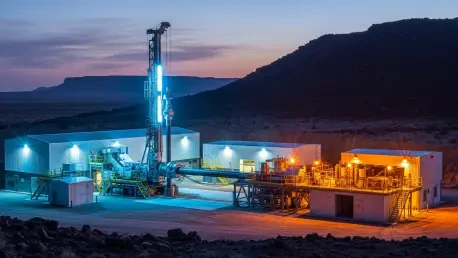
The emergence of Enhanced Geothermal Systems has radically changed this narrative by adopting horizontal drilling and hydraulic stimulation techniques perfected during the shale revolution. By creating artificial reservoirs in hot, deep rock, developers have effectively decoupled geothermal energy from specific volcanic locations. This shift turns geothermal into a globally accessible resource, allowing for the construction of power plants near major load centers rather than in remote wilderness. As the industry moves into this engineered phase, it is finally setting the stage for the kind of industrialization seen in the unconventional oil and gas sectors.
De-Risking the Deep: The Path to Institutional Capital
Achieving the Non-Recourse Debt Milestone
The most significant hurdle for any first-of-a-kind technology is the transition from high-cost venture equity to affordable non-recourse debt. Historically, lenders viewed deep-rock drilling as too speculative, often requiring parent companies to provide total corporate guarantees to secure any form of credit. Recent milestones, such as the $421 million financing for the Cape Station project in Utah, mark a radical departure from this trend. When a consortium of global banks—including Barclays, HSBC, and RBC—agrees to lend hundreds of millions of dollars based solely on project cash flows, it serves as a powerful seal of approval for the technology’s maturity.
Leveraging Oil and Gas Expertise for Scalability
The bankability of enhanced geothermal is largely predicated on its ability to borrow the operational maturity of the fossil fuel industry. By utilizing existing horizontal drilling rigs and AI-enabled exploration tools, developers can provide lenders with a track record of consistency that purely experimental technologies lack. This technological synergy allows for a “factory model” of deployment, where multiple wells are drilled from a single surface pad to reduce capital expenditure and environmental footprints. The integration of advanced sensors and real-time monitoring further mitigates reservoir risk, providing the granular data that institutional investors require to model long-term returns with confidence.
Revenue Certainty Through Power Purchase Agreements
A bankable asset requires not just operational viability but also a guaranteed, long-term stream of cash flow to service debt. The rise of geothermal as an asset class is being fueled by the intense demand for “round-the-clock” carbon-free energy from tech giants and utility providers. Unlike intermittent wind and solar, EGS provides constant power, making it an ideal candidate for multi-year Power Purchase Agreements. Large entities, including Southern California Edison and global energy majors, are increasingly signing these contracts to satisfy grid stability requirements and 24/7 clean energy goals, effectively turning the heat beneath our feet into a reliable financial commodity.
The Future Landscape: Regulatory Tailwinds and Technological Maturation
The trajectory of the sector points toward a future where geothermal becomes a standard component of a diversified, carbon-neutral energy grid. We are seeing a shift in the regulatory environment, with governments streamlining permitting processes for deep-drilling projects to match the speed of solar deployments. This policy support, combined with the successful scaling of projects from hundreds of megawatts toward gigawatt-scale “super-projects,” is expected to drive the Levelized Cost of Energy down through massive economies of scale. Furthermore, the potential for geothermal reservoirs to act as massive energy storage systems for excess wind and solar power adds another layer of value, making these assets even more attractive to green bond issuers and infrastructure funds.
Strategic Takeaways for the Energy Transition
For investors and developers looking to capitalize on this trend, the focus must now shift toward operational excellence and financial transparency. The successful integration of cross-industry technologies has proven to be a shortcut to commercial maturity, but maintaining this momentum requires a disciplined approach to project management. Stakeholders should prioritize:
- Securing long-term offtake agreements with creditworthy partners to ensure project bankability.
- Utilizing AI and digital twins to provide lenders with high-fidelity performance metrics.
- Scaling projects in phases to demonstrate consistent reservoir performance before attempting massive capital outlays. These strategies will be essential as the industry moves from a proof-of-concept phase toward a period of rapid global expansion.
A Permanent Fixture in the Global Energy Portfolio
The transition of Enhanced Geothermal Power into a bankable asset class was cemented by the shift from speculative engineering to standardized, project-financed infrastructure. By solving the intermittency problem and proving that deep-rock reservoirs could be managed with the same precision as oil and gas fields, the sector addressed the two primary weaknesses of earlier renewable efforts. Institutional capital began to flow into these projects not as a bet on a breakthrough, but as an investment in a predictable, high-value foundation for the future of global energy. Moving forward, the industry must focus on standardizing these financial structures to allow for the rapid replication of the “Cape Station” model across diverse geological regions. As the technology matured, it became clear that the Earth’s internal heat provided the missing link for a truly stable and carbon-neutral global power grid.