
The traditional view of the American countryside is undergoing a radical transformation as the historical conflict between energy production and food security dissolves into a new agricultural paradigm. For decades, the expansion of solar arrays often meant the displacement of fertile topsoil, forcing a difficult choice between generating clean electricity and maintaining the nation’s food supply. However, the emergence of the “Farm of Tomorrow” project in New York, spearheaded by Norbut Solar Farms, demonstrates that these two vital sectors are no longer mutually exclusive. This approach, known as agrivoltaics, leverages the same acreage to harvest both sunlight and crops, effectively ending the zero-sum game of land management. As agriculture currently accounts for nearly two percent of total energy consumption in the United States, the move away from diesel-reliant machinery toward integrated renewable systems represents a critical shift for the industry. By rethinking the fundamental utility of farmland, developers are proving that sustainable energy and local food production can thrive in tandem, creating a resilient framework for the modern agrarian economy.
Transforming the Landscape: The Rise of Dual-Use Agriculture
Synergistic Integration: More Than Just Panels in a Field
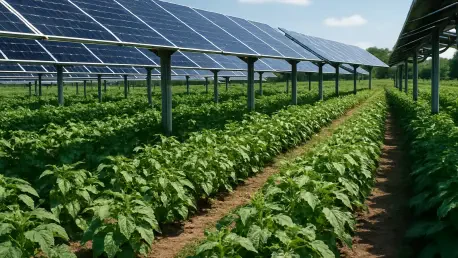
Building on this foundation, the integration of solar technology into active farming operations requires a sophisticated understanding of both engineering and horticulture. Instead of clearing land for massive industrial arrays, developers like David Norbut are elevating solar panels to allow for the passage of livestock or the cultivation of shade-tolerant crops beneath the structures. This method rejects the outdated “either-or” mentality that previously stalled renewable growth in rural communities. The strategic placement of these panels does more than just capture photons; it creates a controlled microclimate that can shield sensitive plants from the increasingly erratic weather patterns seen across the country. This synergy ensures that the land remains productive throughout the year, even during the off-season for traditional harvests. As this model matures, it is becoming clear that the infrastructure of energy and the labor of farming are becoming inextricably linked. This specific design allows for a seamless flow of traditional equipment, ensuring that energy goals never compromise the practical needs of the grower.
Environmental Resilience: Cultivating Biodiversity and Soil Health
This approach naturally leads to significant environmental advantages that go far beyond the mere reduction of greenhouse gas emissions. The shade provided by the elevated solar panels plays a vital role in improving water retention within the soil, which is a crucial factor for farmers facing prolonged periods of dry weather and rising global temperatures. By reducing the direct evaporation of moisture, the agrivoltaic systems allow for more efficient irrigation and promote a healthier soil microbiome. Furthermore, these installations are increasingly designed to support local biodiversity by incorporating native vegetation and pollinator-friendly habitats around the base of the equipment. These “pollinator pillows” attract bees and butterflies that are essential for the fertilization of nearby crops, creating a self-sustaining ecosystem that benefits the entire region. The resulting increase in soil health and local wildlife populations strengthens the land’s long-term viability, proving that high-tech energy solutions can actively restore the natural environment.
Economic Viability: Strengthening the Financial Backbone of Farming
Scalable Impact: Powering Communities While Protecting Crops
The financial implications of this dual-use model are equally compelling, offering a robust economic advantage for family farms that have historically struggled with volatile commodity prices. Through the implementation of on-site solar generation, agricultural operations can potentially reduce their annual electricity expenditures by up to forty percent. Moreover, by leasing portions of their land for energy production or selling excess power back to the grid, farmers have seen their per-acre income increase by as much as thirty percent. The scale of this impact is already visible in the output of pioneers like Norbut Solar Farms, which has produced over 320 megawatts of energy across its various project sites. This volume of clean power is sufficient to supply approximately 80,000 homes, turning the farm into a central hub for community energy resilience. This additional revenue stream provides a much-needed buffer against the rising costs of traditional inputs. By diversifying their income, farmers are able to reinvest in their operations, ensuring the longevity of the rural economy.
Future Outlook: Establishing a Resilient Infrastructure for the Next Decade
The shift toward integrated land use reflected a broader commitment to long-term productivity and carbon footprint reduction that redefined the modern farm. With roughly 600 solar farm projects active across the United States and seventy percent of farmers expressing openness to such developments, the practice moved toward the mainstream of American industry. Decision-makers recognized that the path forward required a blueprint for a more resilient infrastructure that addressed both food security and climate goals simultaneously. To maintain this momentum, stakeholders prioritized investments in modular solar equipment and supported zoning laws that protected agricultural integrity while encouraging energy innovation. The transition away from carbon-intensive diesel toward decentralized renewable grids provided a clear solution for stabilizing operational costs. Ultimately, the successful fusion of these two sectors established a sustainable legacy, ensuring that the land remained a source of both nourishment and power. This evolution proved that agricultural tradition and technological progress could indeed walk hand in hand.