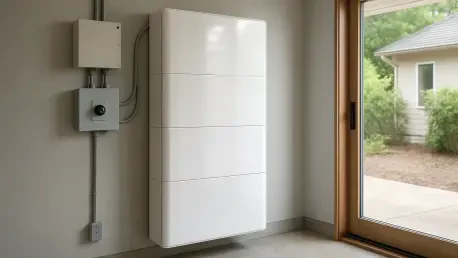

As the United States grapples with an electrical grid under immense strain from escalating demand and decades-old infrastructure, a decentralized solution is rapidly gaining momentum, not from massive new power plants, but from the quiet revolution taking place in suburban garages and basements. The aggregation of thousands of individual home battery systems into sophisticated, software-managed networks known as virtual power plants (VPPs) presents a compelling alternative to traditional grid reinforcement. This approach promises not only to enhance grid stability and resilience but also to empower consumers, turning them from passive energy users into active participants in the nation’s energy future. A recent surge in venture capital funding for companies pioneering this technology underscores the growing confidence that these distributed energy resources are poised to become a cornerstone of a more robust and flexible American power system, addressing the critical lag between surging energy needs and the slow, costly process of building new centralized infrastructure.
The Rise of Virtual Power Plants
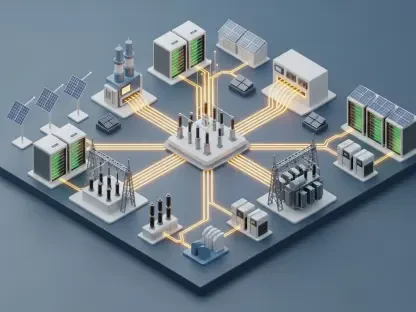
The concept of a virtual power plant transforms a collection of disparate, small-scale energy assets into a single, cohesive, and dispatchable resource for the electrical grid. At the heart of this transformation is advanced software, often driven by artificial intelligence, which orchestrates the charging and discharging of thousands of residential batteries in near real-time. When the grid experiences a surge in demand, such as during a heatwave when air conditioners are running at full capacity, the VPP can instruct the connected home batteries to release their stored energy back to the grid simultaneously. This coordinated response provides what is known as dispatchable capacity, alleviating stress on central power plants and transmission lines. Furthermore, these systems can offer critical ancillary services like fast frequency response, instantly injecting or absorbing power to maintain the grid’s operational stability at the precise frequency required for reliable electricity delivery, a task that is vital for preventing blackouts.
This software-driven approach offers a stark and advantageous contrast to the conventional methods of grid expansion, which typically involve years of planning, regulatory hurdles, and massive capital investment to construct new power plants or upgrade transmission corridors. VPPs, by leveraging assets that are already being installed in homes for backup power and solar energy storage, can be deployed and scaled with remarkable speed and efficiency. This agility is a primary reason for the growing investor enthusiasm, as it directly addresses the fundamental mismatch between the rapid growth of electricity demand—fueled by the electrification of transportation and heating—and the notoriously slow pace of traditional infrastructure development. By tapping into this “behind-the-meter” capacity, utilities can meet peak demand without resorting to expensive, and often polluting, peaker power plants, representing a more economically and environmentally sound path toward a modern grid.
Fueling Innovation with Strategic Investment
The financial markets have taken significant notice of the VPP model’s potential, pouring hundreds of millions of dollars into the technology companies leading the charge. Silicon Valley-based Lunar Energy recently exemplified this trend by securing $232 million in new capital, a clear signal of robust investor confidence. This funding was the result of two separate successful rounds: an oversubscribed $102 million Series D round led by prominent firms like B Capital and Prelude Ventures, and a previously unannounced $130 million Series C round spearheaded by Activate Capital. This latest infusion brings the company’s total capital raised since its 2020 launch to over $530 million. The high level of interest from a diverse group of investors, including major industry players like Sunrun and international conglomerates such as South Korea’s SK Group and Japan’s Itochu Corporation, highlights the global recognition of residential energy storage as a critical and lucrative component of the future energy landscape.
Investor confidence is not built on theoretical potential alone but on demonstrated market performance and a clear path to scalability. The significant capital flowing into companies like Lunar Energy is directly fueled by tangible achievements, such as the successful deployment of over 2,000 home storage systems and the operational success of large-scale VPP programs. This proven ability to execute, combined with leadership from industry veterans with track records at companies like Tesla, provides a compelling case for investment. The core proposition is that these companies are not just selling hardware; they are building sophisticated energy networks that generate recurring value for both the homeowner and the utility. This dual-sided value creation, validated by early market traction and a strong product-market fit, is what underpins the belief that these ventures can capture a significant share of the evolving energy market.
From Homeowner Savings to National Security
While VPPs provide immense value at the grid level, their adoption is largely driven by direct and compelling financial benefits for the individual homeowner. A key strategy for market penetration involves offering integrated home battery solutions through leasing programs, which eliminate the substantial upfront cost of purchasing and installing the equipment. Under this model, a third-party owner, such as the leasing company, can claim valuable federal incentives like the Section 48E investment tax credit, passing the savings on to the consumer in the form of an affordable monthly payment. Homeowners then realize immediate value through lower electricity bills, as the system allows them to store cheap solar or off-peak grid energy for use during more expensive peak hours. Furthermore, participation in VPP programs creates an additional revenue stream. For instance, customers in some active programs earned an average of $464 in the previous year, a figure reportedly $338 higher than those using their batteries in a standard, non-networked operating mode.
Beyond the individual household, the strategic emphasis on domestic manufacturing for these energy systems carries significant implications for national energy security and economic policy. By designing products in California and assembling them in states like Georgia and Washington, companies are positioning their systems as “proudly domestic content.” This commitment is more than just a marketing slogan; it is a critical business strategy that ensures the products are not manufactured with assistance from “foreign entities of concern” (FEOC). This FEOC-free status is a prerequisite for eligibility for some of the most lucrative federal incentives, including the domestic content bonus credit. This focus on a secure, domestic supply chain not only strengthens the U.S. manufacturing base but also insulates the nation’s critical energy infrastructure from geopolitical risks and supply chain disruptions, aligning the growth of residential energy storage with broader national objectives.
A Decentralized Grid Future
The successful deployment and scaling of virtual power plants marked a pivotal shift in how grid stability was conceived and managed. The integration of thousands of home battery systems provided a flexible and rapidly deployable resource that proved capable of complementing traditional infrastructure. The strategic investments that flowed into the sector validated the commercial viability of this decentralized model, moving it from a niche concept to a mainstream component of energy planning. By creating a symbiotic relationship where homeowners benefited from direct financial savings and utilities gained a crucial tool for load management, the VPP model fostered a new paradigm of active consumer participation in the energy market. This foundation laid the groundwork for a more resilient, efficient, and secure American electrical grid, demonstrating that a significant part of the solution to the nation’s energy challenges resided within its own homes.