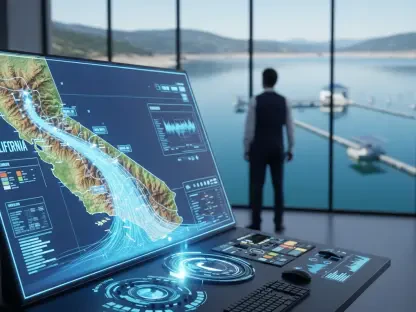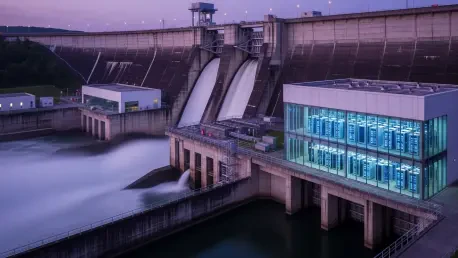

The massive humming turbines buried deep within the concrete heart of the Grand Coulee Dam have been spinning since before the digital age was even a whisper, yet they now provide the vital lifeblood for the most advanced artificial intelligence clusters on the planet. While the spotlight of the energy transition often shines on sleek wind turbines and sprawling solar farms, the most reliable workhorse of the American grid is a technology that predates the lightbulb. Hydropower, often dismissed as a “forgotten giant,” is facing a pivotal moment where its century-old infrastructure must suddenly meet the insatiable, 24/7 power demands of modern data centers. The industry hasn’t seen a major capacity expansion in decades, yet the urgent need for carbon-free, “always-on” electricity is forcing a radical reconsideration of these ancient water-driven assets.
This tension between the old and the new defines the current energy landscape. As tech giants scramble to secure zero-carbon baseload power to fuel their neural networks, they are looking past the intermittent nature of newer renewables toward the steady pull of gravity. However, the path to a hydro-powered future is not a simple matter of flipping a switch. The sector is currently grappling with a stagnant market share and a regulatory environment that often treats 100-year-old dams as liabilities rather than the foundational assets they are.
From the Backbone of the Pacific Northwest to a Fading Market Share
Hydropower’s legacy is defined by unmatched durability, with plants like Wisconsin’s Whiting dam operating since the late 1800s without losing their core functionality. This historical dominance, particularly in the rainy corridors of the Pacific Northwest, provided the cheap, reliable energy that built the modern American industrial base. However, this longevity has led to a sense of complacency, as the sector struggles to keep pace with the aggressive expansion of wind and solar. In recent years, wind power officially surpassed hydro in total generation, and utility-scale solar is projected to follow suit shortly.
Today, hydroelectricity accounts for only about 5.6 percent of total U.S. generation, a figure that reflects an industry at a crossroads. It provides the essential frequency response and voltage stability that intermittent sources lack, acting as the “shock absorber” for a volatile grid. Despite this utility, aging infrastructure and a lack of new “megaprojects” make it an underdog in the current green energy boom. Without a significant shift in investment and public perception, this bedrock of the renewable sector risks becoming a relic of the past rather than a leader of the future.
The Three Pillars of a Potential Hydro Revival
The National Hydropower Association is currently spearheading a movement to reposition the industry through three strategic focus areas designed to break the cycle of stagnation. First, there is a push for regulatory streamlining to simplify the bureaucratic and costly process of renewing federal licenses for older plants. Currently, a dam owner might spend a decade and millions of dollars just to keep an existing facility running, a process that discourages the very upgrades needed to increase efficiency.
Second, the industry is seeking expanded loan guarantees to make small-scale and “closed-loop” projects financially attractive to investors who have traditionally favored the quick returns of solar arrays. Finally, hydro is being marketed as the premier solution for tech giants. Unlike wind and solar, which are slave to the weather, hydropower offers the steady baseload power required to keep massive data centers running without interruption. By aligning the interests of Silicon Valley with those of the water-power industry, proponents hope to unlock a new wave of private capital.
The Pivot to Pumped Storage and the New “Giant Battery” Model
Because traditional large-scale dam construction has largely stalled due to significant environmental concerns and land-use conflicts, the industry’s future growth is now tethered to pumped hydro energy storage. This technology functions as a massive mechanical battery, moving water between reservoirs at different elevations to store energy for peak demand periods. When the sun is shining and solar power is in excess, water is pumped uphill; when the sun sets and demand spikes, the water is released back down through turbines to generate power instantly.
Projects like the 1,200-megawatt Goldendale facility in Washington represent a shift toward systems that stabilize the grid without blocking major rivers. These closed-loop systems, which do not interact with natural waterways, are increasingly viewed as the most viable path forward for adding long-duration storage to a grid that is becoming more dependent on variable energy sources. They offer a way to bypass the ecological controversies of the 20th century while providing the massive energy reserves that chemical batteries cannot yet match.
Confronting the Financial Risks and the “Spillway Problem” of Climate Change
Energy experts and research findings highlight significant barriers that could derail a hydropower renaissance, most notably the extreme capital costs and decade-long construction timelines. Large dams often face “budget creep” that can reach billions of dollars, making them a risky proposition for utilities that need to add capacity within the next few years. Beyond finances, the industry faces a direct threat from climate volatility, which is fundamentally altering the water cycles that these plants depend on for fuel.
Traditional snowpack cycles, which acted as a natural slow-release reservoir, are being replaced by erratic spring rainfalls. This shift creates a “spillway problem” where water levels rise so rapidly that dam operators must release the excess over spillways rather than sending it through turbines to protect the structural integrity of the dam. This results in wasted energy potential and lost revenue. Expert consensus suggests that for hydro to remain reliable, operators must abandon the predictable patterns of the last century and adapt to a future defined by hydrological extremes and intense droughts.
A Framework for Integrating Hydro into the 21st-Century Grid
To achieve a successful renaissance, policymakers and grid operators needed to implement a specific set of strategies that prioritized flexibility over sheer size. This began with a focus on “non-powered dam” retrofits, which involved adding generation capabilities to the thousands of existing structures that currently provide flood control or irrigation but no electricity. By leveraging existing footprints, the industry avoided the ecological damage associated with new construction while steadily increasing the nation’s carbon-free capacity.
Furthermore, the industry emphasized the development of closed-loop pumped storage to mitigate environmental impacts and avoid the historical pitfalls of land displacement. By shifting from a “seasonal” operational mindset to a “flexible” one that could handle both flash floods and prolonged droughts, hydropower secured its place as the essential stabilizer for a fully decarbonized energy market. Investing in predictive AI to manage water flows and modernizing turbine technology allowed these ancient giants to react in milliseconds to grid fluctuations, ensuring that the 19th-century engine remained the most vital component of the modern world.