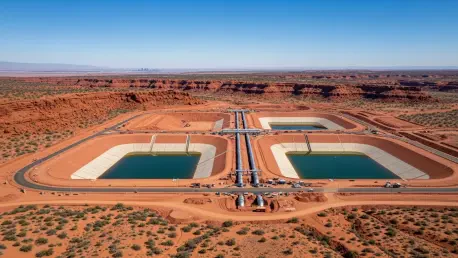

The massive scale of the Desert Bloom Project represents a bold attempt to reconcile the thirst for carbon-free energy with the increasingly dry reality of the American Southwest. This ambitious venture has emerged as a critical flashpoint in the regional market, standing at the high-stakes intersection of federal renewable energy targets and the harsh environmental constraints of the Mojave Desert. Proposed as a significant closed-loop pumped storage hydroelectric facility on Blue Diamond Hill, just a short distance from the Las Vegas Strip, the project promises to provide a essential stabilization for the regional power grid. However, its long-term viability remains tethered to a single, increasingly volatile commodity: water. This analysis examines whether such a resource-intensive infrastructure model can truly survive alongside the stringent conservation mandates defining the modern West, while assessing the technical, regulatory, and social hurdles that threaten its progress.
Navigating the Intersection of Renewable Energy and Extreme Scarcity
The transition toward a carbon-neutral economy has accelerated the demand for long-duration energy storage, making projects like Desert Bloom highly attractive on paper. By utilizing a dual-reservoir system to move water between different elevations, developers aim to create a “water battery” capable of storing excess solar and wind energy. Yet, the geographical placement of this facility on the edge of a rapidly expanding metropolitan area creates a fundamental conflict. In a market where water is increasingly viewed as a finite and precious asset, the introduction of a project requiring billions of gallons of fluid for initial filling and maintenance presents a unique challenge to traditional development models.
Stakeholders are now forced to evaluate the trade-offs between energy security and water security. While the Federal Energy Regulatory Commission has allowed the project to move into a study phase, the disconnect between federal energy goals and local hydrological realities is becoming impossible to ignore. This analysis explores the depth of this friction, looking at how the project seeks to navigate a landscape where environmental groups and water authorities are aligned in their opposition. The survival of the project likely depends on a radical reimagining of how energy infrastructure interacts with the desert ecosystem, or it may simply serve as a cautionary tale for future developers.
From Blue Diamond Hill to the Federal Stage: A History of Ambition
The desire to harness the unique topography of Blue Diamond Hill is not a contemporary phenomenon but rather a recurring vision that has persisted for nearly four decades. Since the late 1980s, developers have repeatedly eyed the site for hydroelectric potential, lured by the significant elevation change it offers. However, the history of these attempts is a chronicle of regulatory stagnation and missed deadlines. Previous iterations of the project were licensed but eventually abandoned when construction failed to commence within the mandated timeframes. This historical context is vital because it reveals that the core obstacles—specifically the acquisition of water rights—have remained largely unchanged even as the climate has grown more arid.
Most recently, a predecessor project known as the Blue Diamond Project faced a formal rejection in early 2024 after failing to meet federal progress benchmarks. The current Desert Bloom proposal represents a strategic rebranding of this concept, filed almost immediately after the previous project’s demise to maintain a foothold in the permitting process. This pattern of “filing and refiling” highlights the persistent belief in the site’s value among energy investors. However, market observers note that the regional environment has shifted significantly since those early proposals. What was once considered a difficult engineering task is now viewed through the lens of a regional water crisis, making the historical baggage of the site a significant weight on its future prospects.
The Massive Fluid Demand of a Desert Battery
The Logistical Nightmare of Sourcing Three Billion Gallons
The technical requirements for the Desert Bloom Project are immense, necessitating approximately 9,800 acre-feet of water to become operational. In practical terms, this volume is equivalent to nearly 3 billion gallons, a figure that represents a significant percentage of the annual water usage for the entire Las Vegas Valley. Developers have suggested that they could “haul or pipe” this water from an as-yet-unidentified source, but this ambiguity has created substantial skepticism among market analysts and local residents. Finding a source of this magnitude in a state where the Colorado River is already under federal shortage conditions is a logistical puzzle that lacks a clear solution.
Furthermore, the physical infrastructure required to transport such a massive volume of water to the elevated site would involve significant energy consumption and environmental disruption. The Las Vegas Valley groundwater basin is already categorized as over-appropriated, meaning that legal claims to water already exceed the natural recharge rate. Without a verifiable and sustainable source of water, the project’s engineering remains purely theoretical. The absence of a concrete water plan at this stage of the permitting process is viewed by many as a major risk factor that could lead to the project being stranded before any physical construction begins.
A Direct Conflict with Regional Conservation Mandates
Local water authorities, including the Southern Nevada Water Authority, have spent the last few decades implementing some of the most aggressive water conservation programs in the nation. These efforts have included paying residents to remove turf and strictly regulating outdoor water use. The proposal to create a massive artificial lake in the middle of a desert environment stands in direct contradiction to these public policy goals. Water officials argue that the region is effectively in a permanent state of water emergency, which should take precedence over the creation of new, water-dependent energy storage facilities.
The volume required to fill the reservoirs for the first time would equal roughly 11 days of total consumption for the entire Las Vegas metropolitan area. This creates a public relations and political nightmare for developers, as they must explain why a private energy project should receive priority over the needs of millions of residents and businesses. In the current regulatory climate, “energy emergencies” are often cited by developers as a justification for resource use, but water authorities maintain that the hydrological health of the region is the foundational requirement for all other economic activities. This clash of priorities represents a significant hurdle for the project’s social license to operate.
Threatened Biodiversity in the Shadow of Red Rock
Beyond the water issues, the project’s proximity to the Red Rock Canyon National Conservation Area introduces a layer of ecological complexity. The site is a known habitat for the Mojave Desert tortoise, a species that is currently listed as threatened and faces ongoing pressure from urban sprawl. Industrializing Blue Diamond Hill would likely result in the destruction of critical corridors for this species, as well as several rare plants like the Blue Diamond cholla and specific penstemon varieties. These species exist in very narrow ecological niches, making any disruption to their habitat potentially catastrophic for their long-term survival.
Conservation groups have been highly effective at leveraging environmental protection laws to stall or block developments in this region. The Bureau of Land Management has already indicated that it will not provide the necessary land-use authorizations unless the developers can demonstrate they have secured valid water rights. This creates a regulatory “Catch-22” where the project cannot move forward on land use without water, and it cannot finalize water infrastructure without land access. The potential for prolonged litigation over species protection and land degradation remains a high probability, adding years of potential delays to the project timeline.
The Evolving Landscape of Western Energy and Regulation
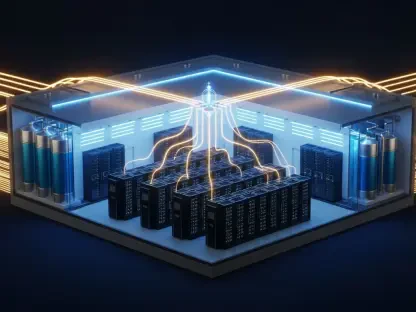
The future of energy storage in the American West is likely to move away from water-intensive models as new technologies mature and regulatory pressures mount. While pumped storage has traditionally been the gold standard for long-duration storage, the shifting climate is forcing a pivot toward alternatives. We are seeing increased interest in gravity-based systems that use solid weights or advanced battery arrays that require negligible amounts of water to function. These technologies offer the same grid-balancing benefits as hydroelectric projects without the massive hydrological footprint that makes projects like Desert Bloom so controversial.
Furthermore, regulatory bodies are beginning to integrate “water security” as a primary metric in the approval process for renewable energy projects. In the coming years, we can expect the Federal Energy Regulatory Commission to require more rigorous proof of water availability much earlier in the feasibility stages. This shift would prioritize projects that can prove a “water-neutral” impact, potentially sidelining traditional pumped storage in arid regions. As the push for a carbon-neutral grid continues, the market will likely reward developers who innovate within the constraints of the local environment rather than those who attempt to bypass them through legacy engineering solutions.
Strategic Realities for Stakeholders and Developers
For those looking to invest in the future of the energy grid, the Desert Bloom Project serves as a vital lesson in the importance of resource due diligence. Technical feasibility is no longer the sole determinant of a project’s success; instead, the availability of water and the strength of local community support have become the primary drivers of viability. Moving forward, developers must prioritize transparency and early engagement with local water districts to ensure their projects align with regional conservation goals. A “water-first” approach to project design is no longer an option but a necessity for any large-scale infrastructure in the West.
Actionable strategies for future energy projects should include the exploration of hybrid models that combine different storage technologies to minimize resource use. Developers should also consider brownfield sites or areas with existing industrial water rights to avoid the pitfalls of seeking new appropriations in over-taxed basins. By focusing on water-efficient or water-neutral designs, energy companies can reduce their regulatory risk and build stronger partnerships with the communities they serve. For the broader public and policymakers, this situation reinforces the need for a unified planning framework that treats water and energy as two sides of the same coin.
Final Assessment: A Precarious Path Forward
The investigation into the Desert Bloom Project revealed a fundamental misalignment between ambitious infrastructure goals and the actual resource capacity of the Mojave Desert. The analysis of the proposal’s technical requirements showed that the sheer volume of water demanded was incompatible with the decades of conservation work performed by regional authorities. The project’s reliance on vague sourcing plans and its potential impact on threatened biodiversity created a series of regulatory barriers that appeared increasingly insurmountable. Historically, similar attempts on the same site failed due to these very issues, and the current climate provided even less room for error than in previous decades.
Ultimately, the study of this project demonstrated that the path to a renewable energy future must be paved with hydrological responsibility. The challenges identified during the study phase indicated that without a major technological shift or an unforeseen change in water availability, the facility’s survival remained highly improbable. Stakeholders moved toward alternative storage solutions that respected the desert’s limits, recognizing that true sustainability required more than just carbon reduction. The legacy of the Desert Bloom Project served to remind the industry that in the American West, water rights functioned as the ultimate arbiter of progress.