
A landmark federal program designed to channel billions into clean energy for America’s most vulnerable communities has instead become the centerpiece of an intense legal war, pitting the executive branch against Congress and leaving grantees in an unprecedented state of limbo. At the heart of this dispute is a foundational question of American governance: can an administration legally halt the flow of funds that lawmakers have already approved and designated for a specific purpose? The answer will have profound implications not only for the climate projects now on hold but for the future of congressionally mandated spending.
The case centers on the Environmental Protection Agency’s (EPA) decision to freeze $14 billion in grants, a move that has escalated to one of the nation’s most powerful courts. This legal battle represents a critical test of the separation of powers, questioning the extent of an agency’s authority to override legislative intent. As the case unfolds, it threatens to set a precedent that could either reinforce or undermine Congress’s power of the purse, shaping federal policy for years to come.
The High Stakes of a Sudden Funding Freeze
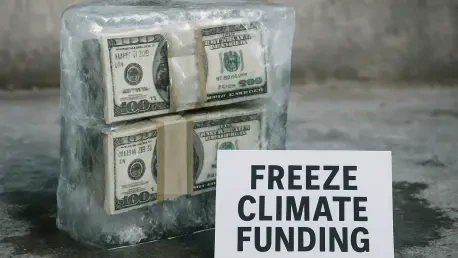
The central conflict erupted when the EPA abruptly locked down $14 billion that Congress had explicitly allocated through the 2022 Inflation Reduction Act. This was not a simple budgetary disagreement but an administrative halt on funds already awarded to nonprofit coalitions tasked with distributing the capital. The agency’s action triggered immediate legal challenges, sparking a high-stakes confrontation over executive authority and congressional will.
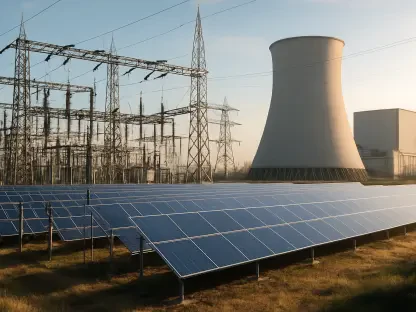
This administrative freeze has had immediate, real-world consequences. Clean energy projects designed to bring solar power, energy-efficient housing, and green infrastructure to disadvantaged neighborhoods were suddenly paused. Communities that had been preparing for transformative investments were left in a state of uncertainty, their plans disrupted as the money intended to fund them became entangled in a complex legal web.
A Fund Designed for Climate Justice
The contested money originates from the Greenhouse Gas Reduction Fund (GGRF), a nearly $27 billion program that stands as a cornerstone of the Inflation Reduction Act. Conceived as a national “green bank,” its purpose is to leverage public and private capital to finance a wide array of clean energy and climate-related initiatives across the country. The program represents one of the most significant federal investments in climate action to date.
What makes the GGRF particularly notable is its explicit mission to prioritize environmental justice. A substantial portion of the fund is mandated to benefit low-income and disadvantaged communities, areas that have historically borne a disproportionate burden of pollution and environmental hazards. By directing investment toward these communities, the fund aims not only to reduce emissions but also to create economic opportunities and address long-standing inequities.
The Anatomy of a Constitutional Power Struggle
The EPA, led by Administrator Lee Zeldin, has justified the funding freeze by citing serious concerns over the grant-awarding process. The agency alleged instances of “self-dealing and conflicts of interest,” along with a rushed timeline under the previous administration that it claims resulted in “intentionally reduced agency oversight” and unqualified recipients. From the EPA’s perspective, it is exercising its duty to ensure federal funds are disbursed responsibly and without impropriety.
In sharp contrast, the nonprofit grant recipients, including coalitions like Climate United and Power Forward Communities, argue that the EPA’s actions are unlawful. Their legal position is that once Congress appropriates and obligates funds for a specific purpose, an executive agency does not have the authority to unilaterally revoke or indefinitely freeze them. They contend that the EPA has overstepped its constitutional bounds, effectively vetoing a congressional mandate through administrative action. The initial legal round went to the EPA, with a three-judge panel ruling 2-1 that the agency was within its authority to ensure the grants were “faithfully executed,” a decision that the grantees immediately moved to appeal.
Arguments from the Legal and Political Frontlines
The dispute quickly drew in voices from Capitol Hill. A group of Democratic members of Congress filed a legal brief in support of the grantees, labeling the administration’s move a “constitutional power grab.” They asserted that the EPA was attempting to invent allegations of fraud as a pretext to dismantle a program established by a previous administration, thereby usurping legislative power.
The initial majority opinion from the appellate panel offered a different view, focusing on the executive branch’s constitutional obligation to “take Care that the Laws be faithfully executed.” The two judges who sided with the EPA argued that the agency’s review of potential conflicts of interest fell within this duty of careful execution. Despite this setback, the nonprofit recipients have remained optimistic, expressing confidence that the law is ultimately on their side as they prepared for a rehearing before the full court.
A Full Court Showdown and Its Consequences
The decision by the U.S. Court of Appeals for the D.C. Circuit to grant an “en banc” rehearing is a critical turning point. This procedure, in which all of the court’s active judges hear the case together, is reserved for matters of exceptional public importance or to resolve conflicting precedents. It effectively vacates the initial three-judge panel’s decision and signals that the court recognizes the profound constitutional questions at stake.
The case will now be decided by a court composed of a diverse group of judicial appointees. The full bench includes appointees from four different presidential administrations, creating a dynamic where judicial philosophies may play a significant role in the outcome. The next major event is the oral arguments scheduled for February 24, which will give both sides a chance to make their case directly to the full court. Until then, a partial administrative stay issued in April remains in effect, keeping the $14 billion inaccessible and leaving the future of dozens of climate projects hanging in the balance.
The legal battle over the Greenhouse Gas Reduction Fund became more than a dispute over money; it tested the very boundaries of executive authority against congressional intent. The conflict illuminated the deep political and ideological divides shaping climate policy, transforming a landmark funding program into a flashpoint in the ongoing struggle over the separation of powers. The final verdict, when it arrived, was poised to establish a critical precedent that would influence how future administrations could engage with congressionally mandated programs, shaping the landscape of federal law for years to come.