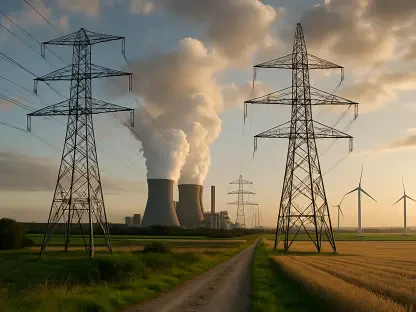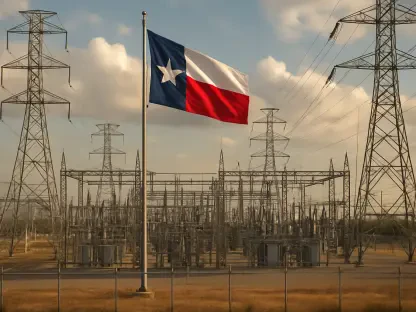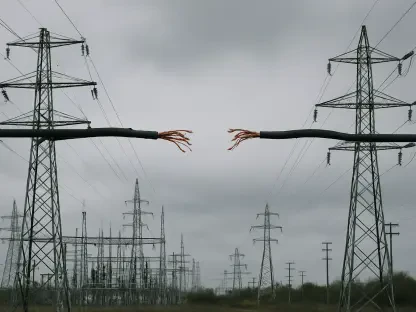

In the intricate tapestry of the American energy landscape, two powerful and opposing forces are pulling the renewable energy sector in entirely different directions, creating a schism that will define the nation’s power grid for the next decade. While a targeted political campaign seeks to dismantle the very foundations of clean energy development, an unprecedented surge in electricity demand, fueled by the digital and industrial engines of the economy, offers the industry an unexpected and potent lifeline. This collision of policy and market reality has plunged the sector into a period of profound uncertainty, forcing a rapid evolution from speculative growth to disciplined survival. The central question now is not whether renewables have a future, but what that future will look like after being forged in the crucible of 2026’s economic and political turbulence.
An Industry Caught in a Paradoxical Struggle
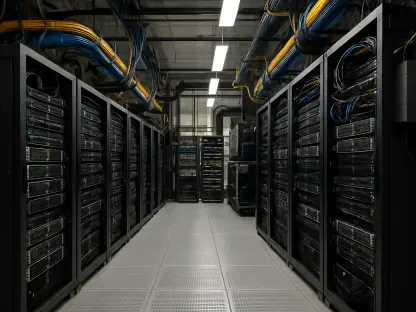
The U.S. renewable energy industry is navigating a deeply contradictory environment. On one side, it faces a concerted effort from the current administration to curtail the incentives and support structures that fostered its recent explosive growth. This has introduced significant risk and forced a painful realignment for developers accustomed to a more favorable federal landscape. On the other side, the insatiable appetite for electricity from data centers, advanced manufacturing, and widespread electrification is creating a demand vacuum that only renewables appear capable of filling quickly and affordably.
This paradox has become the defining characteristic of the sector. The very market forces driving the American economy forward are simultaneously creating an undeniable business case for wind and solar, even as federal policy attempts to apply the brakes. This tension is forcing companies to pivot their strategies, abandoning speculative projects in favor of those with clear, near-term viability. The industry’s ability to weather this storm hinges on whether the sheer economic imperative for more power can overpower the political and administrative hurdles being erected in its path.
The Great Collision Setting the Stage for an Energy Showdown
The stage for the current energy showdown was set by two intersecting developments. The first was a sweeping legislative assault designed to unwind the financial scaffolding that supported the clean energy transition. The “One Big Beautiful Bill Act” (OBBBA), signed into law on July 4, 2025, represented a direct and intentional dismantling of the tax credits and long-term certainties provided by the previous Inflation Reduction Act. This legislative gauntlet was explicitly designed to slow the pace of renewable deployment and reassert the primacy of traditional energy sources.
Simultaneously, a market imperative of historic proportions ignited an unprecedented demand surge. The explosive growth of artificial intelligence, the onshoring of advanced manufacturing, and the broader electrification of the economy created a voracious, and largely unanticipated, thirst for power. Utility planners and grid operators, who just a few years ago were forecasting flat load growth, are now grappling with projections that show demand skyrocketing over the next five years. This sudden, massive need for new generation capacity created an urgent market signal that contradicted the government’s policy direction.
An Anatomy of the Assault on Clean Energy
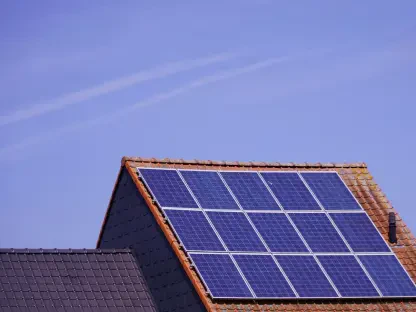
The “One Big Beautiful Bill Act” effectively deconstructed the support system for renewables by imposing an aggressive new deadline of July 4 of this year for wind and solar projects to commence construction to qualify for full tax credits. While a secondary deadline allows projects to qualify if placed in service by the end of 2027, this compressed timeline has created a perilous cliff for any project not already in advanced development. The legislation also completely sunsetted the residential solar credit at the end of last year, delivering a severe blow to that segment of the market and forcing a dramatic industry contraction.
Further complicating the landscape are ambiguous new rules concerning “foreign entities of concern” (FEOC) within the supply chain. The Treasury Department’s failure to issue clear, final guidance has left developers in a state of paralysis, forcing them to operate conservatively to avoid running afoul of poorly defined regulations. This uncertainty disrupts established supply chains, increases costs, and adds another layer of risk to project financing and construction timelines as companies scramble to verify compliance without a clear rulebook.
Beyond direct legislation, the current administration is leveraging bureaucracy as a tool to impede progress. The Department of the Interior is intentionally slowing down approval timelines for renewable projects on federal lands and waters, creating significant delays. This tactic is most pronounced in the offshore wind sector, where the administration has issued stop-work orders and revoked permits for projects already under construction. A similar strategy was deployed in Nevada, where the environmental review for the massive 6.2-GW Esmeralda 7 solar project was canceled in favor of a fragmented, component-by-component review, a move clearly intended to introduce indefinite delays.
The Market’s Unstoppable Force Pushing Back
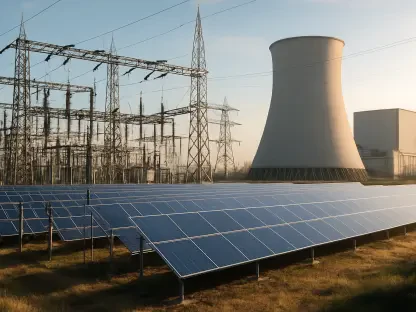
Despite the hostile policy environment, the fundamental economics of power generation continue to favor renewables, primarily due to their unparalleled speed of deployment and competitive cost. New utility-scale solar and wind projects can be conceptualized and brought online in as little as a year, a stark contrast to the five-to-eight-year development cycle for a new natural gas plant or the roughly 15-year odyssey required to build a new nuclear reactor. This speed advantage makes renewables the only practical solution for meeting the urgent, near-term demand from data centers and other large power users. Federal data from 2024 and 2025 substantiates this reality, showing that solar and wind consistently dominated all new generating capacity added to the grid.
Industry leaders, while acknowledging the severe challenges, remain focused on the powerful market fundamentals. Dan Smith of DSD Renewables described the current policy reality as “more draconian” than anticipated, forcing a disciplined triage of project pipelines. In contrast, Robb Jetty, CEO of REC Solar, maintains that due to the underlying need for power, “the future actually looks just as bright as it has previously.” This sentiment highlights the core conflict: the business case remains strong even as the policy framework weakens. However, the chilling effect is real, with Kevin Beicke of Morningstar DBRS noting that the administration’s actions send a signal to global investors that the “U.S. is not open for business,” creating long-term uncertainty that transcends the renewable sector.
A New Playbook for Resilience and Adaptation
In response to this new era of renewable development, the industry has pivoted sharply from speculative expansion to disciplined execution and operational excellence. Companies are now rigorously triaging their project pipelines, separating mature projects that are certain to meet the new deadlines from less-developed ventures that are now considered high-risk. This shift toward pragmatism means focusing resources on the most viable projects while being prepared to cancel or downsize those that no longer pencil out in a post-incentive world. The focus has moved from land acquisition and interconnection queues to streamlining construction and standardizing design to mitigate risk.
To meet the 24/7 power needs of large corporate customers, developers are increasingly pairing renewable generation with battery storage, creating hybrid projects that can deliver reliable power around the clock. A solar-plus-storage facility can be implemented far more quickly than traditional thermal generation, making it the ideal solution for plugging near-term capacity gaps. This move toward integrated energy solutions is not just a market trend but a strategic necessity for remaining competitive.
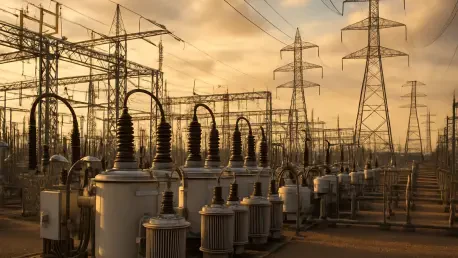
With federal support waning, the role of states and the need for grid modernization have become critical lifelines for the industry. Proactive state-level policies, such as Illinois’ Clean and Reliable Grid Affordability Act and California’s SB-254 transmission accelerator, are filling the void left by the federal government by expediting storage deployment and transmission planning. In the immediate term, however, the most impactful solutions involve maximizing the existing grid through the deployment of grid-enhancing technologies and reconductoring old power lines. These upgrades can be completed in months, unlocking gigawatts of latent capacity far faster than building new generation or transmission lines.
The renewable energy sector’s journey through 2026 was defined by a resilience born of necessity. Faced with a policy regime designed to stifle its growth, the industry found its salvation in the undeniable laws of supply and demand. The economic imperative for cheap, quickly deployable power proved to be a more powerful force than the legislative and administrative hurdles placed in its path. While the political headwinds forced a painful but necessary strategic pivot toward discipline and efficiency, they did not halt the sector’s momentum. Instead, the industry adapted, leveraging technological advantages, innovative project designs, and crucial state-level support to meet the nation’s surging energy needs. The challenges underscored the critical importance of grid modernization and pragmatic, market-driven solutions in securing a reliable energy future.