
In a move signaling a profound recalibration of national energy policy, the Department of Energy has officially withdrawn a substantial $1.8 billion loan commitment previously allocated to Arizona Public Service, the state’s largest utility. This funding was earmarked for a suite of projects designed to accelerate the utility’s transition away from fossil fuels, including advanced transmission infrastructure, new renewable generation facilities, and large-scale energy storage systems. The cancellation disrupts APS’s strategic timeline to shutter its coal-fired power plants by 2031 and achieve a fully carbon-neutral energy portfolio by 2050. The decision is not an isolated event but rather a key component of a widespread re-evaluation of federal energy investments, reflecting a significant philosophical shift in how the administration prioritizes grid reliability, affordability, and the sources of American power.
A Sweeping Reassessment of Energy Investments
The termination of the APS loan is a prominent example within a far broader administrative review that has scrutinized, and often reversed, financial commitments made in the final months of the previous administration. This comprehensive re-evaluation has impacted tens of billions of dollars in planned energy projects across the country.
Reversal of Prior Commitments
The Department of Energy has characterized this extensive review as an “exhaustive first-year” undertaking, resulting in the restructuring, revision, or complete elimination of approximately $83 billion in loan commitments. Officials have suggested that many of these prior agreements were expedited following the last presidential election without sufficient vetting, prompting the new administration to apply a different set of criteria for federal backing. This has led to the de-obligation of nearly $30 billion in loans that were either finalized or in process, with an additional $53 billion in commitments currently undergoing significant revision. The scope of this policy reversal is vast, affecting a diverse array of projects and stakeholders who had previously secured federal financial support. The stated goal is to ensure that taxpayer-backed loans align with the current administration’s energy priorities, which emphasize grid stability and cost-effectiveness over the rapid expansion of specific renewable technologies.
Impact on Renewable Projects
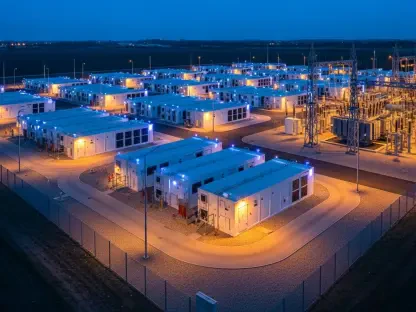
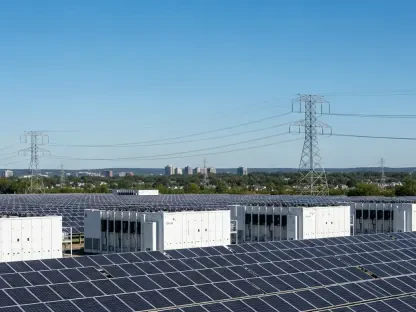
The cancellation directly affects tangible clean energy initiatives, with the first casualty of the APS decision being the planned Agave Battery Energy Storage System. This facility was designed to be a cornerstone of Arizona’s renewable energy integration strategy, offering 150 megawatts of power for a 4-hour duration, totaling 600 megawatt-hours of storage capacity. Such systems are crucial for stabilizing the grid by storing excess solar or wind power generated during periods of low demand and releasing it during peak hours, thereby smoothing out the intermittency inherent in renewable sources. The DOE’s explicit statement that it has eliminated “around $9.5 billion in government-subsidized, intermittent wind and solar projects” confirms that the Agave project is part of a much larger strategic pivot. This move underscores a fundamental shift in the department’s view on how to best ensure a reliable energy supply for the nation.
A New Focus on Baseload Power
The administration’s new direction in energy financing clearly favors technologies that provide continuous, on-demand power. This pivot redirects federal resources toward natural gas and nuclear energy, which are now positioned as the preferred solutions for maintaining a dependable and affordable national grid.
Prioritizing Natural Gas and Nuclear
The redirection of federal funds is not merely a cancellation of old projects but a deliberate reinvestment in different energy sectors. The DOE is actively championing natural gas and nuclear uprates as more reliable and affordable cornerstones of the nation’s energy infrastructure. This policy is being materialized through significant new loan commitments. For example, a $1.6 billion loan has been approved for AEP to finance transmission line upgrades across five states, enhancing the grid’s capacity to handle power from diverse sources. Furthermore, a $1.5 billion loan is being allocated to restart a coal gasification plant, and another $1 billion is designated to support the restart of a nuclear power plant. These investments signal a strong belief that dispatchable power sources are essential for national energy security and economic stability, marking a clear departure from the previous administration’s focus on subsidizing intermittent renewables.
Future Outlook for Federal Energy Loans
This trend of re-evaluating and canceling prior loan commitments is expected to persist. A spokesperson for the Department of Energy has confirmed that additional cancellations are forthcoming, although details cannot be disclosed until the decisions are finalized. This ongoing process creates a climate of uncertainty for developers and utilities that had been counting on federal support for renewable energy projects. The administration’s actions demonstrate a sustained commitment to its revised energy strategy, suggesting that the criteria for receiving federal loans will continue to favor projects that enhance baseload power capacity and grid resilience. As the DOE continues to de-obligate and revise the remaining $53 billion in loans from the prior administration, the energy landscape will likely see further consolidation around conventional power sources, fundamentally altering the trajectory of the nation’s energy transition for years to come.
The Aftermath of a Policy Shift
The decision to cancel the $1.8 billion loan to Arizona Public Service and re-evaluate billions more in federal commitments represented a defining moment in the nation’s energy policy. This action, rooted in a strategic pivot toward what the administration deemed more reliable and affordable power sources like natural gas and nuclear, had immediate and far-reaching consequences. It directly impeded the progress of specific renewable projects, such as the Agave Battery Energy Storage System, and created significant uncertainty for utilities and investors who had aligned their long-term strategies with previous federal incentives. This recalibration effectively reshaped the financial landscape for the energy sector, favoring established baseload technologies over emerging intermittent ones and setting a new course for the country’s energy infrastructure development.