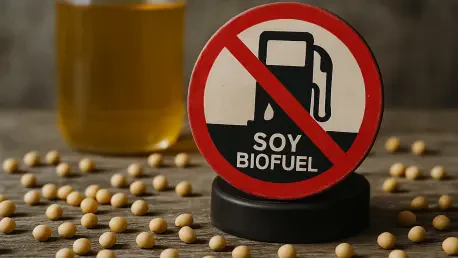

In a significant policy shift aimed at decoupling its renewable energy targets from global environmental degradation, the European Union has officially designated soy-based biofuels as unsustainable. A new European Commission report confirms that soy will be phased out, a decision rooted in the growing body of evidence linking its cultivation to indirect land-use change (ILUC). This phenomenon occurs when land previously used for food or feed crops is converted to biofuel production, which in turn displaces agricultural activities into sensitive ecosystems like forests, wetlands, and peatlands. The result is a cascade of negative environmental impacts, including accelerated deforestation, significant carbon dioxide emissions, and a severe loss of biodiversity. By categorizing soy as a high-risk feedstock, the EU places it on par with palm oil, which is already on a trajectory to be fully excluded from the bloc’s renewable transport fuel mandates by 2030 under the updated Renewable Energy Directive. This move represents a critical acknowledgment that not all biofuels contribute equally to climate goals, and some can be demonstrably more harmful than the fossil fuels they are meant to replace.
A Victory Marred by Loopholes
The decision has been met with approval from environmental advocacy groups, who have long campaigned against the use of food-based biofuels. The organization Transport & Environment (T&E) lauded the phase-out, highlighting data indicating that soy-based biofuels have a climate impact at least twice as severe as that of traditional fossil diesel when ILUC emissions are factored in. However, the group also issued a stark warning that the battle is far from over. A critical loophole in the EU’s methodology allows certain feedstocks to narrowly avoid the high-ILUC risk classification. Sugarcane, for example, falls just below the established threshold, meaning it can still be used to meet the EU’s renewable energy quotas. This regulatory gap creates a significant risk of problem-shifting, where the agricultural pressure and associated deforestation simply move from one commodity to another. As global demand for biofuels continues to rise, the potential for this loophole to be exploited grows, threatening vulnerable ecosystems in regions where sugarcane production is expanding rapidly.
The Broader Challenge of Crop-Based Fuels
This policy refinement underscores a deeper, more systemic issue within the EU’s renewable energy strategy: the reliance on food and feed crops for fuel. While phasing out the most damaging feedstocks like palm oil and soy is a positive development, it does not address the fundamental conflict of using agricultural land to power vehicles instead of feeding people. Projections show that the demand for other biofuel crops will surge to fill the gap left by soy. T&E has pointed to an anticipated 50% increase in sugarcane production for biofuels by 2030, which is directly linked to deforestation in biodiverse areas such as Papua, Indonesia. This situation suggests that the current framework, even with its recent adjustments, may perpetuate a cycle of environmental harm. The policy had aimed to create a sustainable energy future, but by leaving the door open for other high-impact crops, it had only partially addressed the complex relationship between biofuel mandates and their unintended consequences on global land use and climate stability.