
Navigating the Crossroads of Growth and Risk
A recent regulatory filing from Georgia Power has sent ripples through the state’s energy sector, revealing a startling 6-gigawatt (GW) net reduction in its pipeline of potential large-scale industrial customers. While any fluctuation in demand forecasting is notable, this sizable drop has ignited a fierce debate with profound implications for every electricity consumer in the state. At the heart of the issue lies a fundamental conflict: Georgia Power’s optimistic focus on a growing roster of legally committed projects versus the Georgia Public Service Commission (PSC) staff’s grave warnings about the financial risks of building expensive power plants for speculative demand. This article delves into this high-stakes disagreement, exploring the dueling narratives, the volatile role of the data center industry, and what it all means for the future of electricity rates in Georgia.
The Economic Boom That Redefined Georgia’s Energy Map
To understand the current tension, one must look back at the recent economic trajectory of the Southeast. Georgia has positioned itself as a major hub for high-tech manufacturing and massive data centers, industries with an insatiable appetite for electricity. This unprecedented surge in anticipated demand prompted Georgia Power, in its 2023 Integrated Resource Plan (IRP) Update, to propose a significant expansion of its generation capacity to serve these new large loads. This planning was based on a pipeline brimming with potential projects, signaling a new era of economic growth. The current 6 GW drop, however, challenges the foundational assumptions of that strategy, forcing regulators and the public to question whether the utility is prudently planning for a guaranteed future or gambling on a boom that may not fully materialize.
Deconstructing the Dueling Narratives on Demand
A Tale of Two Pipelines Shrinking Prospects vs Hardened Commitments
The core of the debate can be found in two starkly different interpretations of the same data. On one side, the PSC staff highlights the significant pipeline volatility. The 6 GW net decrease was the result of 14.3 GW of projects exiting the pipeline, which overshadowed 6.8 GW of new entrants and 1.6 GW of existing project expansions. This shrinkage signals instability and raises questions about the reliability of long-term forecasts. On the other side, Georgia Power paints a picture of progress and certainty. The utility emphasizes that the number of large-load customers with formal commitments grew from 26 to 28, adding a substantial 2.2 GW of confirmed demand. This brings the utility’s total confirmed commitments to 11 GW, which Georgia Power argues is proof that serious projects are “materializing and making progress without material delays,” justifying its infrastructure buildout plans.
The Specter of Stranded Assets Who Foots the Bill
The PSC’s public interest advocacy staff presents a cautionary counter-narrative centered on financial risk to the average consumer. Their primary concern is the potential for “stranded assets”—billions of dollars in new power plants built to serve a projected demand that never arrives. If these industrial customers cancel or delay their plans after the utility has already invested in new generation, the immense cost of that underutilized infrastructure would be passed on to residential and small business customers through higher rates. The staff’s testimony quantifies this risk, asserting that the majority of Georgia Power’s planned generation is “not backed by executed contracts” and that only about 1,900 MW of the proposed buildout is supported by such firm agreements. This exposes ratepayers to the considerable risk of paying for power plants that ultimately serve no one.
Data Centers The Volatile Linchpin of Georgia’s Energy Future
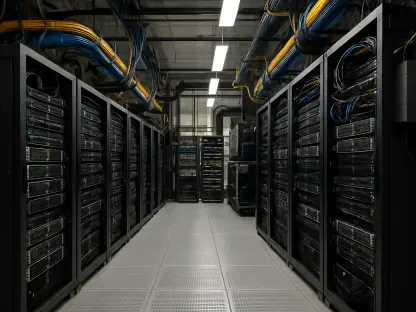
Digging deeper, the PSC staff identifies the data center sector as the primary driver of the pipeline’s instability and the greatest source of risk. The staff’s analysis concludes this segment is “primarily underperforming expectations due to a mixture of lower materialization rates, project cancellations, and delays.” The statistics are telling: since the 2023 IRP Update, 33 data center projects, representing a staggering 11,332 MW of potential load, have been removed from Georgia Power’s pipeline. This single industry accounts for a disproportionate 65% of the total announced load that has been removed. With an average of five data center projects exiting the pipeline each quarter, the PSC staff argues that the utility’s forecasting models may be overly optimistic and fail to adequately account for the demonstrated volatility of this crucial but unpredictable sector.
Forecasting in the Fog The Future of Georgia’s Grid Planning
This clash between projected growth and realized commitments is forcing a reevaluation of traditional utility planning. The era of predictable, slow-growing demand is over, replaced by a landscape defined by massive but highly speculative industrial loads. This new reality may necessitate a paradigm shift in how energy infrastructure is approved and funded. Future regulatory frameworks could incorporate more stringent risk-sharing mechanisms, requiring large industrial customers to provide greater financial security before generation assets are built on their behalf. Furthermore, this uncertainty may drive utilities toward more flexible and scalable generation solutions, such as battery storage and smaller natural gas peaker plants, rather than committing to large, long-term baseload power stations based on volatile forecasts.
Strategic Implications for Stakeholders and Ratepayers
The unfolding debate carries critical takeaways for all involved. For Georgia Power, the situation underscores the need for enhanced transparency and a more conservative approach to risk assessment in its public communications and regulatory filings. For the Georgia PSC, the challenge is to strike a delicate balance between fostering economic development and fulfilling its primary mandate of protecting consumers from undue financial burdens. For prospective industrial customers, particularly data centers, this episode signals that they will likely face increased scrutiny and may be required to make more concrete financial commitments earlier in the development process. Most importantly, for residential ratepayers, this serves as a crucial reminder that decisions made about industrial growth have a direct and lasting impact on their monthly electricity bills.
A Defining Moment for Georgia’s Energy and Economic Policy
The 6 GW load drop is more than a statistical revision; it is a symptom of a fundamental challenge facing modern utilities and the states they serve. Georgia stands at a critical juncture, forced to reconcile the immense promise of a new economic boom with the tangible risk it poses to its citizens. The resolution of this debate will not only determine the cost of electricity for millions of Georgians but will also set a precedent for how other states manage the delicate dance between attracting energy-intensive industries and ensuring a stable, affordable, and reliable power grid. How Georgia navigates this complex terrain will define its energy and economic landscape for decades to come.