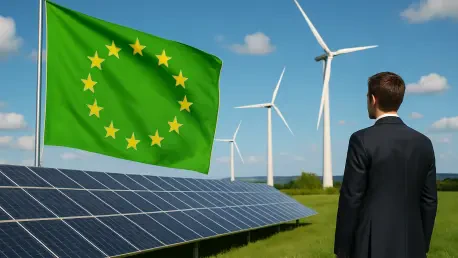

In a historic and defining moment for global energy policy, the European Union’s electricity grid underwent a fundamental transformation in 2025, as wind and solar power collectively surged to become the bloc’s primary source of electricity for the first time. An in-depth analysis of all 27 member states reveals that these renewable sources generated an unprecedented 30% of the EU’s total electricity, narrowly eclipsing the 29% share produced by all fossil fuels combined. This landmark achievement is not a fleeting anomaly but rather the culmination of a deliberate and accelerated structural shift away from carbon-intensive energy. Just five years prior, in 2020, wind and solar contributed a mere 20% to the mix, while fossil fuels dominated at 37%. The latest figures, which show all renewable sources, including hydropower, supplying nearly half (48%) of the EU’s electricity, signal that the continent has crossed a significant threshold, moving from a fossil-fuel-based system to one increasingly defined by clean energy and setting a powerful precedent for the rest of the world.
The Ascendancy of Clean Energy
The rapid rebalancing of the EU’s energy portfolio is a story of two distinct yet complementary forces: the explosive, widespread growth of solar capacity and the established, consistent power of wind generation. Together, they have not only challenged the long-standing dominance of fossil fuels but have also effectively displaced them as the cornerstone of the continent’s electricity supply. This transition, however, is not uniform, with solar power’s recent surge contrasting with the more mature, yet still critical, contribution of wind energy. Understanding the dynamics of each is essential to appreciating the full scope of this energy revolution.
The Solar Surge
The most dynamic element in the EU’s energy transition has been the remarkable and sustained expansion of solar power, which grew by over 20% for the fourth consecutive year, establishing itself as a formidable force in the continent’s power grid. In 2025, solar generation delivered a record 13% of the EU’s total electricity, a figure that allowed it to surpass both coal and hydroelectric sources for the first time. This growth was not confined to a few sunny nations but was a bloc-wide phenomenon, with every member state recording an increase in its solar output. The data highlights a particularly strong performance in several countries where solar has become a mainstream energy provider. In nations such as Hungary, Cyprus, Greece, Spain, and the Netherlands, solar power now accounts for more than one-fifth of their total electricity production, demonstrating its viability as a primary energy source even in diverse geographical and climatic conditions. This rapid deployment reflects a confluence of factors, including plummeting technology costs, supportive government policies, and a growing consumer appetite for decentralized energy solutions.
The ascent of solar power signifies more than just an increase in renewable capacity; it represents a fundamental democratization of energy production that is reshaping local economies and consumer behavior across the European Union. Unlike large-scale, centralized power plants, solar installations can range from massive utility-scale farms to rooftop panels on individual homes and businesses, empowering communities and reducing reliance on distant energy suppliers. This widespread adoption has created a resilient, distributed network that enhances grid stability and energy security. The fact that solar outproduced legacy sources like coal and hydro in 2025 underscores the disruptive potential of this technology. It has moved from being a niche, supplemental power source to a central pillar of the EU’s energy strategy. As innovation continues to drive efficiency gains and reduce costs further, the trajectory of solar power suggests its share of the energy mix will continue its steep upward climb, solidifying its role in the continent’s decarbonized future.
Wind Power’s Steady Dominance
While solar power captured headlines with its explosive growth, wind energy quietly maintained its crucial role as the European Union’s second-largest electricity source, solidifying its position as a mature and indispensable component of the clean energy mix. In 2025, wind turbines generated 17% of the bloc’s total electricity, a contribution significant enough to surpass the output from natural gas. This achievement highlights the scale and reliability that the wind sector has cultivated over decades of investment and technological advancement. Although its overall generation experienced a minor 2% year-over-year drop, this slight fluctuation does not detract from its foundational importance. Wind power remains the workhorse of the EU’s renewable portfolio, providing a consistent and powerful counterbalance to the intermittency of other sources. Its ability to displace a major fossil fuel like natural gas is a clear indicator of its market power and its central function in the ongoing effort to decarbonize the continent’s power grid.
The steady performance of wind energy, even with a minor dip in output, provides a critical anchor for the EU’s increasingly complex and renewables-heavy grid. Unlike the more volatile hydroelectric sector, which is highly susceptible to climatic shifts, the wind sector’s vast and geographically diverse installations offer a more predictable and resilient supply of power. This stability is vital for grid operators managing the integration of multiple variable renewable sources. The established infrastructure and supply chains for wind energy also provide a robust platform for future expansion, both onshore and offshore. As the EU continues to phase out fossil fuels, the consistent, large-scale generation from wind power will become even more essential for maintaining energy security and meeting climate targets. Its role is not merely to supplement other renewables but to provide the backbone of a clean, reliable, and increasingly independent European energy system.
Navigating the Transition’s Complexities
The milestone of renewables surpassing fossil fuels does not mark the end of the EU’s energy challenges. The transition is fraught with complexities, as evidenced by the unexpected resurgence of natural gas to compensate for shortfalls in other sectors. This reliance highlights persistent vulnerabilities in the system, particularly concerning import dependency and price volatility. Simultaneously, the dramatic collapse of coal-fired generation reveals the profound and likely irreversible nature of the shift, pointing toward a future where the energy landscape is fundamentally and permanently altered.
The Persistent Role of Natural Gas
Despite the triumphant rise of renewables, the EU’s energy transition faced a significant headwind in 2025, as an unexpected shortfall in hydroelectric power forced a renewed and costly reliance on natural gas. A 12% decline in hydro output, attributed to unusual weather patterns, created a generation gap that grid operators scrambled to fill, ultimately leading to an 8% increase in gas-fired power generation. This turn of events served as a stark reminder of the system’s remaining vulnerabilities and the critical role that dispatchable power sources still play in ensuring grid stability. The economic consequences were immediate and severe. The increased demand for natural gas pushed the bloc’s import costs up by 16% to a staggering €32 billion ($37.4 billion), marking the first annual cost increase since the 2022 energy crisis. Germany and Italy, two of the EU’s largest economies, bore the brunt of this expenditure, underscoring the geopolitical and economic risks associated with continued dependence on imported fossil fuels.
The ripple effects of this gas dependency extended beyond national budgets and directly impacted consumers and businesses across the continent. The increased use of expensive gas-fired peaker plants resulted in an 11% spike in average electricity prices during peak usage periods compared to 2024. This price volatility highlights the urgent need for greater investment in energy storage solutions, such as batteries and pumped hydro, as well as demand-side management strategies that can help balance the grid without resorting to fossil fuels. The episode demonstrated that while wind and solar are now the primary sources of electricity, the overall energy system is not yet fully resilient to shocks in other parts of the renewable portfolio. It underscored that the final phase of the energy transition will require not just adding more renewable capacity, but also building a more flexible, interconnected, and technologically advanced grid capable of managing the intermittency of all clean energy sources.
A New Energy Paradigm Emerged
The year 2025 was ultimately defined by the establishment of a new energy order in the European Union, a paradigm shift solidified by the precipitous decline of coal power. Once the bedrock of the continent’s industrial might, coal-fired generation plummeted to a historic low, accounting for just 9.2% of the EU’s power mix. This figure stood in stark contrast to its position a decade earlier, when it supplied nearly a quarter of all electricity. This collapse was not an isolated trend but a systemic change observed across the bloc, with 19 of the 27 member states now sourcing 5% or less of their power from coal. This irreversible trend, coupled with the ascendancy of renewables, confirmed that a tipping point had been crossed. The data revealed a profound realignment, with more than half of the EU’s member states—14 countries in total—now generating more electricity from wind and solar combined than from all fossil fuel sources, signaling the dawn of a fundamentally different energy landscape. The events of that year demonstrated that the transition was no longer a future aspiration but a present-day reality, driven by a powerful synergy of policy, technology, and market forces that have successfully displaced legacy fossil fuels from their long-held position of dominance.