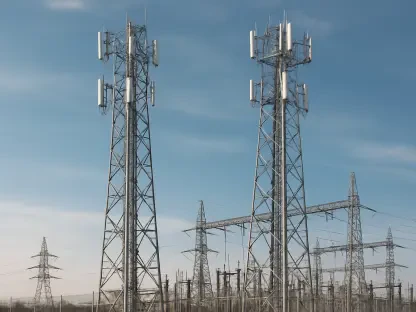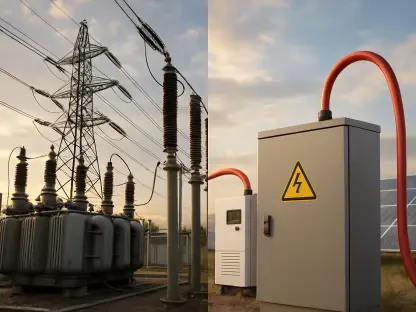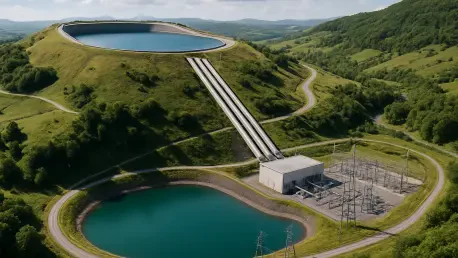

As nations raced to install record-breaking amounts of solar and wind power throughout the year, a critical vulnerability in the global energy system became starkly apparent: the grid itself was struggling to cope with the intermittency of these clean but variable sources. The urgent need for reliable, long-duration energy storage shifted from a niche engineering concern to a top-tier issue of national security and economic stability. In this high-stakes environment, 2025 became the year that pumped storage hydropower, a century-old technology, was decisively repositioned as the indispensable cornerstone of the modern energy transition. Through a series of coordinated global initiatives, targeted policy advocacy, and compelling demonstrations of sustainable performance, these massive “water batteries” were firmly established as the most mature, scalable, and essential solution for ensuring a secure and decarbonized energy future. This shift was not accidental but the result of a deliberate and strategic effort to align policymakers, investors, and the public around the critical role of hydropower in balancing the clean energy equation.
A Global Campaign for the Water Battery
The strategic effort to elevate pumped storage culminated in the International Forum on Pumped Storage, a landmark event held in Paris that convened over 500 global leaders from government, finance, and industry. The forum successfully framed the technology not merely as an asset but as the essential “backbone for energy security and grid flexibility” in a world increasingly reliant on intermittent renewables. For two intensive days, discussions moved beyond technical specifications to focus on the critical enablers of rapid deployment: innovative investment models capable of valuing long-term grid services and robust sustainability practices to ensure projects deliver benefits to both the climate and local communities. The event forged a powerful international consensus, creating a unified voice that called for immediate action to remove regulatory barriers and unlock the immense global potential of these “water batteries” as a foundational element of the energy transition. This alignment proved crucial in shifting the conversation from if pumped storage was needed to how quickly it could be built.
This powerful advocacy was supported by the development of concrete policy instruments designed to guide governments from ambition to action. The Global Alliance for Pumped Storage (GAPS), a coalition whose membership expanded to include 60 governments and international agencies, was at the forefront of this work. Early in the year, the alliance published the comprehensive Pumped Storage Policy Toolkit, providing officials with a detailed menu of regulatory and market mechanisms to incentivize development. This was followed by the formal adoption of the GAPS Principles at the Paris Forum, a powerful declaration affirming the indispensable role of pumped storage in creating a secure and climate-resilient energy future. Together, these resources created an actionable and authoritative pathway for nations to follow, offering clear options to strengthen power system flexibility, decarbonize energy markets, and foster the economic development and innovation needed to accelerate the deployment of long-duration storage technologies.
From Global Policy to Regional Action
The global momentum was strategically translated into targeted regional advocacy designed to address specific market challenges and opportunities. In Europe, a powerful coalition of industry players delivered the “Paris Pledge on Pumped Storage” directly to the European Commission in Brussels. During a high-level roundtable, the message was unequivocal: Europe’s ambition to build an affordable, reliable, and fully decarbonized electricity supply could not be realized without decisive action and clear investment frameworks for pumped storage. This direct engagement was not merely a symbolic gesture; it was a formal submission backed by extensive data, underscoring the urgency of integrating long-duration storage into the continent’s energy planning. The initiative successfully placed pumped storage at the center of future EU energy policy discussions, ensuring its role would be formally recognized and supported in upcoming regulatory packages.
This tailored approach was replicated in other critical energy markets around the world, each with its unique set of challenges. In Australia, a nation grappling with the immense grid stability demands created by its world-leading solar power penetration, dedicated forums were convened to tackle the market, revenue, and contractual risks that had stalled project development. The outcomes from these sessions were shared directly with state governments and fed into the national energy market review, where significant policy changes are now being considered. Meanwhile, in India, a market poised for explosive growth in energy demand, a new working group was established to engage in high-level meetings with the national Ministry of Power and key state governments. These discussions, supported by technical expertise from leading industry members, focused on refining national policy, streamlining the complex permitting process, and embedding internationally recognized sustainability standards into the country’s infrastructure planning, setting the stage for a new wave of responsible hydropower development.
Proving the Value with Data and Excellence
The sector’s renewed optimism was substantiated by compelling data from the 2025 World Hydropower Outlook. The flagship report documented strong global momentum, revealing that hydropower generation had surged by 10% in the previous year to reach 4,578 TWh. A total of 24.6 GW of new capacity was commissioned, a significant portion of which—8.4 GW—was pumped storage. This represented a 5% increase in global pumped storage capacity in a single year, bringing the total to 189 GW. The report noted that the rate of annual additions has nearly doubled over the past two years, with China continuing to lead global development. However, the Outlook also issued a critical warning: a potential gap of 60 to 70 GW exists between current development trajectories and the capacity required by 2030 to meet the internationally agreed-upon goal of tripling renewable energy. This data-driven analysis underscored the profound urgency for accelerated permitting, innovative financing, and supportive government policies to close the gap and keep climate targets within reach.
Parallel to this documented growth, the industry reinforced its unwavering commitment to sustainability as a core principle of modern development. The prestigious IHA Blue Planet Prizes recognized projects that demonstrated leadership in responsible practices, with all contenders assessed against the rigorous criteria of the Hydropower Sustainability Standard. The 2025 awards showcased the standard’s versatility and its applicability across a diverse range of project types and scales. The main prize was awarded to the 2,520 MW Bakun Hydroelectric Project in Malaysia, which achieved Silver certification for its significant enhancements in environmental, social, and governance (ESG) performance. In a world-first achievement, SSE’s Coire Glas Hydropower Project in Scotland became the first pumped storage project to earn a Gold certification. In the small hydropower category, the 9.5 MW Mai Beni project in Nepal also achieved Gold certification, lauded for its exceptional community partnerships and deep local engagement, proving that world-class sustainability is achievable for projects of any size.
A Unified Voice on the World Stage
Throughout 2025, a concerted effort was made to ensure that hydropower’s critical role was recognized on the world’s most influential stages. Representatives from the sector actively participated in premier global events, including COP30, the Global Renewables Summit, the G20 Clean Energy Ministerial, and the IEA Ministerial. This consistent and high-level presence was instrumental in elevating the issue of long-duration energy storage from a technical side conversation to a central element of the international energy security and climate dialogue. By framing pumped storage as a key enabler of the “tripling renewables” pledge, the industry successfully communicated its value proposition to the policymakers and global leaders responsible for turning climate commitments into tangible action. This strategic engagement ensured that the unique grid-stabilizing capabilities of hydropower were understood and integrated into national and international energy transition plans.
This enhanced global influence was mirrored by a significant expansion of public outreach and community building. The 2025 edition of Global Hydropower Day became the most far-reaching celebration to date, with coordinated events taking place in 44 countries. The campaign’s media reach exploded to an estimated 28.6 million people, a dramatic increase from 1.4 million just one year prior, reflecting a growing global appreciation for hydropower’s contributions to a clean and secure energy future. The year also marked significant organizational milestones, including the celebration of the industry association’s 30th anniversary and the election of a new, regionally diverse board to steer its work for the 2025–27 term. The community itself expanded with the addition of 17 new members, including industry heavyweights such as Adani Green Energy Limited, Iberdrola Generacion, and ReNew, further strengthening the sector’s collective network and amplifying its unified voice.
A Foundation for the Future Grid
The collective achievements of 2025 painted a clear picture of a sector that had successfully harnessed a powerful resurgence, driven by strategic and persistent advocacy. The year was defined by the definitive positioning of pumped storage hydropower as a non-negotiable cornerstone of the global energy transition. This success was built on the development of critical policy tools, direct and influential engagement in key markets worldwide, a documented increase in installed capacity, and a deepened commitment to world-class sustainability standards. The expansion of the sector’s global influence and community provided the unified voice necessary to turn potential into progress. Building on these milestones, a clear strategic focus for 2026 was established, centered on accelerating pumped storage deployment, modernizing existing assets, and embedding sustainability into every project. The groundwork laid in 2025 created sustained momentum toward the World Hydropower Congress in Sydney in 2027, reinforcing a long-term commitment to delivering the secure, green, and reliable energy required for the 21st century.