
The sheer scale of the Lianghekou hydroelectric station, which towers nearly 300 meters above the rugged terrain of the Tibetan Plateau, serves as a definitive statement regarding the future of global renewable energy infrastructure. Located in the Garze Tibetan Autonomous Prefecture of Sichuan Province, this facility is not merely a power plant but a cornerstone of a massive strategic shift toward a low-carbon economy. By reaching heights comparable to the Eiffel Tower at an elevation that would leave most travelers breathless, the dam stands as one of the highest-altitude mega-hydropower projects ever conceived. Its annual output of 11 billion kilowatt-hours provides a necessary surge of clean energy into a national grid that has long searched for a way to balance industrial growth with environmental preservation. Beyond the impressive engineering statistics, the project represents a sophisticated response to the inherent instability of modern power systems, acting as a reliable anchor that ensures the lights stay on even as older, coal-fired plants are gradually phased out of the primary energy mix.
Mastering the Flow of the Yalong River
Engineering Prowess: Regional Stability
Constructed with a staggering investment of approximately $10.5 billion, the Lianghekou dam is strategically positioned on the Yalong River, which serves as a vital artery feeding into the Yangtze. The reservoir created by this massive wall of concrete and earth is designed to hold more than 10 billion cubic meters of water, transforming the wild river into a precisely controlled energy resource. This storage capacity allows operators to act as masters of the hydrological cycle, smoothing out the dramatic variations between the torrential wet seasons and the parched dry months. By regulating the flow of the Yalong, Lianghekou does more than generate its own power; it effectively optimizes the performance of an entire chain of smaller hydroelectric facilities located further downstream. This cascading efficiency ensures that the kinetic energy of the river is harvested multiple times, maximizing the return on investment for the entire regional watershed while simultaneously providing a critical defense against the catastrophic flooding that often plagues the lower Yangtze basin.
The environmental dividends of this massive undertaking are equally significant, as the facility is projected to displace the consumption of roughly 13 million tons of raw coal every year. In doing so, the station prevents approximately 21 million tons of carbon dioxide from entering the atmosphere, a feat that would be impossible without such high-capacity infrastructure. However, the true value of Lianghekou lies in its functional reliability as a “base load” power source, a characteristic that sets it apart from more volatile renewables like wind or solar. While clouds can darken solar panels and wind can suddenly die down, the massive volume of water behind the dam provides a constant, predictable pressure that can be tapped at a moment’s notice. This stability is crucial for supporting the Chengdu-Chongqing economic circle, a region that has faced severe power shortages during recent heatwaves. By serving as a stabilizing anchor, the dam ensures that the industrial heart of southwest China remains operational regardless of local weather fluctuations or sudden spikes in consumer demand.
Technical Integration: Grid Reliability
The sophisticated control systems housed within the Lianghekou facility allow for a level of grid management that was previously unattainable in high-altitude environments. Modern power grids require an instantaneous balance between supply and demand, and the ability of a large-scale hydro plant to ramp production up or down in minutes makes it an ideal partner for the broader energy transition. As the region continues to integrate more intermittent sources into the fold, the dam acts as a giant shock absorber, soaking up excess energy or filling gaps as needed to prevent blackouts. This technical flexibility is especially important in 2026, as the demand for electric vehicle charging and high-tech manufacturing puts unprecedented strain on existing infrastructure. The project demonstrates that the path to a green future is not just about building more turbines, but about creating a hierarchy of energy assets where large-scale “anchors” provide the structural integrity required to support a complex and decentralized network of smaller, cleaner generators.
Furthermore, the geographical placement of the dam provides a unique advantage for long-distance power transmission, allowing electricity to be exported from the resource-rich highlands to the energy-hungry coastal provinces. This west-to-east power transfer is a central component of national energy strategy, utilizing the natural elevation of the Tibetan Plateau to “drop” power toward the lowlands with minimal loss. The engineering behind the dam’s turbines is specifically calibrated for the thin air and extreme temperature swings of the plateau, showcasing a level of specialized innovation that pushes the boundaries of what is possible in hydraulic engineering. By solving these localized technical challenges, the project provides a scalable model for other mountainous regions around the world that possess untapped hydroelectric potential but lack the infrastructure to harness it. The success of this facility serves as a reminder that large-scale engineering remains a vital tool in the fight against climate change, providing the bulk power necessary to transition entire civilizations away from their carbon-intensive roots.
A Blueprint for Modern Grid Management
Synergizing Renewables: The Hybrid Model
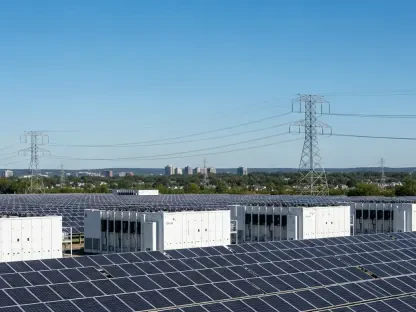
Rather than viewing hydropower as a competitor to wind and solar, the Lianghekou project pioneers a “handshake” model that treats these diverse energy sources as a single, integrated ecosystem. This is most visible in the coordination between the dam and the nearby Kela photovoltaic plant, which currently stands as one of the largest high-altitude solar installations in existence. During the dry season, when river levels naturally decline and hydro output might otherwise falter, the clear skies of the plateau allow solar production to reach its peak. Conversely, when the rainy season brings heavy cloud cover that limits solar efficiency, the roaring Yalong River allows the dam to operate at full capacity. This seasonal complementarity transforms the reservoir into a “water battery,” where energy is essentially stored in the form of potential elevation. This hybrid approach effectively eliminates the “intermittency tax” often associated with green energy, creating a resilient and self-correcting system that can provide a steady stream of electricity to millions of homes and businesses throughout the entire year.
This integrated strategy represents a major evolution in how energy projects are planned and executed, moving away from isolated facilities toward regional energy clusters. By sharing transmission lines and substations, these hybrid projects reduce the overall environmental footprint and lower the cost of delivering clean power to the end consumer. The management of these assets requires highly advanced AI-driven forecasting tools that can predict weather patterns and river flows weeks in advance, allowing operators to decide exactly when to hold water back and when to release it for maximum grid stability. This level of synergy is a direct response to the limitations of earlier renewable rollouts, which often struggled with overcapacity during the day and shortages at night. The Lianghekou model proves that with the right combination of geography and technology, the dream of a 100% renewable grid becomes a tangible reality. It offers a clear blueprint for how massive economies can transition their heavy industry to carbon-free power without sacrificing the reliability that modern society depends upon for its daily functions.
Addressing Impacts: Ecological and Social Costs
Despite the clear climate benefits, the construction of the Lianghekou dam has not been without its significant ecological and social challenges, which require a transparent and proactive management approach. The physical presence of such a massive barrier inevitably alters the natural flow of the river, which scientists have noted can disrupt the migration patterns of local fish species and change the sediment distribution downstream. To mitigate these effects, the project has incorporated specialized fish ladders and breeding programs designed to preserve the biodiversity of the Yalong River basin. Additionally, the sheer amount of concrete and steel required for a 295-meter structure carries its own carbon debt, and the decomposition of organic matter in the newly flooded reservoir can lead to the release of methane, a potent greenhouse gas. These factors mean that the “greenness” of a mega-dam must be calculated over a decades-long lifecycle, rather than just by looking at its immediate operational output, requiring a commitment to long-term environmental monitoring and restoration efforts.
The human dimension of the project is perhaps the most complex aspect of its development, as the creation of the massive reservoir necessitated the relocation of approximately five thousand residents from traditional communities. Moving families who have lived in these valleys for generations involves more than just providing new housing; it requires a comprehensive strategy for economic reintegration and the preservation of local cultural heritage. From 2026 to 2028, the focus of local authorities has shifted toward ensuring that these displaced populations have access to new livelihoods in the burgeoning green energy and tourism sectors that the dam has helped create. Success in this area is measured not by megawatts, but by the quality of life and social stability of the people who sacrificed their homes for the national energy transition. The lessons learned from Lianghekou suggest that the future of large-scale infrastructure depends on a holistic view of sustainability that balances global climate goals with the immediate needs and rights of the local environment and its human inhabitants.
As the global community moves forward with decarbonization efforts, the Lianghekou hydroelectric station serves as an essential case study in the necessity of large-scale, flexible energy anchors. The project has demonstrated that achieving a truly green grid requires more than just the installation of solar panels; it demands the construction of integrated systems capable of managing the inherent volatility of the natural world. Moving into the future, the primary focus for energy planners should be the replication of these hybrid “water battery” models in other high-potential regions, while simultaneously refining the technologies used to mitigate ecological disruption. Investors and policymakers must recognize that while the upfront costs and social challenges of mega-projects are substantial, the long-term reliability and carbon-reduction benefits they provide are indispensable. The ultimate legacy of the Lianghekou facility was not found in its height or its volume, but in its ability to prove that industrial-scale power and environmental responsibility can coexist through intelligent, integrated engineering.